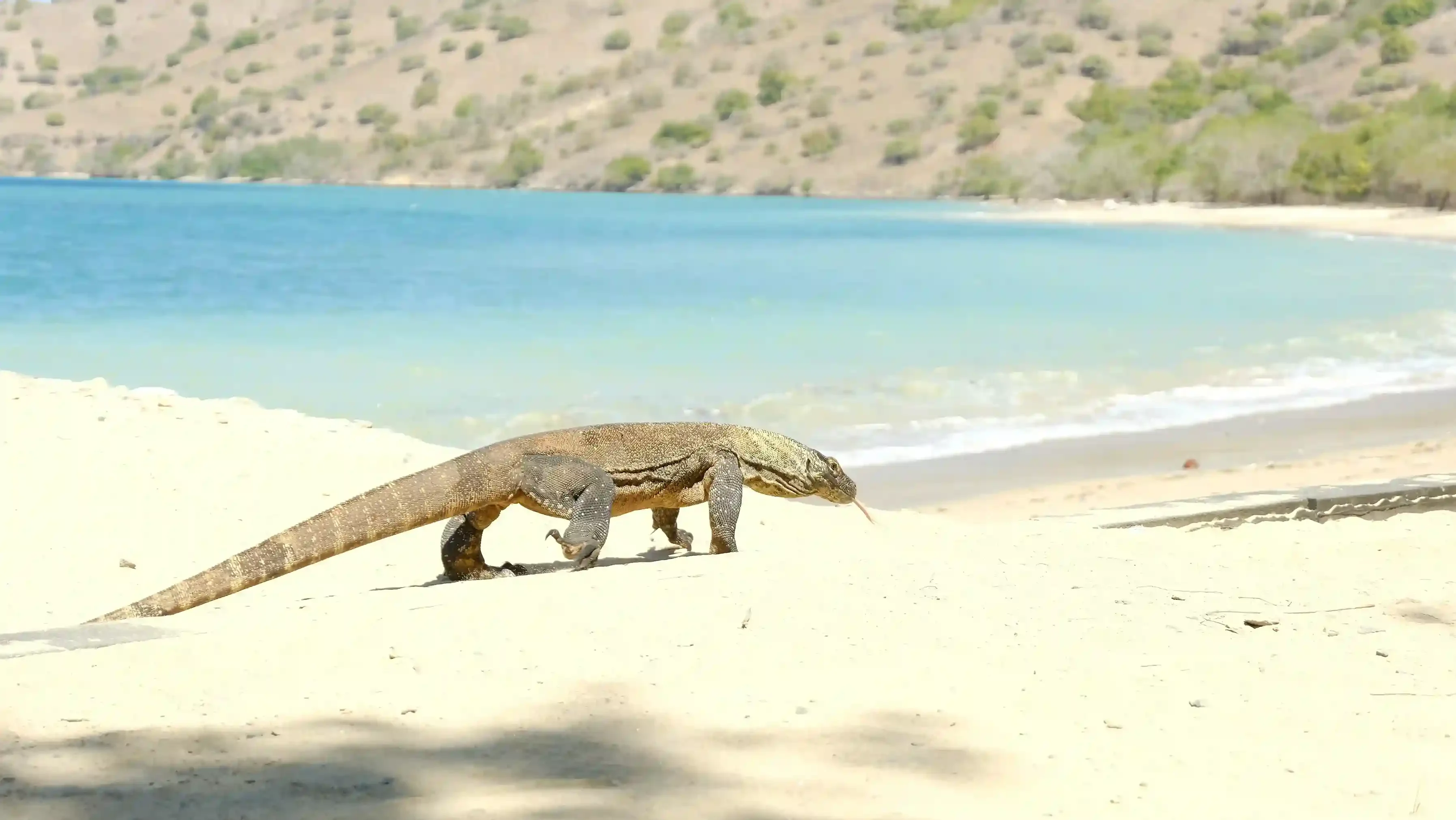
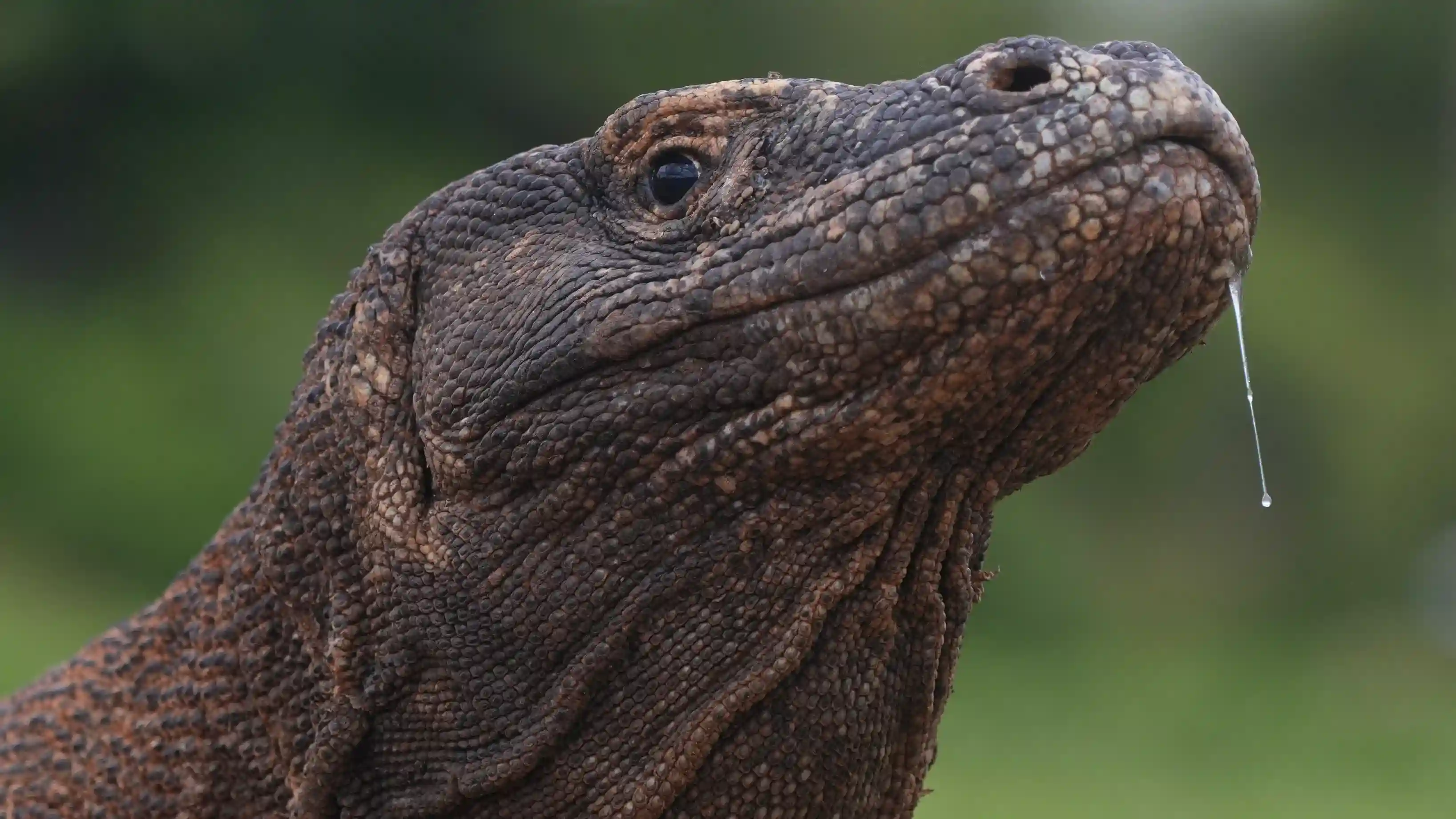
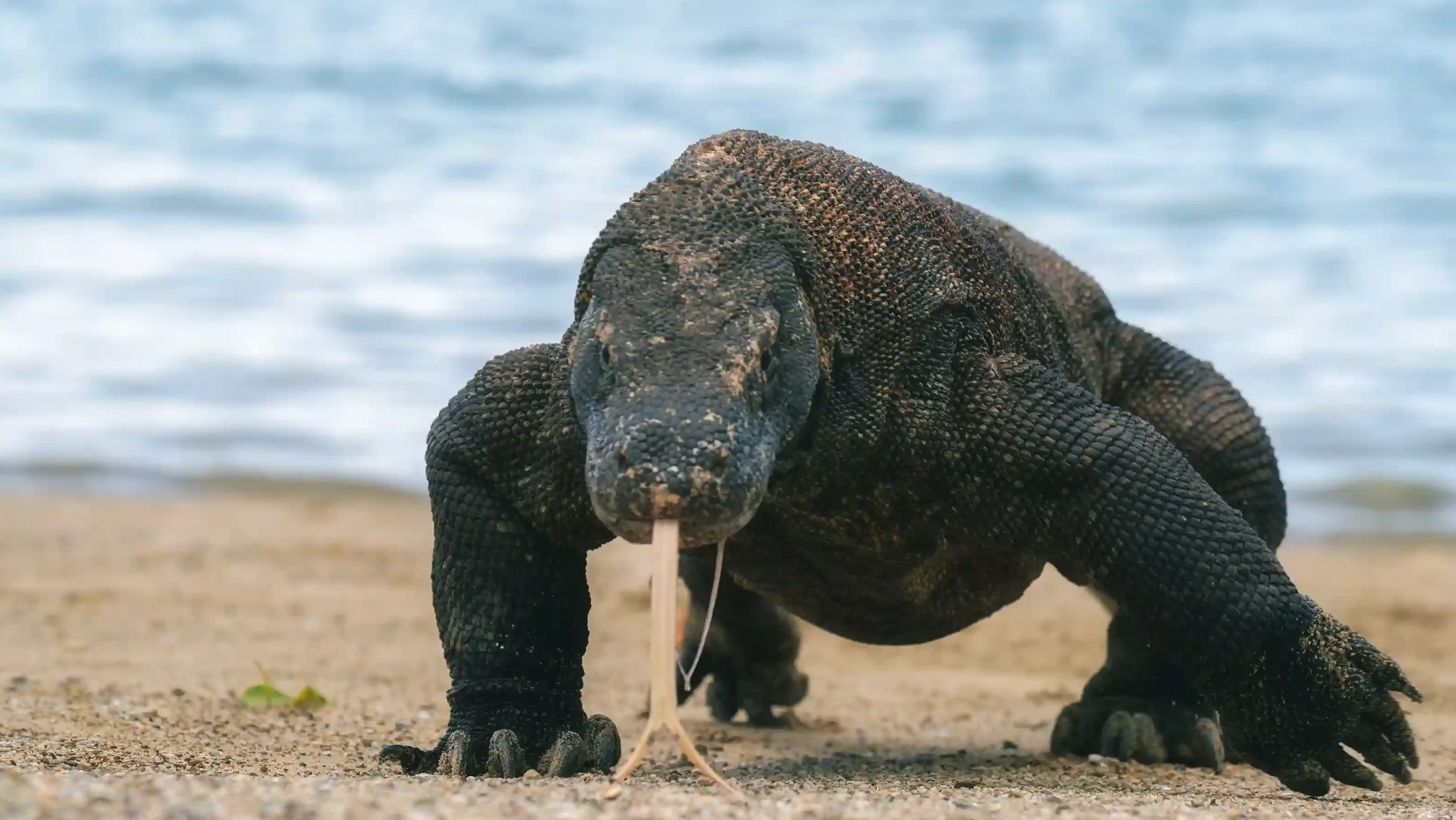
A Komodo wildlife tour represents more than a mere animal observation—it’s an adventure into one of Earth’s most remarkable ecosystems where ancient creatures still roam freely and nature operates according to ancient rhythms unchanged for millennia. The Komodo dragon, Earth’s largest living lizard species, stands as the primary attraction drawing wildlife enthusiasts from across the globe. However, the islands’ diverse fauna extends far beyond these prehistoric-appearing reptiles, encompassing abundant bird species, mammals, and countless other creatures that comprise one of Southeast Asia’s most intact ecosystems.
Komodo dragons represent apex predators evolved in isolation across thousands of years, resulting in creatures that appear untouched by modern evolutionary processes. These massive reptiles achieve lengths exceeding three meters and weights surpassing 150 kilograms, making them formidable hunters despite their seemingly sluggish movements. A Komodo dragon tour provides rare opportunities to observe these creatures in their natural habitat, where behavior observation reveals the sophisticated hunting strategies and social structures underlying their effectiveness as predators.
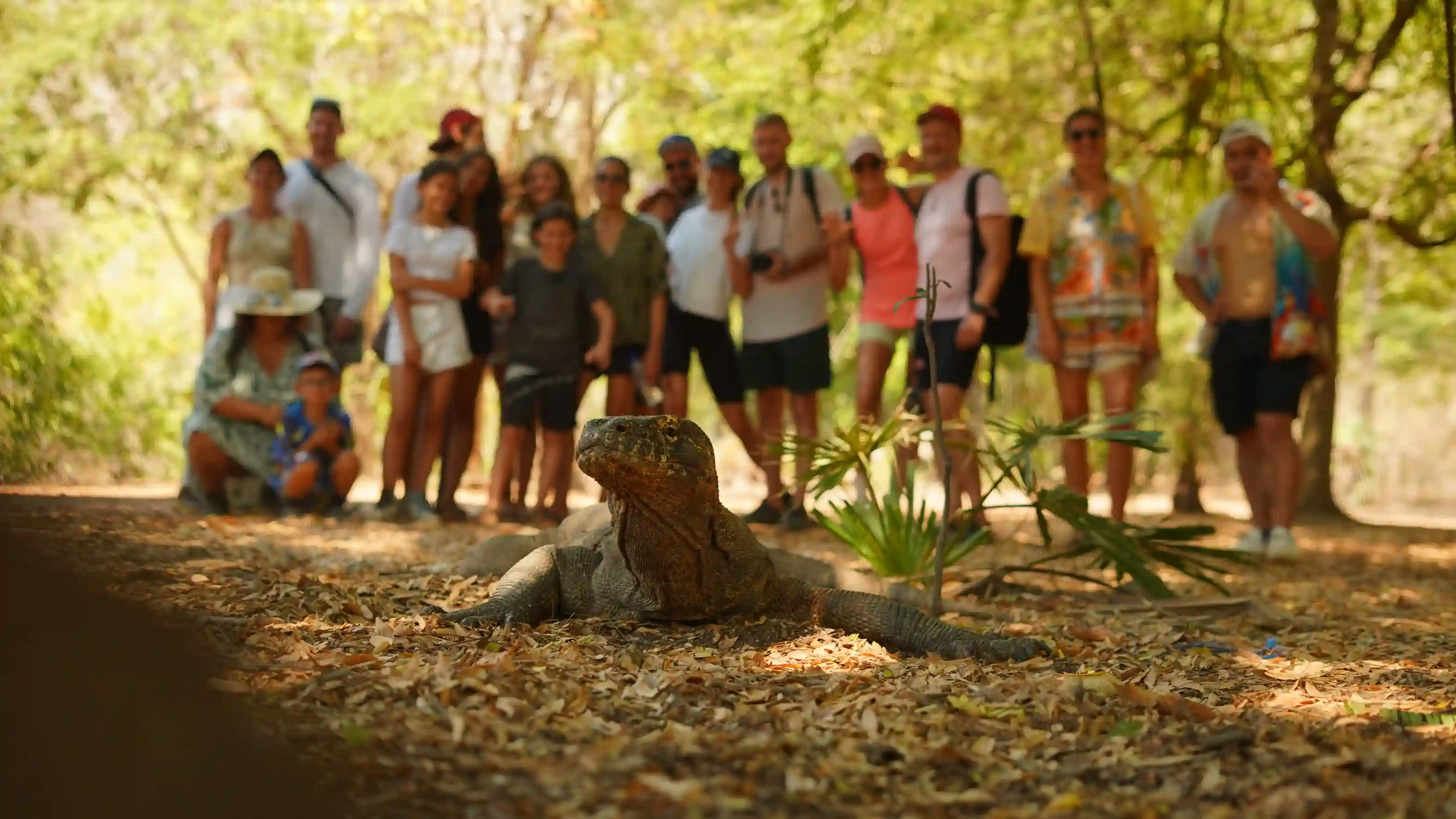
Our professional Komodo boat charter services include expert ranger-guided tours that bring you face-to-face with these remarkable creatures while maintaining appropriate safety distances and respectful interaction protocols. Licensed national park rangers provide exceptional interpretive information, sharing insights into dragon ecology, behavior, and conservation challenges these endangered species face.
Observing Komodo dragon behavior reveals sophisticated predatory adaptations. Despite popular misconceptions depicting mindless killing machines, dragons demonstrate complex hunting strategies including ambush tactics, cooperative hunting, and problem-solving behaviors. They can sprint at surprising speeds across short distances despite their bulk, allowing them to capture prey through rapid acceleration rather than extended pursuit. Their powerful jaws and backward-curving teeth grip struggling prey while venom production—discovered through recent research—helps immobilize victims. Tour guides share observations of dragon social hierarchies, with dominant individuals establishing feeding priority at carcasses.
The Komodo deer (endemic to the islands) and sambar deer inhabit the grasslands and open forests throughout Komodo and Rinca islands. These ungulates comprise the primary prey base for Komodo dragons, creating the predator-prey relationship essential for ecosystem balance. Wildlife tours frequently encounter herds of these elegant creatures grazing peacefully, providing excellent observation and photography opportunities. The seasonal movement of deer populations responds to rainfall patterns, with dry season concentrations in specific grazing areas.
Boar and buffalo populations provide alternative prey for large dragons while contributing to ecosystem complexity. These powerful mammals occasionally challenge dragons in dangerous confrontations that create dramatic predator-prey encounters. Wildlife tours occasionally witness evidence of these interactions, from dragon combat scars to massive buffalo horns used in displays of dominance.
Komodo hosts remarkable bird diversity with over 150 recorded species. Endemic species including the Komodo pigeon and Flores hawk-eagle inhabit the islands’ forests and cliffs. Seabirds including frigatebirds, boobies, and various gull species occupy coastal areas. Birdwatchers find Komodo simultaneously rewarding and challenging due to the combination of rare species and challenging observation conditions. Patient observation rewards dedicated birders with sightings of uncommon species rarely encountered elsewhere.
Populations of long-tailed macaques inhabit forest areas, particularly on Rinca Island where they reach higher population densities. These intelligent primates display complex social behaviors and maintain considerable wariness toward humans. Wild dogs, though rare and elusive, occasionally appear throughout the islands. Both species add to the ecosystem’s ecological richness while remaining challenging to observe during standard tours.
The primary Komodo Island trek typically covers approximately 11 kilometers across varying terrain, requiring 4-5 hours excluding rest intervals. This challenging hike traverses grasslands, dry forests, and open terrain where dragon encounters occur regularly. Rangers identify dragon locations through habitat assessment and experience-based knowledge, positioning trekkers for optimal observation while maintaining mandatory safety distances (typically 4-5 meters). The trek’s physical demands suit hikers with moderate fitness levels, though heat and uneven terrain present challenges.
The Rinca Island trek offers slightly shorter distances (typically 8-10 kilometers) over more forested terrain. Forest coverage provides better shade and cooler temperatures compared to Komodo Island, though it reduces general visibility. Despite increased vegetation, Rinca Island remains accessible and offers excellent wildlife observation opportunities. Many visitors report more frequent dragon sightings on Rinca due to concentrated populations in specific areas.
For visitors with limited mobility or lower fitness levels, short ranger-guided nature walks spanning 2-3 kilometers offer wildlife observation opportunities without extreme physical demands. These walks frequently yield productive wildlife encounters while remaining accessible to wider visitor demographics including elderly travelers and young children.
All Komodo National Park visitors must employ professional ranger guides—independent exploration remains prohibited for visitor safety and wildlife protection. These licensed rangers represent the park’s first line of defense for visitor safety when encountering Komodo dragons or other hazards. Beyond safety functions, rangers provide invaluable interpretive information about dragon ecology, local history, and conservation challenges. Many rangers possess decades of experience and offer profound insights into dragon behavior and island ecosystems.
Rangers are not mere safety escorts but rather skilled naturalists whose interpretive abilities transform wildlife tours into educational experiences providing genuine understanding of ecosystem dynamics. They identify subtle behavioral indicators, share information about individual dragon personalities, and explain ecological relationships underlying the islands’ natural systems.
Dragon safety depends entirely on respecting these creatures’ predatory nature and maintaining mandatory distance requirements. Rangers maintain minimum 4-5 meter separation between trekkers and dragons, though dragons typically avoid humans and display minimal aggression toward groups. Never attempt to touch dragons, approach nests, or interfere with hunting activities. Follow all ranger instructions immediately and without question. Report observations of unusual dragon behavior to your ranger immediately. Respect the enclosed areas protecting nesting females and vulnerable populations.
Beyond fauna, Komodo’s unique landscape reflects adaptation to arid climate conditions. Deciduous forests dominating lower elevations drop leaves seasonally to conserve water during extended dry periods. Tough shrubs and grasses characterize the grasslands where dragons hunt. Higher elevation areas host different plant communities adapted to slightly increased rainfall. Understanding these plant communities provides context for herbivore distribution and predator hunting patterns.
Visit our Komodo destinations page for information about other natural features including viewpoints showcasing the dramatic landscapes where wildlife activities unfold.
Wildlife photography during dragon treks requires patience, appropriate focal lengths (typically 70-200mm lens range), and respect for ranger instructions limiting movement during critical observation moments. Early morning starts provide superior lighting conditions while temperatures remain cooler. Avoid rapid movements that startle wildlife or distract from ranger group management. Anticipatory positioning based on ranger guidance yields superior photographic results. Consider wildlife photography workshops offered by specialized tour operators focusing specifically on photographic opportunities.
Komodo dragons face uncertain futures despite protected status. Habitat loss through human encroachment, reduced prey populations, and climate change impacts all present genuine threats to species survival. Tourism generates essential revenue supporting park management and conservation initiatives. However, sustainable tourism requires visitor cooperation with conservation protocols. Respect all park regulations, stay on designated trails, and avoid activities that disturb wildlife or damage habitat.
Komodo dragons rarely attack humans when proper distance protocols are maintained. Rangers keep visitors at safe separation distances (typically 4-5 meters minimum). While dragons possess formidable predatory capabilities, they generally avoid groups and display minimal aggression toward humans. Statistically, wildlife tours remain far safer than suggested by media sensationalism.
Dragons are active year-round, though their behavior varies seasonally. During dry season (April-June) and transitional periods, dragons emerge more regularly and undertake visible hunting activities. Wet season activity concentrates around water sources. Morning tours typically provide cooler conditions and higher activity levels before midday heat forces dragons to seek shelter.
Dragon trekking varies in difficulty. The main Komodo Island trek covers 11 kilometers over uneven terrain requiring moderate fitness. Rinca Island offers shorter, shadier alternatives. Short nature walks suit visitors with limited mobility. Choose trek difficulty matching your fitness level. Heat and terrain present challenges regardless of distance covered.
Children can participate in wildlife tours, though hiking difficulty necessitates age-appropriate selection. Short nature walks suit younger children or those with limited hiking experience. Longer treks suit older children with trail experience and adequate fitness. Supervision remains essential throughout tours, and parental judgment regarding child capabilities determines suitability.
Bring sturdy hiking boots with ankle support, plenty of water (minimum 2-3 liters), sun protection (hat, sunscreen), light layered clothing, and a small backpack. A camera or binoculars enhance observation experiences. Professional guides provide essential information, making guidebooks optional though potentially valuable for additional context.