Raja Ampat: The World’s #1 Dive Destination
Raja Ampat (The Four Kings) is more than a destination—it’s a pilgrimage for marine enthusiasts. With 70% of all known coral species and fish populations 10 times richer than the Caribbean, Raja Ampat represents Earth’s most biodiverse marine ecosystem. Located in West Papua, Indonesia, these four main islands and over 1,500 smaller islands create an underwater paradise accessible only by dedicated expedition vessels.
Why Choose a Phinisi for Raja Ampat?
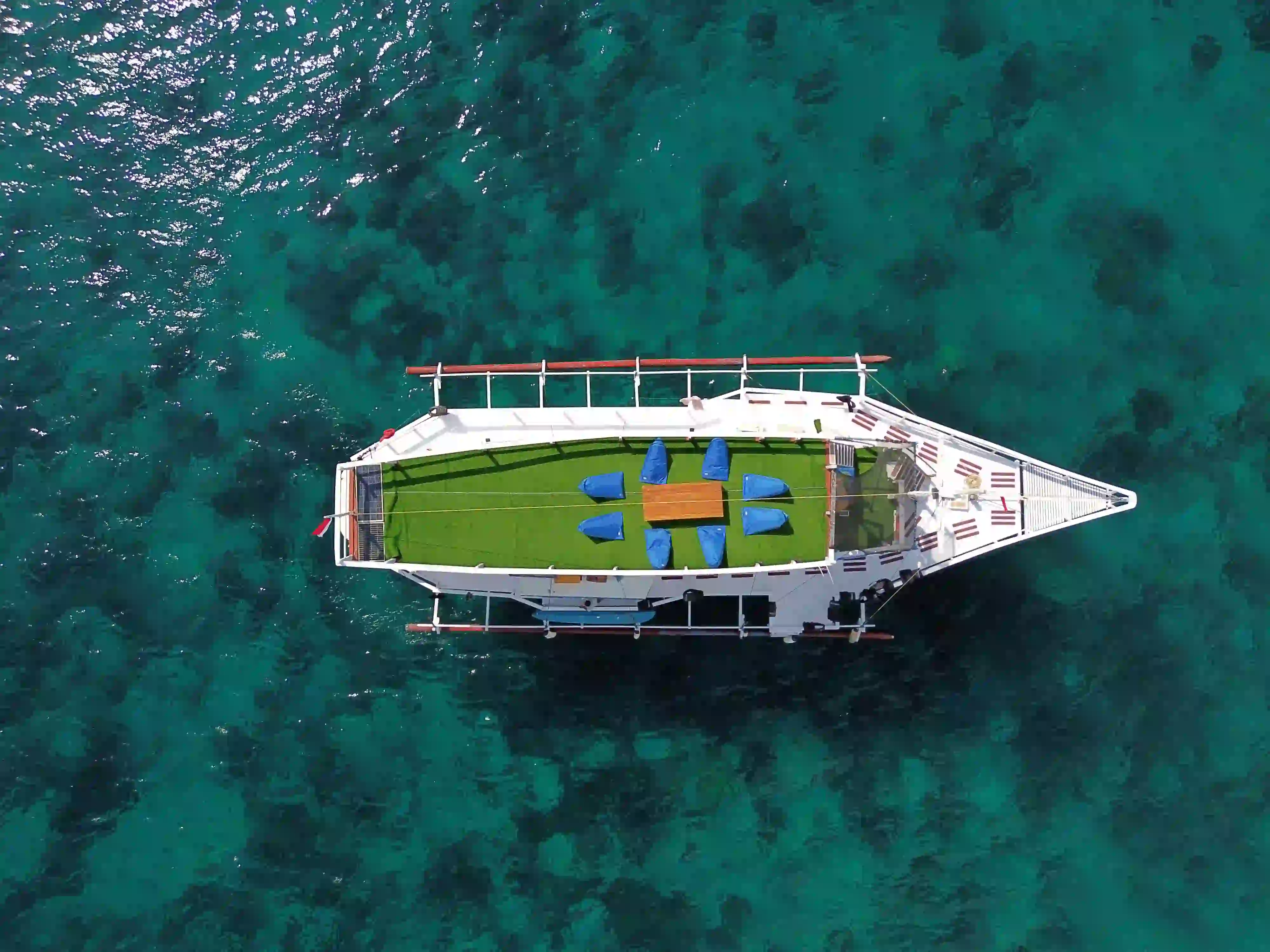
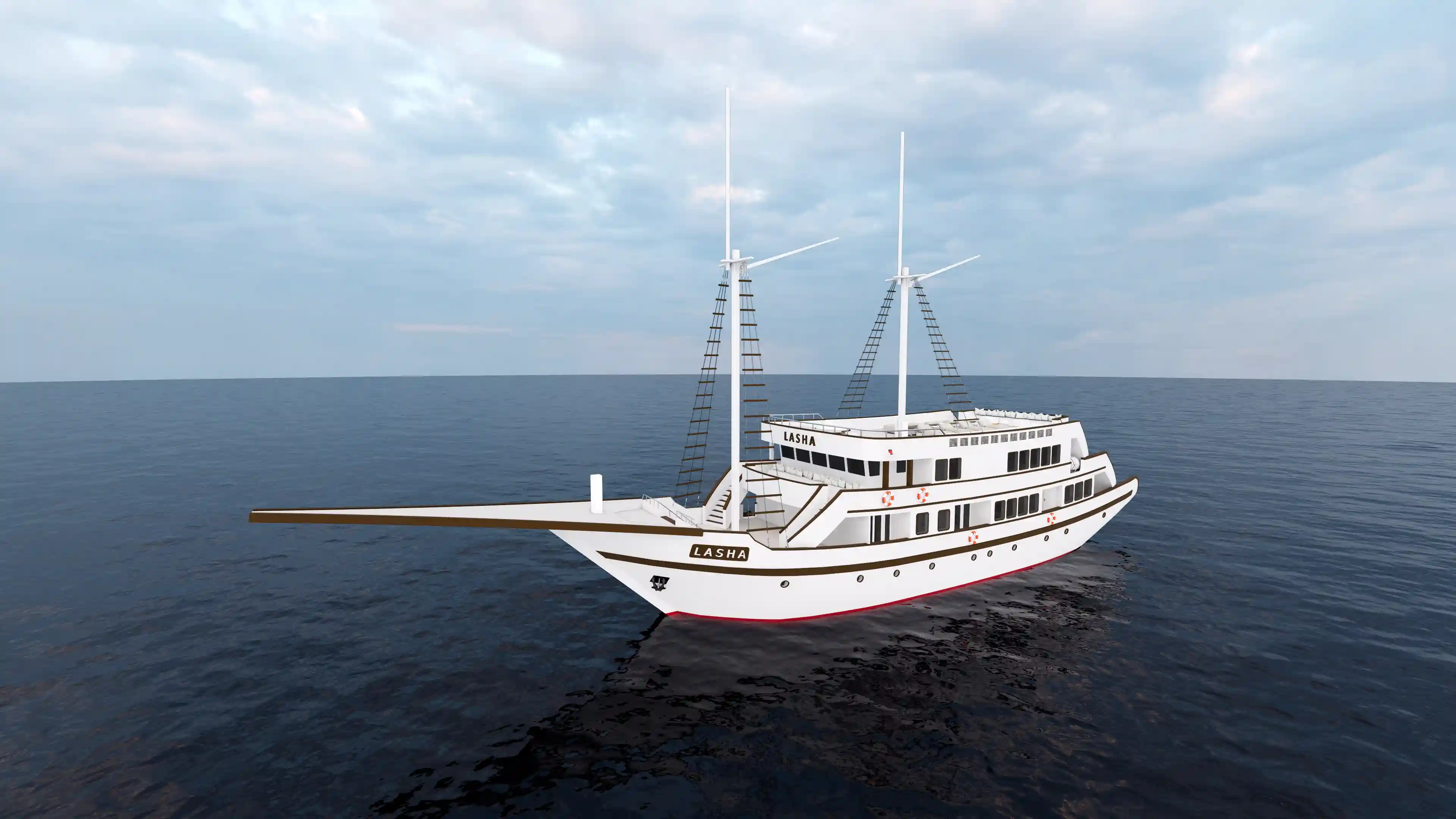
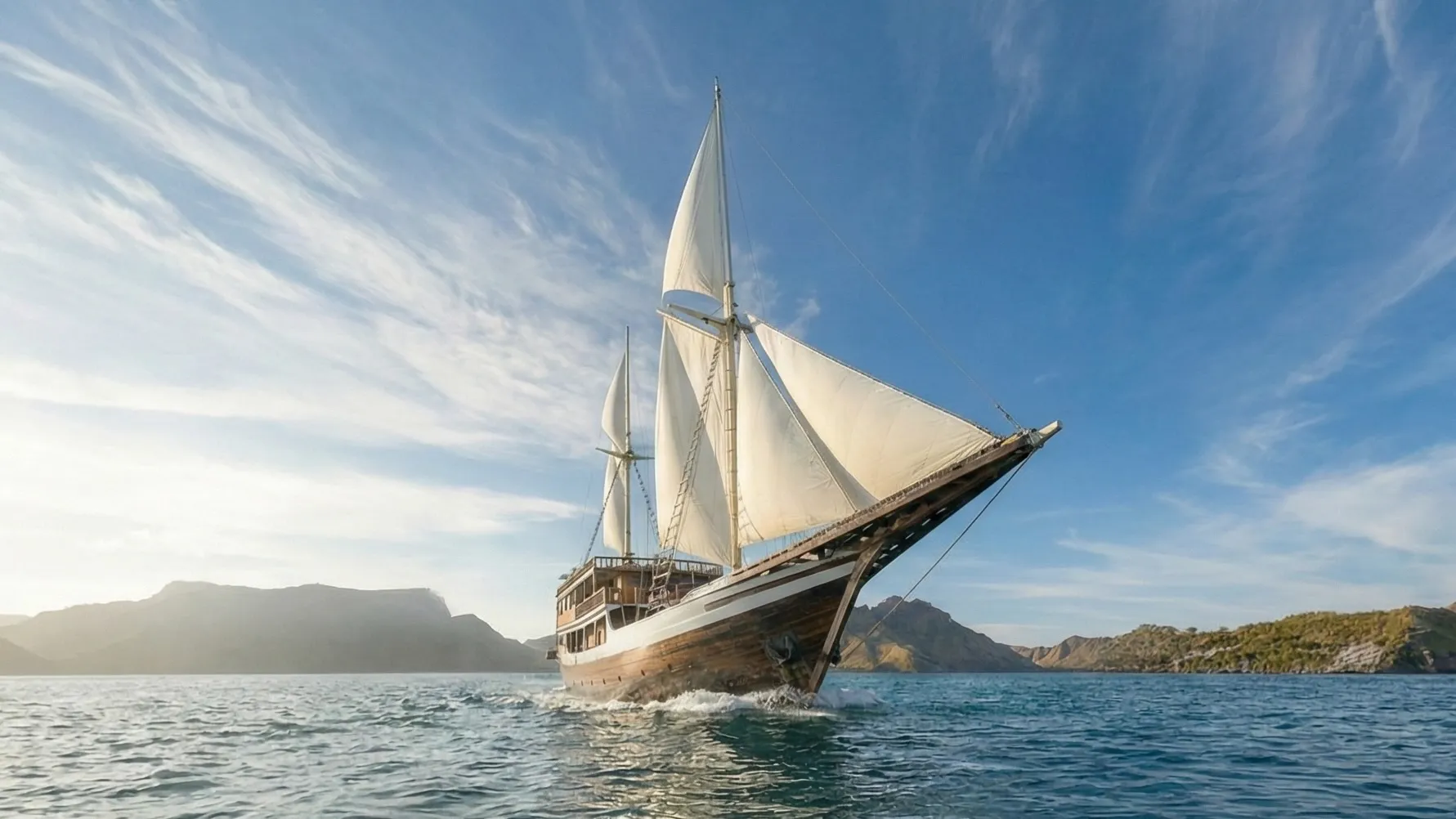
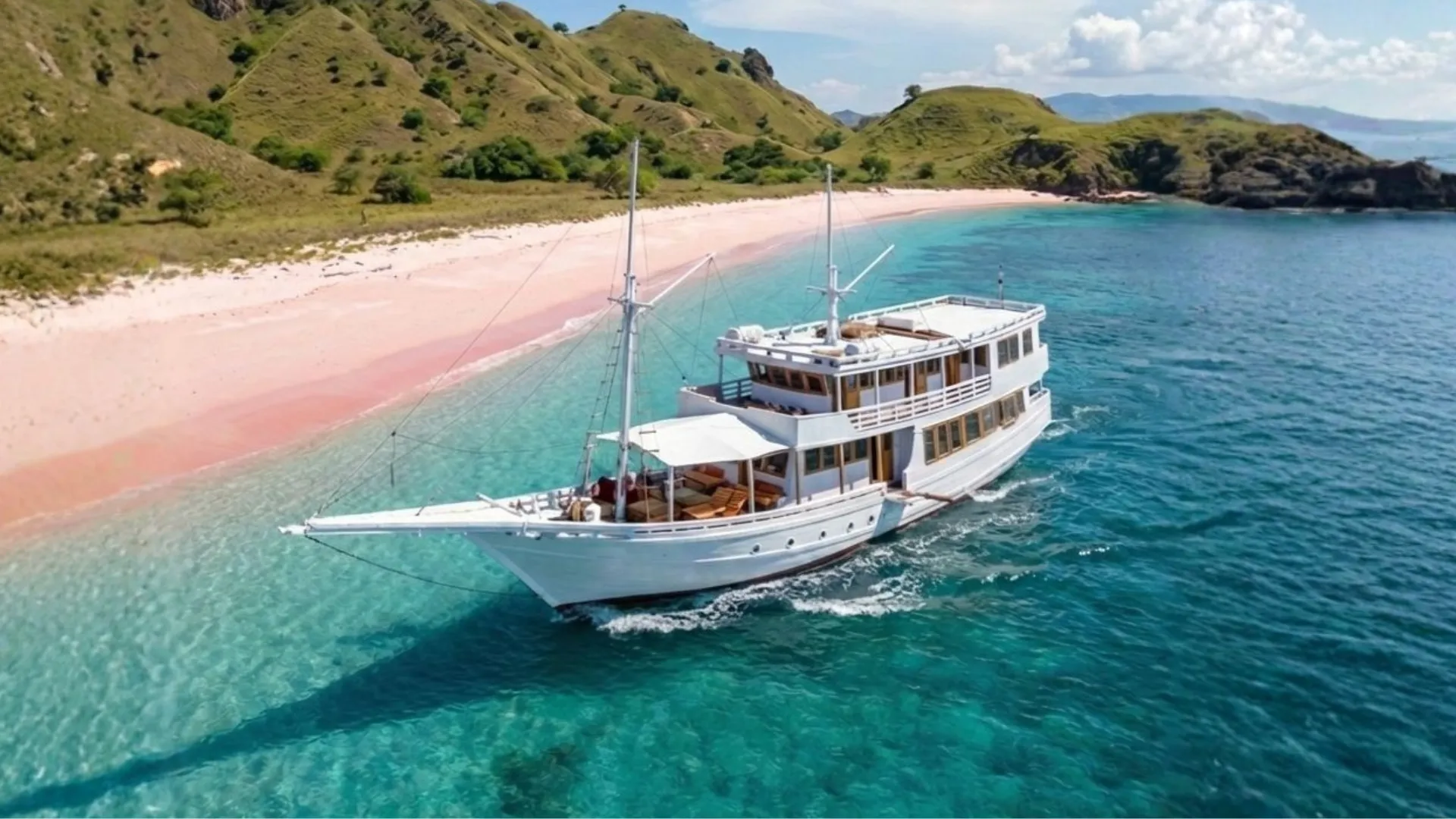
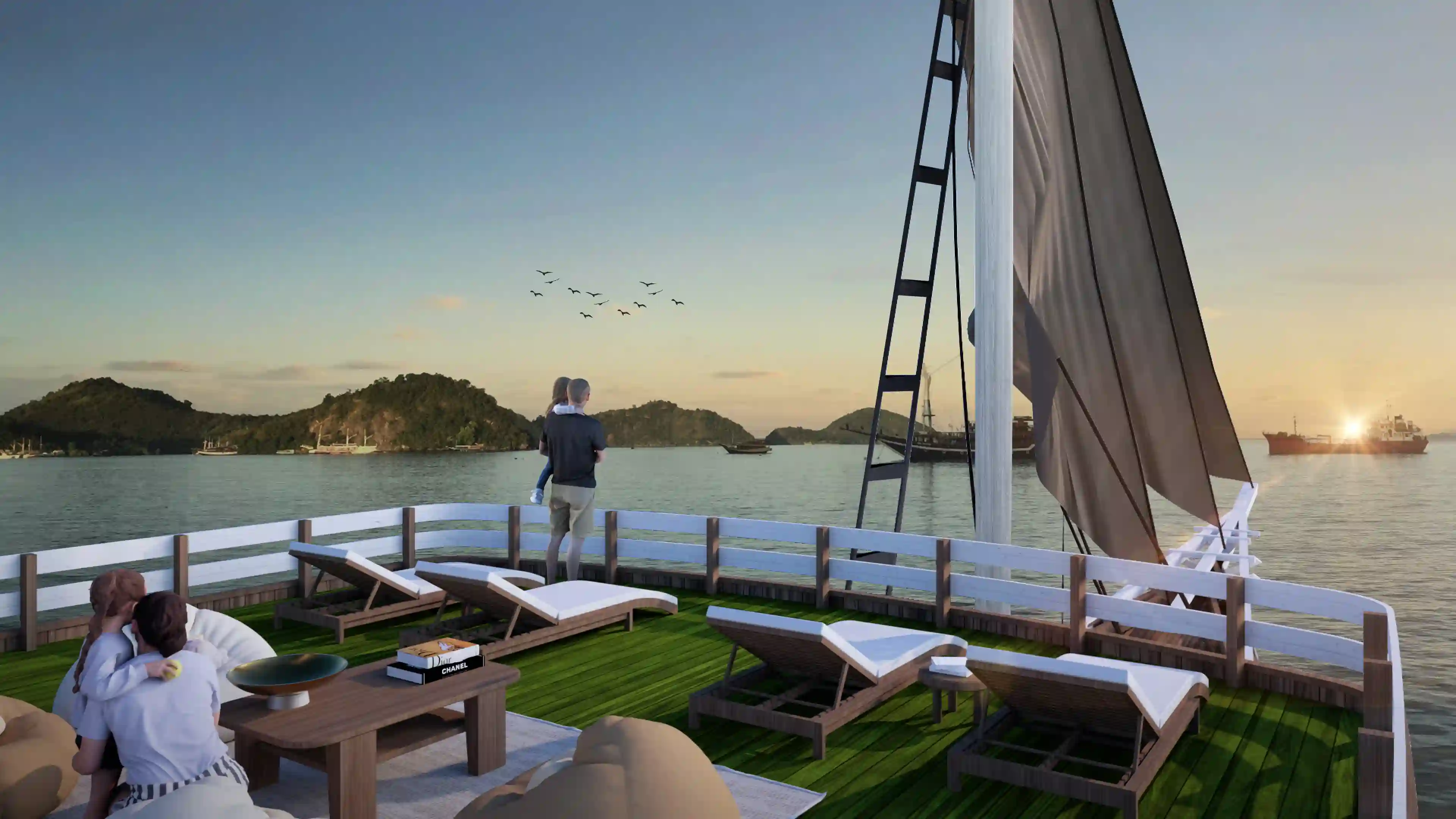
Traditional wooden phinisi vessels are the ideal platform for exploring Raja Ampat’s remote anchorages. Unlike modern superyachts requiring deep water and modern harbors, phinisi boats feature shallow drafts (typically 1.5-2.5 meters) that access pristine sites unreachable by larger vessels. The classic sailing design allows you to anchor in protected bays, explore hidden lagoons, and reach dive sites within minutes rather than hours.
Our Raja Ampat fleet includes vessels specifically designed for extended tropical voyages:
Key Raja Ampat Destinations
Wayag Islands: The iconic limestone karsts rising 300+ meters above turquoise waters. Hike to viewpoints for panoramic vistas, then snorkel the lagoons below where manta rays cruise.
Piaynemo Viewpoint: A 45-minute climb rewards you with one of Indonesia’s most photographed vistas—dramatic karst formations, emerald waters, and your phinisi anchored below.
Manta Ridge: A world-class manta ray cleaning station where 15-20 mantas gather during the right season. Dives here offer 70%+ encounter probability from October-April.
Boo Windows: Spectacular underwater arches creating cathedral-like dive sites. Massive groupers, trevally schools, and pristine coral gardens at 15-35 meters depth.
Misool Caves & Lakes: Freshwater limestone lakes accessible only by phinisi. Swim in crystal-clear waters surrounded by jungle, then dive the surrounding reefs.
Four Kings Dive Site: The legendary site where four major underwater ridges converge, creating nutrient-rich currents that attract pelagic life—sharks, manta rays, and schooling fish.
Fam Islands: Remote islands with pristine coral gardens, traditional Papuan villages, and uncrowded dive sites where you might encounter 5+ shark species in a single dive.
Combining Komodo + Raja Ampat: The Ultimate 12-14 Day Expedition
Why choose between two world-class destinations? Our combined itineraries allow you to explore both Komodo National Park (3 days) and Raja Ampat (9-11 days) in a single expedition.
12-Day Itinerary:
14-Day Deep Dive: Add time in Misool region, extend Raja Ampat exploration to 11 days, include more remote sites like Penemu Island and Dampier Strait.
Best Season for Raja Ampat
The dry season from October to April offers the calmest seas and clearest visibility. December-February brings the most consistent manta ray sightings due to optimal current patterns. March-April offers equally good conditions with fewer boats. November-September experiences rougher seas and increased rainfall but lower prices.
What’s Included in Raja Ampat Phinisi Charters
Raja Ampat Entry Requirements & Conservation Fees
A PNBP (Park Entry Fee) of approximately 500,000 IDR (~USD 32) per person is required for Raja Ampat National Park. This conservation fee directly funds marine protection and community programs. A separate entry permit for certain dive sites may apply depending on your specific itinerary.
Liveaboard vs Private Charter in Raja Ampat
Liveaboard Expeditions: Join 8-14 other divers, share costs (typically USD 350-650/person/day), flexible social experience, scheduled departure dates. Best for: budget-conscious travelers, those seeking dive community.
Private Charters: Exclusive vessel for your group, flexible itinerary customization, premium cabins, personal crew attention (USD 5,500-8,000/night for phinisi). Best for: families, couples, corporate retreats, special celebrations.
Pricing
Raja Ampat phinisi charters begin at USD 5,500 per night for private charters (6-8 guest minimum). This includes all meals, diving, snorkeling, guides, and transfers. Premium vessels command USD 6,500-8,000/night. Multi-week expeditions (12-14 days) typically receive 10-15% discounts.
Frequently Asked Questions
1. Do I need to be a certified diver for Raja Ampat?
Advanced certification is recommended for most sites (depths 25-40m). Open Water certified divers can participate with reduced depth limitations. Non-divers can enjoy world-class snorkeling on the same expeditions.
2. What’s the difference between Raja Ampat and Komodo diving?
Komodo features dramatic underwater topography with strong currents and large pelagics. Raja Ampat emphasizes coral diversity and macro life. Both offer exceptional experiences; it depends on your diving interests.
3. Can I bring my own dive equipment?
Yes, we encourage certified divers to bring personal equipment. All vessels carry rental equipment if needed.
4. Is Raja Ampat suitable for non-divers?
Absolutely. World-class snorkeling sites, hiking, kayaking, and cultural village visits make Raja Ampat perfect for mixed groups.
5. How many people can fit on a phinisi?
Our Raja Ampat vessels accommodate 14-20 guests, creating intimate expeditions. Maximum capacity is intentionally limited to preserve reef ecosystems.
6. What’s the weather like in Raja Ampat?
October-April: Dry season, calm seas, 26-28°C, occasional brief showers. May-September: Rougher seas, stronger winds, 24-26°C.
7. Do you arrange domestic flights to Sorong?
Yes, we handle all flight arrangements from Jakarta to Sorong (5.5-hour flight). This is included in private charter packages or USD 600-800 for liveaboards.
8. Are there medical facilities in Raja Ampat?
Basic medical care is available in Sorong (main town). For serious emergencies, evacuation to Jakarta can be arranged. Travel insurance with evacuation coverage is mandatory.
9. Can I extend my trip beyond the standard 10-14 days?
Yes, multi-week expeditions combining Raja Ampat with other Indonesian regions are available upon request.
10. What happens if weather is too rough to sail?
Our itineraries build in contingency days. We prioritize safety and may alter anchorages or explore alternative sites based on conditions.
Raja Ampat translates to “Four Kings,” referring to the four largest islands: Misool, Salawati, Batanta, and Waigeo. This Indonesian archipelago in the easternmost corner of the country contains some of Earth’s most pristine marine ecosystems. The region boasts extraordinary biodiversity—over 1,500 species of fish, 700+ species of coral, and unique species found nowhere else on Earth. UNESCO recognizes Raja Ampat as a World Heritage Site and part of the “Coral Triangle,” the global center of marine biodiversity. Unlike heavily touristed reef systems, Raja Ampat remains largely untouched, offering pristine diving and snorkeling in waters where you’ll see thriving ecosystems in their natural state.
Wayag Lagoon is Raja Ampat’s most photographed destination—iconic limestone cliffs rising 300 meters from emerald lagoons ringed by white sand beaches. The lagoon itself features calm, turquoise water perfect for kayaking and snorkeling among limestone towers. Above water, the landscape resembles Halong Bay (Vietnam) but with superior marine life and fewer crowds. Most charters anchor overnight near Wayag, allowing sunset exploration and early-morning kayaking with no other boats present. The combination of terrestrial beauty and extraordinary marine biodiversity makes Wayag essential to any Raja Ampat itinerary.
Misool represents Raja Ampat’s southern treasures—a largely uninhabited island archipelago with pristine reef systems and white sand beaches accessible only by boat. Misool’s marine gardens contain some of the healthiest coral formations in the world, with minimal human disturbance. The underwater landscape includes vertical walls, coral gardens, and open-water encounters with pelagics. Above water, Misool’s protected bays and pristine beaches provide idyllic anchorages. Few other vessels visit Misool due to distance from Sorong, making it an exclusive experience. For adventurous divers seeking truly remote diving, Misool is unmatched.
These less-visited islands offer excellent diving and snorkeling with dramatic underwater topography. Salawati features wall dives descending to 40+ meters with large pelagic encounters. Batanta offers protected lagoons and calm-water diving perfect for intermediate divers. The villages on these islands remain traditionally oriented, offering genuine cultural encounters. Charters often include stops at local villages where you can purchase authentic crafts and meet fishermen living sustainably. The islands’ lack of tourism infrastructure keeps them authentic and unspoiled.
Sorong (on the mainland) serves as the primary entry point to Raja Ampat. Direct flights from Jakarta and Makassar arrive at Sorong Airport. The town features basic infrastructure, local markets, and simple accommodations. Most charters depart from Sorong’s port in early morning, with crews managing all logistics. Sorong itself offers limited tourist attractions but provides authentic Indonesian town experience. Many travelers spend one night pre-charter to acclimate to the time zone and prepare dive equipment. The 4-6 hour boat journey from Sorong to the main diving islands becomes part of the experience, allowing crew briefings and traveler adjustment.
Widely considered Indonesia’s best dive site and potentially Southeast Asia’s finest. Blue Magic features a steep wall descending to 40+ meters surrounded by open water, attracting massive schools of jacks, tuna, snappers, and regular manta ray encounters. Morning dives often yield 20-40 mantas cruising through the site. The current is strong (requiring advanced diving skills), but rewards adventurous divers with the most action-packed dives possible. The site’s name derives from the “magic” of consistent wildlife encounters. Boats typically dive Blue Magic 2-3 times during a week-long charter, timing dives with tide and current conditions for optimal safety and encounters.
Another world-renowned manta ray aggregation site featuring a sandy plateau at 12-16 meters depth with consistent manta visits, particularly during plankton blooms (June-October). Divers position themselves on the sand while mantas circle above—an exceptional perspective. The site works for intermediate divers due to moderate depth and lower current. Underwater photographers consider Manta Sandy essential—the combination of blue water and majestic mantas with divers in frame creates stunning images. Best visited during slack tide for optimal positioning and photography. Most charters include multiple Manta Sandy dives.
A submerged wooden jetty with pilings covered in soft corals, surrounded by thriving fish populations. Rather than large pelagics, Arborek excels in macro diversity—tiny seahorses, pipefish, nudibranchs, and colorful reef fish swarm the jetty structure. Visibility is exceptional (often 40+ meters) with minimal current. The jetty hangs in 3-12 meters of water, perfect for extended bottom time and photography. Many divers consider this their favorite dive—intimate, colorful, and teeming with life. Arborek breaks up a charter with relaxing diving focused on biodiversity rather than adrenaline. Adjacent Arborek Island village offers cultural interaction and beach time.
Named by scientists for having the highest fish biodiversity ever recorded in a single dive—over 283 species counted in one dive. Cape Kri features a sloping reef with varied topography (walls, valleys, sandy areas) attracting fish species across all ecological niches. Rather than targeting specific large animals, Cape Kri impresses with sheer density and variety of marine life. The site works for all skill levels depending on depth zone. Morning dives in bright sunlight showcase the incredible colors. Divers often describe Cape Kri as “swimming through an aquarium”—the abundance surpasses typical expectations. Most week-long charters include at least two Cape Kri dives.
Similar to Arborek but with slightly different fish composition and coral formations. Equally excellent for macro photography and colorful reef encounters. The jetty structure attracts massive schools of fusiliers and jacks during morning dives. Many charters include both Arborek and Sawandarek to showcase variation in similar site types.
Raja Ampat and Komodo represent Indonesia’s two pinnacle diving destinations. While geographically separated (600+ km), combining them into a 10-14 day expedition creates the ultimate Indonesian diving adventure. Most travelers have limited time for Indonesia, so a combined itinerary maximizes experiences rather than choosing between excellent destinations. The logistics work well: fly to Komodo via Bali/Jakarta, complete 5-7 day Komodo charter, return to Bali for 2 days, fly to Raja Ampat for 5-7 day charter, returning home with comprehensive Indonesian diving experience.
Komodo and Raja Ampat feature different marine environments. Komodo emphasizes strong currents, large pelagics, and challenging diving with mantas, sharks, and big fish schools. Raja Ampat features calmer conditions, exceptional coral health, higher fish diversity, and more macro opportunities. Diving both destinations within one trip provides varied experiences preventing “coral fatigue.” Many professional divers consider this combination the ultimate diving experience—it hits all adventure, wildlife, and aesthetic elements possible in Indonesia.
Komodo represents central Indonesia with Flores culture. Raja Ampat represents far-eastern Indonesia (Papua) with Melanesian culture. Village visits in each region offer different authentic cultural encounters. Combined charters allow experiencing Indonesia’s remarkable cultural diversity within single expedition.
Day 1: Fly Bali to Labuan Bajo, transfer to boat, settle in, evening briefing and equipment check.
Day 2: First dive day—Banta area or north Komodo sites, two dives, afternoon snorkeling, dinner on deck.
Day 3: Manta Point morning dives, Cannibal Rock afternoon dive, evening at Karang Makassar.
Day 4: Gili Laba (Horse Shoal) dives—strong current, big fish action, afternoon relaxation and snorkeling.
Day 5: Northern sites—Banta, Gili Mimpis, or Seraya—focusing on macro and coral gardens.
Day 6: Final Komodo day—flexible based on conditions—often repeating favorite sites or exploring new areas, evening return to Labuan Bajo port.
Day 7: Early morning flight Labuan Bajo to Bali, full day rest/equipment maintenance, evening accommodation in Ubud or coastal area.
Day 8: Optional: Bali beach day, visit temples, cultural experiences, or explore local restaurants. Evening flight to Sorong.
Day 9: Sorong arrival, boat boarding afternoon, evening at nearby protected bay, night dive optional.
Day 10: Early departure for Wayag area—first dives Blue Magic or Manta Sandy, afternoon kayaking Wayag Lagoon, sunset exploration.
Day 11: Cape Kri (early morning), Arborek Jetty (afternoon)—diversity showcasing, evening village interaction.
Day 12: Misool expedition—either two dives in Misool marine protected area or combination Misool/Salawati depending on weather, snorkeling at pristine beach.
Day 13: Return journey toward Sorong—dives at remaining priority sites (Sawandarek, Banta, or repeats of favorite sites based on conditions).
Day 14: Early morning arrival Sorong, breakfast, flight Sorong to Makassar/Jakarta to Bali/connecting flights home.
Manta Rays: Regular sightings at Blue Magic and Manta Sandy—massive mantas (5+ meter wingspan) gliding through open water. Probability: 70-80% over week-long charter.
Whale Sharks: Less common than mantas but regular encounters at open-water sites June-October. These gentle giants reach 15+ meters. Probability: 30-50%.
Pygmy Seahorses: Tiny (1cm) camouflaged seahorses living on soft corals at Arborek and similar sites. Incredibly difficult to spot but present at virtually all jetty sites. Probability: 90% once located by experienced guide.
Walking Sharks (Epaulet sharks): Rare endemic species literally walking across the seafloor using modified pectoral fins like legs. Most sightings occur at Arborek and Cape Kri. Probability: 20-30%.
Sharks & Rays: Wobbegongs (carpet sharks), reef sharks, devil rays, and stingrays encountered throughout. Probability: 80%+.
Tuna & Jacks: Massive schools of jacks and tuna at current-swept sites like Blue Magic and Cape Kri. Probability: 95%.
Coral Diversity: Acropora, branching corals, plate corals, mushroom corals, and soft corals in exceptional health and density. Probability: 100%.
All visitors require a valid passport with 6+ months validity. Indonesians require visa (30 days on arrival for most countries, approximately USD 35). Marine park permits are included in charter pricing—your boat captain manages all official requirements. Divers need proof of certification (bring card), and we verify current ratings before assigning dive depths. Wildlife protection laws strictly prohibit collecting shells, coral, or marine life—enforcement is serious.
Peak Season (June-October): Dry season with calm seas, excellent visibility (40-50 meters), regular manta encounters, and stable weather. July-September busiest tourist traffic (still less crowded than other destinations). Water temperature 27-29°C, requiring thin wetsuits. This is optimal time for all diving and Wayag visits.
Shoulder Season (May, November): Reasonable conditions, still good diving, fewer boats, cheaper rates. Weather becomes more unpredictable toward November.
Wet Season (December-April): Frequent rain and rough seas limit diving opportunities and Wayag kayaking. Visibility drops to 20-30 meters. Most charters close or limit capacity December-January. Not recommended for Raja Ampat unless accepting schedule unpredictability. Water warms to 29-31°C.
International Route: Jakarta (or other international hub) to Bali, then Bali to Sorong. Flight Bali-Sorong approximately 3 hours. Several daily options via Garuda Indonesia, Lion Air, or Batik Air.
Regional Route: Makassar to Sorong (2 hours) from eastern Indonesia regions.
Airport Logistics: Sorong’s airport (SRQ) has basic facilities—ATM, simple cafes, limited accommodation. Most travelers arrive morning and board boats that afternoon. Pre-arrange airport pickup through charter operator.
Minimum Open Water certification required for diving. Advanced certification gives access to deeper dive sites (40+ meter walls). Rescue/DM level divers assist guides with large groups. Non-divers welcome for snorkeling—our snorkel program is equally exceptional. Bring your certification card—we cannot issue provisional certifications, and no dives occur without valid documentation.
Classic Indonesian wooden sailing boats with modern safety features. Offer authentic sea experience with diesel auxiliary engines for calm conditions or reaching dive sites efficiently. Capacity 6-20 guests. These vessels excel in Raja Ampat’s protected waters and provide comfortable cabins with ensuite facilities. Most charters use traditional phinisi for the cultural ambiance and elegant design. Daily rates: USD 5,500-7,500 including crew, meals, and diving operations.
Modern powered vessels offering faster transit and more stable ride in rough conditions. Capacity 8-16 guests. Typically feature air-conditioned cabins, larger common areas, and reliable engine systems. Ideal for travelers preferring modern comforts or those with limited mobility. Daily rates: USD 6,000-8,000.
Specialized diving vessels optimizing for maximum dive time and technical diving support. Capacity 8-20 divers. Features onboard compressor for air supply, technical diving gases available, underwater photography support, and minimal surface time between dives. Daily rates: USD 5,000-7,000 (often all-inclusive with dives, equipment, and meals).
Budget Option (USD 5,500-6,000/night): Traditional wooden phinisi, capacity 6-10 divers, shared double cabins, basic but comfortable facilities, 2-3 dives daily, simple but delicious meals, essential diving equipment provided.
Mid-Range (USD 6,500-7,500/night): Well-maintained phinisi or motor yacht, capacity 10-14 divers, private cabins with ensuite, comfortable common areas, 3-4 dives daily, quality meals with varied menus, premium diving support and safety equipment, photography services available.
Premium (USD 7,500-9,000+/night): Luxury phinisi or modern yacht, capacity 8-12 divers, spacious cabins with premium fittings, excellent cuisine, premium dive team with guides, complete photographic support, daily shore excursions, specialized interests accommodated (macro photography, technical diving, etc.).
Accommodation in cabin, all meals and beverages, diving operations (2-4 dives daily), diving guide services, snorkeling with equipment, kayaking (Wayag), village visits, and crew services. Most charters include airport pickup in Sorong.
Flights to Sorong, travel insurance (essential), optional activities (spa massage, helicopter tours), additional photography services beyond standard crew photography, personal diving equipment rental, nitrox (if used beyond standard air), and gratuities for crew.
Ready to explore the ocean’s most biodiverse region? See our complete boat fleet options and compare vessels. Check Komodo diving charters to combine your trip. Learn about comprehensive pricing details across all destinations. Want expertise in advance? Our team has 15+ years Raja Ampat experience.
Both are exceptional—Raja Ampat excels in biodiversity, coral health, and relaxed diving conditions. Komodo emphasizes strong currents, large pelagics, and adrenaline-inducing encounters. Raja Ampat is “beautiful and full of life,” Komodo is “dramatic and action-packed.” Most experienced divers prefer experiencing both. Raja Ampat suits intermediate divers; Komodo requires advanced skills. Choose based on your experience level and what resonates—wildlife (Komodo) vs. biodiversity (Raja Ampat).
Typically 3-4 dives daily—morning dive (early), mid-morning dive (second), afternoon dive (post-lunch), optional evening dive (time-permitting). Total 20-28 dives over a 7-day charter. Most recreational divers do 2-3 dives daily with rest days every other day. We accommodate preferences—some divers prefer 2 dives daily with more surface time; others want maximum diving.
Absolutely! Snorkeling in Raja Ampat rivals diving. Snorkelers see 80% of marine life without needing certification, and several sites (Wayag, pristine beaches) are snorkel-only. Non-diving partners enjoy kayaking, island exploration, and relaxation while divers dive. Many charters mix divers and snorkelers seamlessly with flexible daily schedules.
Peak season (June-October): 40-50 meters visibility—extraordinary clarity. Shoulder season: 30-40 meters. Wet season: 20-30 meters. Most dives provide 35+ meters visibility where you see fish from distance before approaching. Visibility rarely limits Raja Ampat diving even in poor seasons.
Strongly recommended. Remote location means evacuation to Sorong then Makassar for serious medical issues. Comprehensive travel and dive insurance (USD 30-50 for week) covers emergency evacuation and medical expenses. Many dive medical emergencies cost USD 2,000-5,000+ without insurance. Every diver should carry insurance regardless of experience.
The 4-6 hour Sorong-to-Raja Ampat journey can be rough in certain sea states. Preventative dramamine/scopolamine patches before departure work well (prescription available from dive physicians). Many boats feature stabilizers reducing motion. The open-ocean journey typically becomes a non-issue once you acclimate. Most seasickness occurs within first 2 hours; people usually adapt for subsequent days.
Absolutely! Bring personal equipment if you prefer. All boats provide gear rental for items you lack. Rental computers/BCDs/regulators are maintained to safety standards but new divers appreciate bringing familiar equipment. High-end photography equipment or technical diving gear should be brought personally—rental options limited for specialized equipment.
Overnight anchorages sometimes feature dolphins, flying fish, and bioluminescent organisms (night plankton). Kayaking Wayag offers tropical birds, flying lizards, and possibly monitor lizards on beaches. Beach walks reveal hermit crabs, various seashells, and sea turtles nesting (rare but possible). Above-water wildlife encounters enrich the experience—keep eyes open at all times.