Castle Rock is widely regarded as the single most exhilarating dive site in Komodo National Park and one of the finest current diving experiences in the world. This submerged seamount rises from the deep ocean floor in the northern channel of the park, creating a magnet for marine life that transforms every dive into an underwater spectacle of sharks, giant trevally, schooling fish, and pelagic encounters that leave even experienced divers breathless with excitement.
Located near Crystal Rock in the channel between Gili Lawa Laut and the open Flores Sea, Castle Rock is distinguished from other Komodo dive sites by the sheer volume and variety of large marine life that congregates around the seamount. The combination of strong nutrient-rich currents, complex underwater topography, and deep surrounding water creates conditions that support an underwater ecosystem of extraordinary abundance, making Castle Rock the undisputed crown jewel of Komodo diving.
Castle Rock is a submerged plateau that rises from depths exceeding 50 meters to approximately 7 meters below the surface at its shallowest point. The seamount is more extensive than nearby Crystal Rock, with a broad summit area that provides multiple diving routes and exploration options during a single dive. The edges of the plateau drop away in dramatic walls and steep slopes that plunge into the blue water, creating the dramatic backdrop against which the site’s famous marine life parades.
The summit of Castle Rock features a garden of hard and soft corals interspersed with large barrel sponges and gorgonian seafans. Coral health at the site is excellent, with the strong currents preventing sediment accumulation and delivering a constant supply of nutrients that support vigorous coral growth. The northern edge of the plateau faces the incoming oceanic current and tends to support the densest concentration of filter-feeding organisms, while the southern and western edges provide more sheltered conditions where divers can observe reef life at a more relaxed pace.
Several large rock formations and coral bommies on the summit create natural channels and swim-throughs that add structural complexity and interest to the dive. These formations serve as gathering points for reef fish and provide shelter for larger predators that rest in the lee of the current between hunting forays.
Castle Rock’s reputation rests on its extraordinary concentration of large marine life. The site functions as a feeding station where ocean currents deliver plankton and small fish, attracting progressively larger predators up the food chain until the water around the seamount is teeming with life at every level of the marine food web.
Multiple shark species are virtually guaranteed at Castle Rock. Whitetip reef sharks rest on ledges and patrol the reef edges, while grey reef sharks cruise the deeper perimeter of the seamount in groups of two to ten individuals. During cooler water periods, blacktip reef sharks and occasional bamboo sharks add to the elasmobranch diversity. The real prizes are the less frequent but spectacular encounters with scalloped hammerhead sharks that occasionally pass through the deeper waters below the seamount, particularly during the early morning hours of the first dive.
Giant trevally are perhaps the most iconic residents of Castle Rock, with individual specimens exceeding one meter in length that patrol the current-swept edges of the seamount with aggressive confidence. Schools of bluefin trevally and bigeye trevally often number in the hundreds, creating swirling silver curtains of fish that encircle divers in a mesmerizing display. Napoleon wrasse of impressive size are regular companions, approaching divers with the curiosity that characterizes this charismatic species.
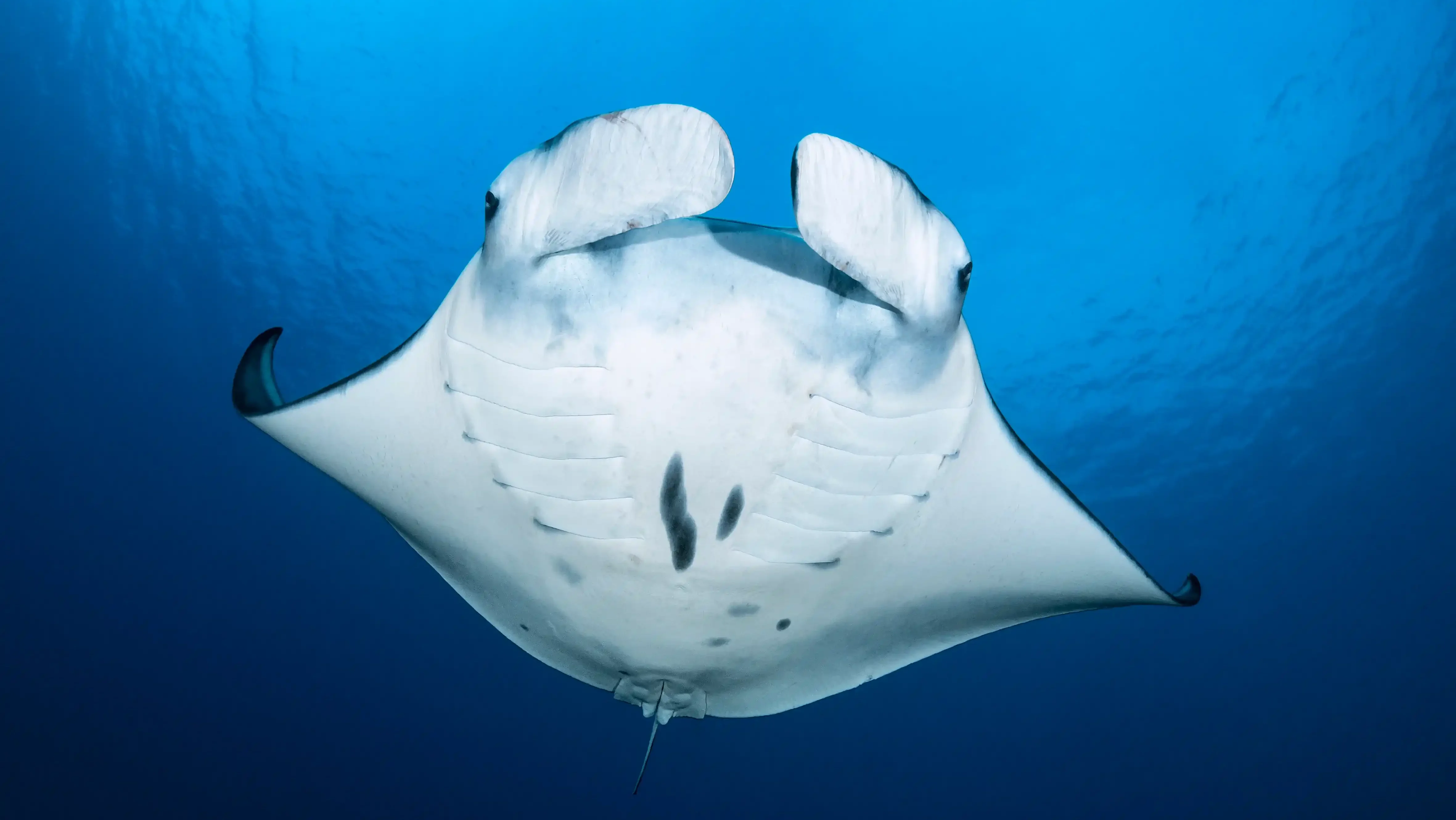
Eagle rays and manta rays pass through the Castle Rock area during their movements between feeding and cleaning stations, providing memorable encounters that add an element of unpredictability to every dive. During the manta season, encounters at Castle Rock can rival those at dedicated manta cleaning stations, with the added context of the rich reef environment creating a more dynamic and diverse underwater experience.
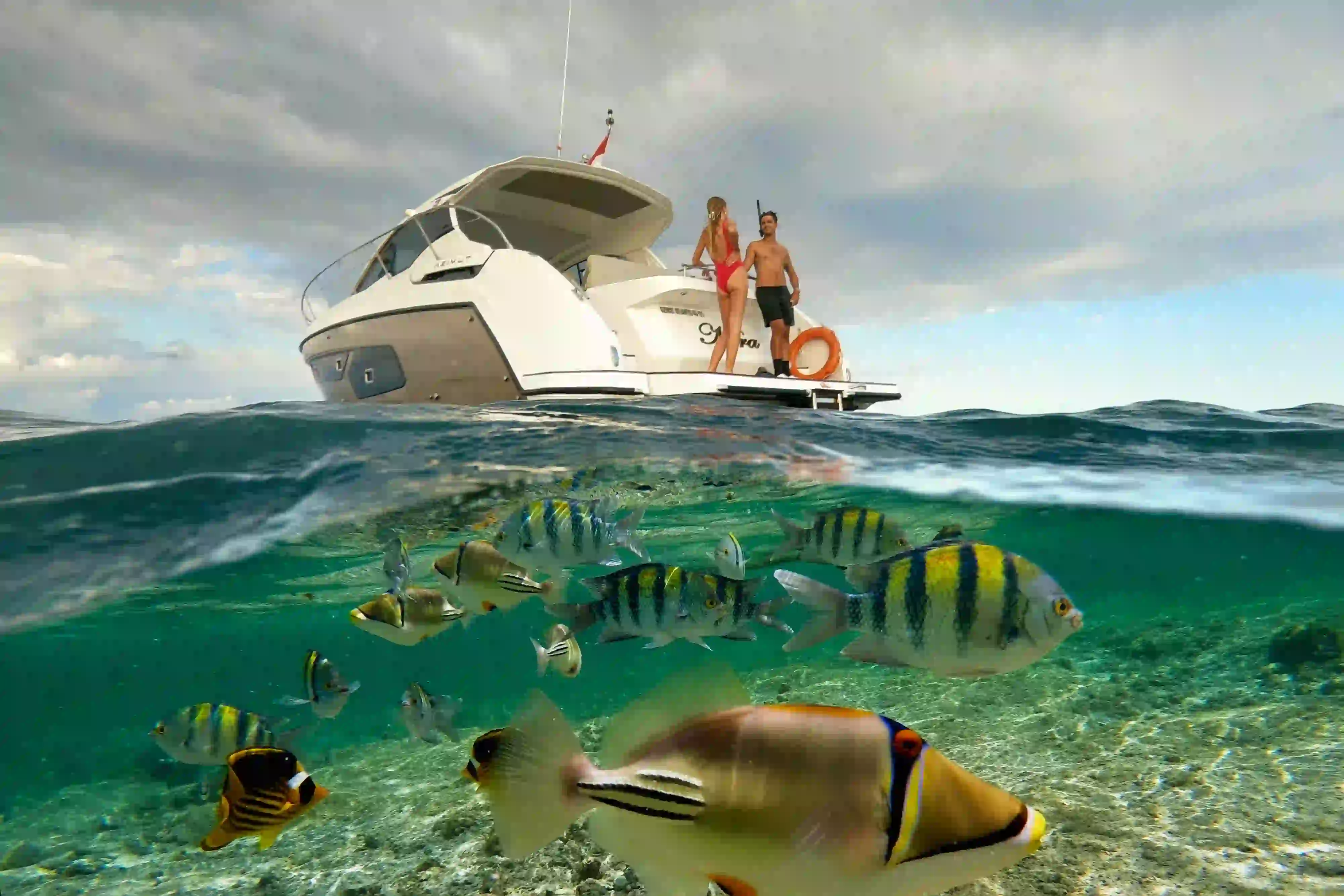
Beyond the headline-grabbing large species, Castle Rock supports an incredibly rich reef community. Dense schools of fusiliers, surgeonfish, and pyramid butterflyfish form massive aggregations above the reef that create dramatic visual effects, particularly when backlit by sunlight filtering through the water column. Moray eels of several species inhabit the reef crevices, including the impressive giant moray eel that can reach 2.5 meters in length. The macro life, while often overlooked amid the big animal spectacle, includes nudibranchs, flatworms, pipefish, and various shrimp species that reward careful observation of the reef’s smaller details.
Castle Rock is an advanced dive site that requires experience with current diving, good buoyancy control, and the ability to adapt to rapidly changing conditions. The currents at Castle Rock can be significantly stronger than at Crystal Rock, and the site’s exposure to open ocean means that conditions can change during a dive as tidal flow shifts direction or intensity.
Dive guides time entries to coincide with manageable current conditions, typically during the transition period around slack tide or during moderate flow when the current attracts marine life without making the dive dangerous. During strong current, divers use reef hooks to anchor themselves at strategic points on the seamount where they can observe the passing marine life parade without exhausting effort swimming against the flow.
Maximum diving depth at Castle Rock typically ranges from 20 to 30 meters, with safety stops performed in the sheltered areas near the summit at 5 to 7 meters. Water temperatures follow the same patterns as Crystal Rock, ranging from 24 to 28 degrees Celsius with occasional cooler thermoclines below 20 meters. Visibility averages 15 to 25 meters and can exceed 30 meters during optimal conditions.
Castle Rock delivers spectacular dives year-round, with seasonal variations in marine life encounters that give each visit a unique character. The months of March through May often produce the most diverse encounters, with warm water species and cooler water species overlapping. The peak dry season months of July and August bring cooler water upwellings that increase shark and trevally activity, while the transition months of October and November frequently offer the best visibility combined with active marine life.
Morning dives at Castle Rock, starting between 7:00 AM and 8:00 AM, typically produce the best large animal encounters, as many species are most active during the early hours. Afternoon dives can offer a different perspective, with different current patterns and lighting conditions revealing different aspects of the site’s marine community.
Experience the most thrilling dive site in Komodo National Park on a dedicated dive safari charter. Castle Rock delivers the kind of underwater spectacle that makes Komodo a world-class diving destination. Contact Komodo Boat Charter to plan your ultimate diving adventure.
Castle Rock is an advanced dive site best suited for certified divers with current diving experience. The strong tidal currents and depths require comfort with drift diving, good buoyancy control, and the ability to manage changing conditions. Advanced Open Water certification or equivalent is recommended as a minimum.
Whitetip reef sharks and grey reef sharks are virtually guaranteed on every dive. Blacktip reef sharks are common seasonal visitors, and scalloped hammerhead sharks are occasionally spotted in the deeper waters below the seamount, particularly during early morning dives and cooler water periods.
Reef hooks are recommended and widely used at Castle Rock. During stronger current conditions, they allow divers to secure themselves at strategic viewing points and enjoy the parade of marine life without exhausting energy swimming against the flow. Your dive safari charter crew will provide reef hooks and instruction on proper use.