Komodo National Park ranks among the world’s top 10 dive destinations—a status earned by the extraordinary combination of nutrient-rich currents, volcanic topography, and the confluence of Indian and Pacific Ocean water masses that creates conditions for exceptional marine biodiversity and dramatic underwater landscapes. A Komodo dive safari aboard a private liveaboard charter gives serious divers the time, flexibility, and expert guidance to explore the park’s 30+ dive sites systematically, diving each site at its optimal tide and current window.
Unlike resort-based diving that limits you to nearby sites and fixed boat schedules, a liveaboard dive safari positions you at the best sites before dawn, allows 3–4 dives per day, and enables your divemaster to adjust the itinerary in real time based on current conditions, marine life sightings, and your group’s experience level. This is how Komodo is meant to be dived.
A submerged pinnacle rising from 70+ metres to just below the surface. Strong currents create an explosion of marine life: giant trevally, Napoleon wrasse, white-tip reef sharks, schools of barracuda, and dense aggregations of anthias and fusiliers. The pinnacle’s walls are covered in soft corals of every colour. Batu Bolong is widely considered Komodo’s signature dive—challenging, exhilarating, and exceptional.
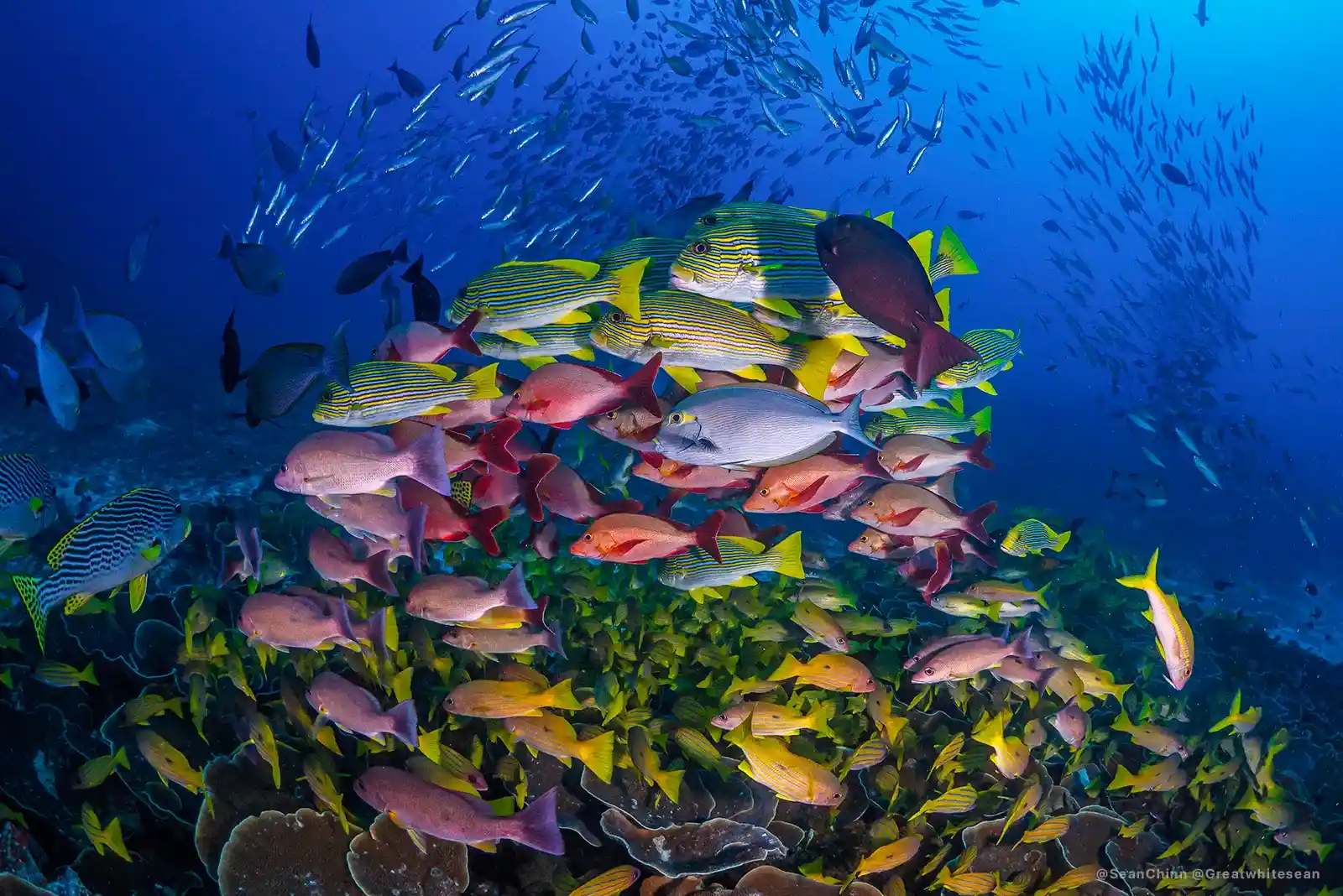
Named for its exceptional water clarity (25+ metres visibility on good days), Crystal Rock is a twin-pinnacle site that attracts huge schools of sweetlips, batfish, and surgeonfish. Macro enthusiasts find nudibranchs, frogfish, and ghost pipefish on the pinnacle walls. The site is best dived on slack tide for maximum visibility and minimum current stress.
A flat-topped reef at 10 metres surrounded by deep water. Strong currents attract large pelagic visitors—grey reef sharks, eagle rays, and occasionally hammerhead sharks patrol the reef edges. Schools of fusiliers number in the thousands, creating wall-of-fish experiences that rank among scuba diving’s most thrilling spectacles.
The world’s most reliable manta ray encounter site. Oceanic mantas visit this cleaning station year-round (peak March–November) with wingspans reaching 5 metres. Divers descend to the cleaning station at 12–15 metres and wait as mantas glide in for parasite removal—an intimate, peaceful encounter that experienced divers describe as their single greatest underwater experience.
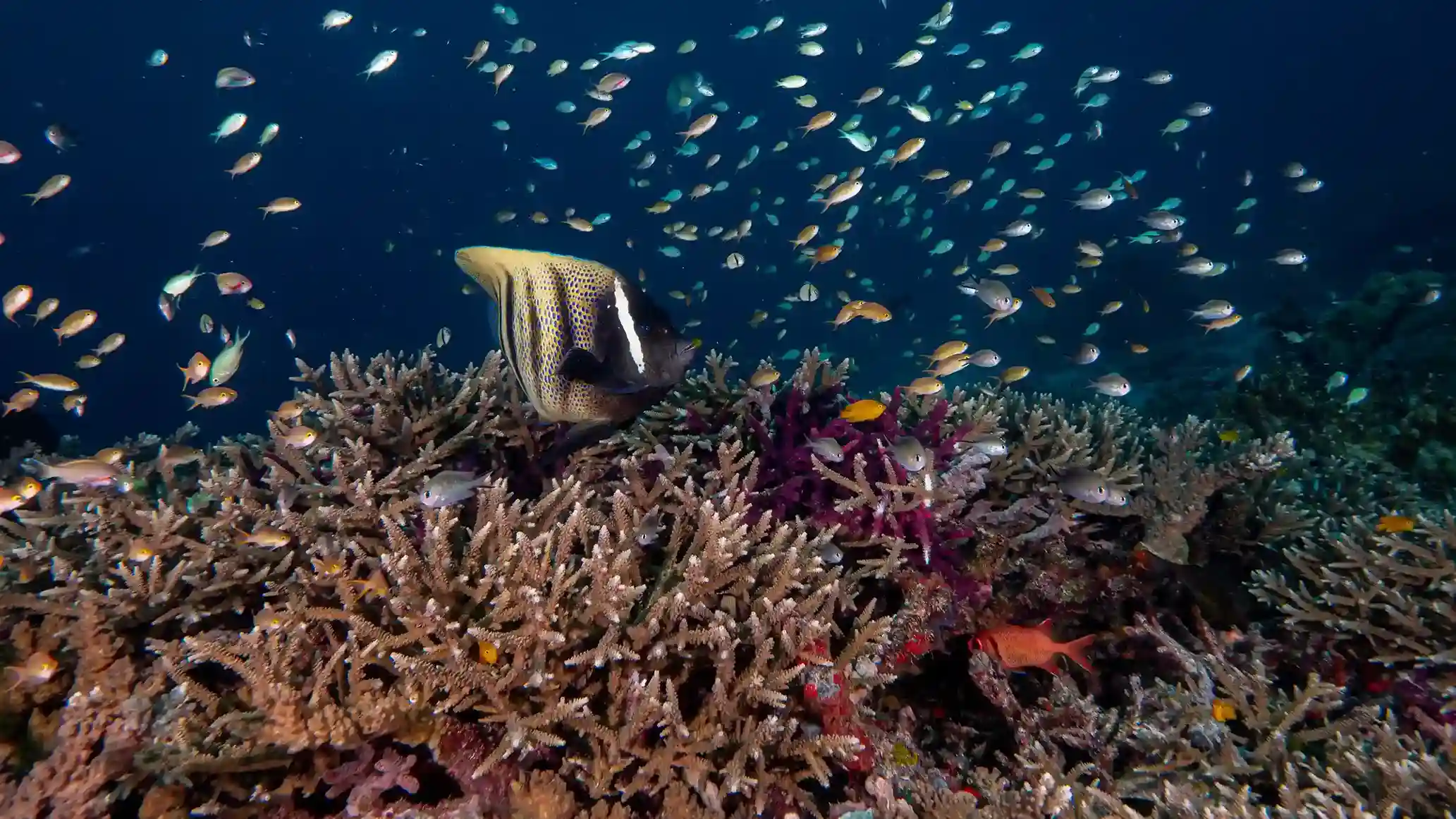
Tatawa Besar features a gently sloping reef wall covered in spectacular soft corals—purple, red, orange, and yellow formations that create one of Komodo’s most photogenic underwater landscapes. Tatawa Kecil is its smaller, wilder sibling with stronger currents and larger fish aggregations.
Named for their intense current-driven drift diving experiences. These advanced sites launch divers through underwater channels at exhilarating speed, passing walls of coral and schools of fish. Not for beginners, but for experienced divers seeking adrenaline alongside beauty, these sites deliver like few others in the world.
Covers the essential sites: Batu Bolong, Crystal Rock, Castle Rock, Manta Point, and 2–3 additional sites. Three to four dives per day with surface intervals spent at scenic anchorages. Ideal for divers with limited time who want to experience Komodo’s best.
Comprehensive coverage of all major sites plus southern sites (Cannibal Rock, Yellow Wall) that shorter safaris miss. Extended bottom time at premium sites, night dive options, and multiple Manta Point visits at different tides. The definitive Komodo diving experience.
Our dive safari vessels feature: dedicated dive deck with camera rinse stations, individual equipment storage, and hot shower, Bauer or Coltri dive compressors with nitrox capability, 12-litre and 15-litre aluminium tanks, DIN and yoke valve options, professional PADI/SSI certified divemasters (1:4 divemaster-to-guest ratio), underwater photography table with charging stations, and post-dive warm towels and hot beverages.
Komodo diving ranges from intermediate to advanced difficulty. Minimum certification: PADI Open Water (or equivalent) for sheltered sites. Advanced Open Water recommended for current-exposed sites (Batu Bolong, Castle Rock). Nitrox certification recommended for extended bottom times on multi-dive days. Our divemasters assess each guest’s experience level and match them with appropriate sites—no guest is pressured beyond their comfort zone.
Absolutely. Non-diving partners and friends can snorkel at most sites while divers are below. The liveaboard itinerary also includes island hikes, beach walks, and dragon encounters at Rinca and Komodo Islands—ensuring non-divers have an equally rich experience.
Komodo’s underwater world is waiting. Contact our dive team via WhatsApp with your certification level, preferred dates, and group size. We’ll design a dive safari itinerary matched to your experience and ambitions.
Komodo’s diving conditions are shaped by the powerful tidal exchanges between the Indian and Pacific Oceans. These currents bring nutrient-rich water that feeds one of the world’s most productive marine food chains—from microscopic plankton to the enormous manta rays and reef sharks that top it. Water temperatures range from 22°C in the cooler southern sites to 29°C at sheltered northern reefs. Thermoclines are common, and encountering a 5°C temperature drop during a single dive is not unusual.
This dynamic oceanographic environment supports an extraordinary range of marine life. Komodo’s 30+ dive sites host over 1,000 species of reef fish, 260 species of hard coral, 70+ species of sponge, and regular sightings of manta rays, reef sharks, eagle rays, Napoleon wrasse, giant trevally, barracuda, sea turtles, and an astounding diversity of nudibranchs, seahorses, frogfish, and other macro subjects that delight underwater photographers.
Komodo is a world-class destination for underwater photography. Our dive safari photography packages include: dedicated camera rinse stations on the dive deck, individual equipment storage with charging stations, camera table with micro-fibre cloths and tools, flexible dive scheduling to accommodate photography needs (longer bottom times, repeated visits to productive sites), and post-dive image review sessions with the divemaster. Professional underwater photographers can arrange a dedicated guide who positions them for optimal shots at each site.
All our dive safari vessels offer Nitrox (Enriched Air, EAN32/36) as standard for qualified divers. Nitrox extends no-decompression limits, reduces surface intervals, and decreases nitrogen loading on multi-dive days—significant advantages on a safari doing 3–4 dives daily. For technical divers, we can arrange extended range dive programmes at deeper sites (30–50 metres) with appropriate gas management and emergency procedures. Technical diving must be arranged in advance with documentation of relevant certifications.
Our divemasters plan each day’s diving based on tidal predictions, current observations, weather conditions, and your group’s experience level and interests. The flexibility of a private liveaboard means we can visit the same site at different tidal states on different days—critical for sites like Batu Bolong and Crystal Rock where current direction dramatically changes the dive experience. Morning dives typically target current-exposed sites when tidal flow is strongest and marine life is most active. Afternoon dives move to sheltered sites for relaxed exploration and macro photography.
Night dives on a Komodo dive safari reveal a completely different underwater world. Spanish dancers, hunting octopus, sleeping parrotfish in mucus cocoons, cuttlefish in hunting mode, and bioluminescent organisms transform familiar daytime sites into alien landscapes. Night dives are scheduled at calm, sheltered sites with easy boat access. Our divemasters carry powerful torches and backup lights—the experience of descending into the warm dark water with only your torch beam illuminating the reef is simultaneously thrilling and peaceful.
All dive safari operations follow DAN (Divers Alert Network) recommended safety protocols. Vessels carry emergency oxygen delivery systems, first aid kits, satellite communication devices, and DAN evacuation insurance coordination capability. Surface intervals between dives follow conservative dive table calculations. Our divemasters conduct pre-dive briefings at every site covering: current direction and strength, maximum depth and dive time, marine life highlights, entry and exit procedures, and emergency protocols. Safety stops are mandatory on all dives regardless of no-decompression limit status.
Komodo’s underwater world is among the richest and most dramatic on the planet. A multi-day dive safari aboard a private liveaboard is the definitive way to explore it—with expert guidance, premium equipment, and the flexibility to dive each site at its absolute best. WhatsApp our dive team with your certification level, preferred dates, and group composition for a personalised dive safari proposal.
The right dive safari length depends on your diving ambitions and available time. A 3D2N safari delivers 8–10 dives covering the essential sites—perfect for intermediate divers or those adding a dive component to a broader Komodo trip. A 5D4N safari delivers 15–18 dives with comprehensive coverage of all major sites plus southern and technical locations—the definitive Komodo dive experience for dedicated divers. For the ultimate commitment, a 7D6N extended safari covers every diveable site in the park with multiple visits to favourites at different tidal states—reserved for serious dive enthusiasts who want to know Komodo’s underwater world intimately.
Essential dive safari packing: personal dive computer (rental available), personal mask and fins for optimal comfort, rash guard or wetsuit (3mm recommended for cooler southern sites), dive log book, certification cards, reef-safe sunscreen, underwater camera system with charger, dry bag for electronics, and personal medication including seasickness prevention and ear drops. Our vessels provide: tanks, weights, BCD and regulator rental (or bring your own), dive torches for night dives, and surface marker buoys.
Our dive programme is led by PADI/SSI certified divemasters with thousands of Komodo dives logged across every site and season. This accumulated knowledge means your divemaster knows exactly where the manta cleaning station is active today, which corner of Batu Bolong is sheltered from the current, and where the resident frogfish has been spotted this week. This site-specific intelligence, updated daily, transforms your diving from exploration into targeted encounters with Komodo’s most spectacular marine life. Contact our dive team to plan the dive safari of a lifetime.
Komodo’s marine environment exists in a delicate balance. The same currents that create spectacular diving also make the ecosystem vulnerable to disturbance. Our dive safari operations maintain strict conservation protocols: no touching or collecting of marine life or coral, buoyancy control training for less experienced divers before visiting sensitive sites, designated entry and exit points to minimise reef impact, responsible anchor management using mooring buoys where available, and education about Komodo’s marine ecology during dive briefings.
We actively support marine conservation research within Komodo National Park, including fish population surveys, coral health monitoring, and manta ray identification programmes. Dive safari guests are encouraged to contribute to citizen science projects by reporting marine life sightings and photographing manta ray belly patterns for the identification database. Your dive safari is not just an adventure—it’s a contribution to the ongoing protection of one of the world’s most important marine ecosystems.
The underwater world of Komodo National Park is waiting to be explored. From the current-swept pinnacles of Batu Bolong to the peaceful manta encounters at Makassar Reef, from night-diving cephalopods to sunrise reef panoramas, a Komodo dive safari delivers the full spectrum of world-class underwater experiences. Contact our team today.
A Komodo dive safari is more than a series of dives—it’s a complete immersion in one of the world’s great marine ecosystems. Between dives, the liveaboard experience continues to deliver: gourmet meals prepared with fresh local ingredients, crew who share their personal knowledge of Komodo’s waters accumulated over years of daily diving, evening dive log sessions where the day’s encounters are discussed and tomorrow’s sites planned, and the simple pleasure of falling asleep anchored above the very reefs you explored that day.
The friendships formed on dive safaris—born from shared adrenaline at Batu Bolong, shared wonder at Manta Point, and shared silence watching the Milky Way from the dive deck—tend to be lasting ones. Many of our repeat dive safari guests coordinate their bookings to reconnect with diving companions they met on previous trips. The Komodo dive community is small, passionate, and welcoming. Your safari is your introduction to this remarkable tribe of underwater explorers.
Snorkelling Trip | Liveaboard | 4D3N Cruise. Read our best dive sites guide and snorkeling spots.