Batu Bolong, meaning “hollow rock” in Indonesian, is arguably the most iconic and most dived site in all of Komodo National Park. This dramatic rock pinnacle pierces the surface of the strait between Komodo Island and Tatawa Island, its above-water portion barely larger than a car but its underwater realm extending into a world of breathtaking coral coverage, dense fish populations, and reliable encounters with reef sharks, turtles, and schools of pelagic fish that make it a bucket-list dive for underwater enthusiasts worldwide.
What makes Batu Bolong truly special is the combination of accessibility, consistent marine life density, and the sheer visual impact of the underwater landscape. Unlike deeper, more remote sites that require advanced skills, Batu Bolong offers rewarding experiences for a range of diving levels during appropriate current conditions, while still delivering the big animal encounters and rich biodiversity that define Komodo diving at its finest.
The above-water portion of Batu Bolong is a small rocky pinnacle with a distinctive hole or arch formation that gives the site its name. Below the surface, the rock descends dramatically on all sides, creating walls that plunge to depths exceeding 70 meters in some directions. The reef structure is essentially a steep-sided column of rock and coral that serves as an oasis of life in the otherwise deep water channel.
The coral coverage at Batu Bolong is widely considered the most impressive in Komodo National Park. Every square meter of the rock face is encrusted with living coral, from massive hard coral formations in the shallows to dense soft coral gardens and gorgonian seafans in the deeper sections. The diversity and health of the coral at Batu Bolong has earned it recognition from marine biologists as one of the most biodiverse single reef structures in the Coral Triangle, the global epicenter of marine biodiversity.
The site is typically dived as a wall dive, with divers descending along one face of the pinnacle, following the wall at their chosen depth, and circling around the rock as air supply allows. The relatively compact size of the pinnacle means that a single dive can encompass the entire circumference, with each face presenting slightly different conditions, currents, and marine life communities.
Batu Bolong functions as an underwater magnet for marine life, with the pinnacle’s isolated position in deep water creating a concentration effect that results in extraordinary fish density. The sheer volume of life at this site is often described by first-time visitors as overwhelming, with fish populations so dense that they can momentarily obscure vision as schools swirl around divers in response to current shifts.
Resident marine life includes whitetip reef sharks that rest on ledges and patrol the deeper sections, green and hawksbill sea turtles that graze on the reef and shelter in crevices, and massive Napoleon wrasse that approach divers with characteristic boldness. Giant trevally and bluefin trevally hunt along the reef edges, while dense schools of fusiliers, surgeonfish, bannerfish, and anthias create layered walls of color above the coral.
The macro life at Batu Bolong is equally impressive. Nudibranchs of numerous species decorate the reef walls, pygmy seahorses hide on gorgonian seafans, mantis shrimp peer from their burrows, and various species of pipefish and ghost pipefish can be found among the soft corals. Octopus and cuttlefish are regularly encountered, and the rich invertebrate community provides endless photographic subjects for macro enthusiasts.
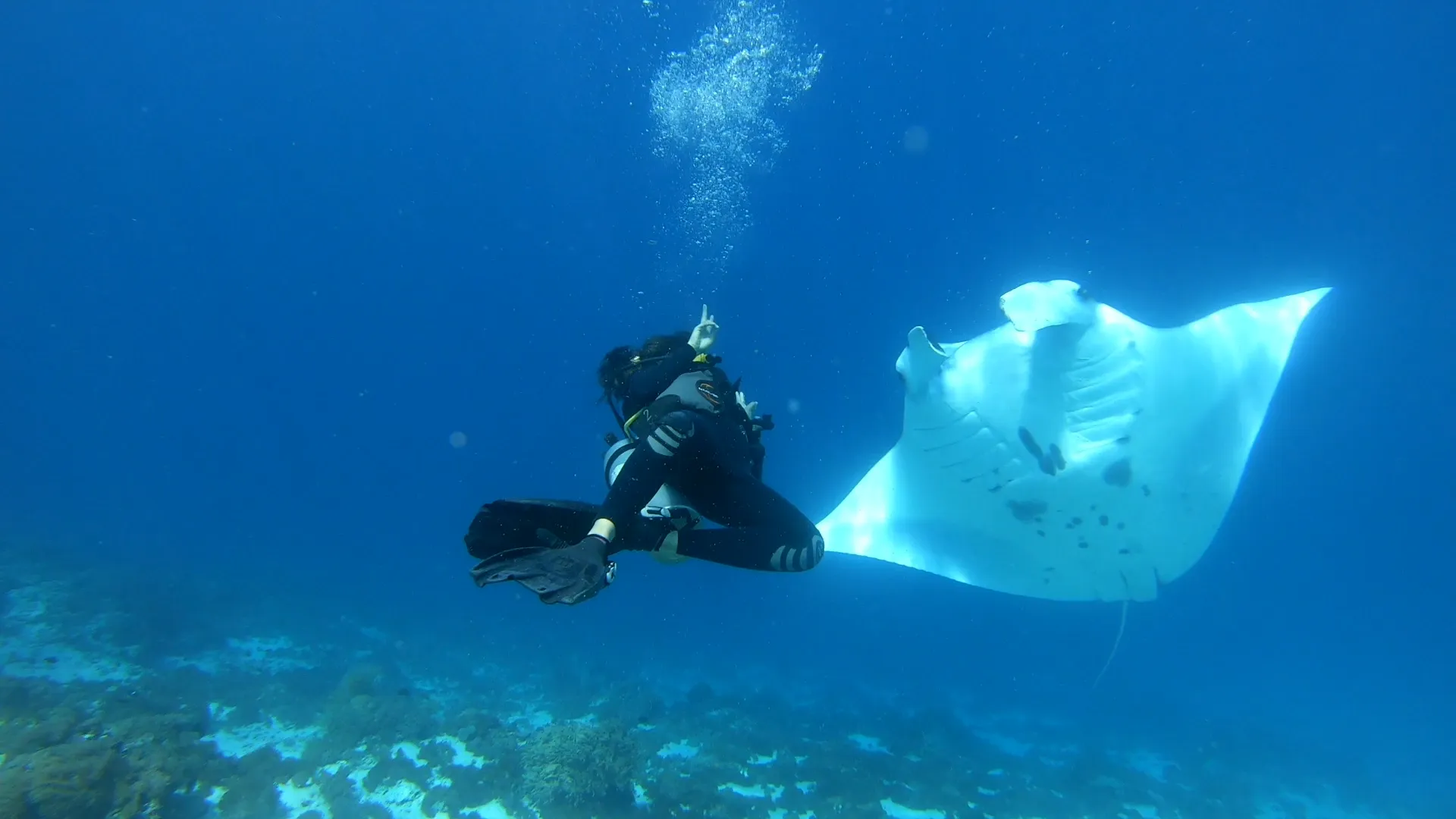
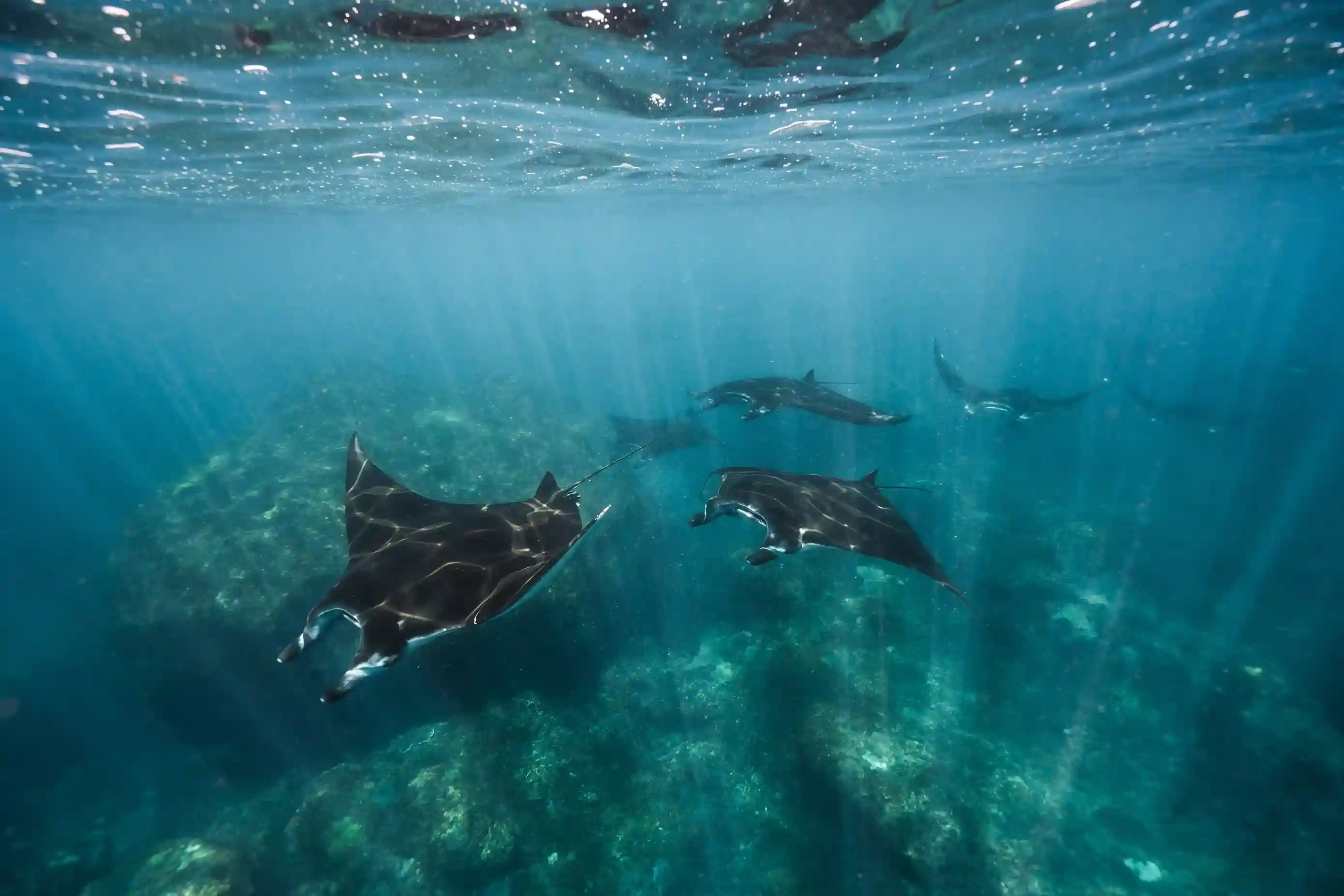
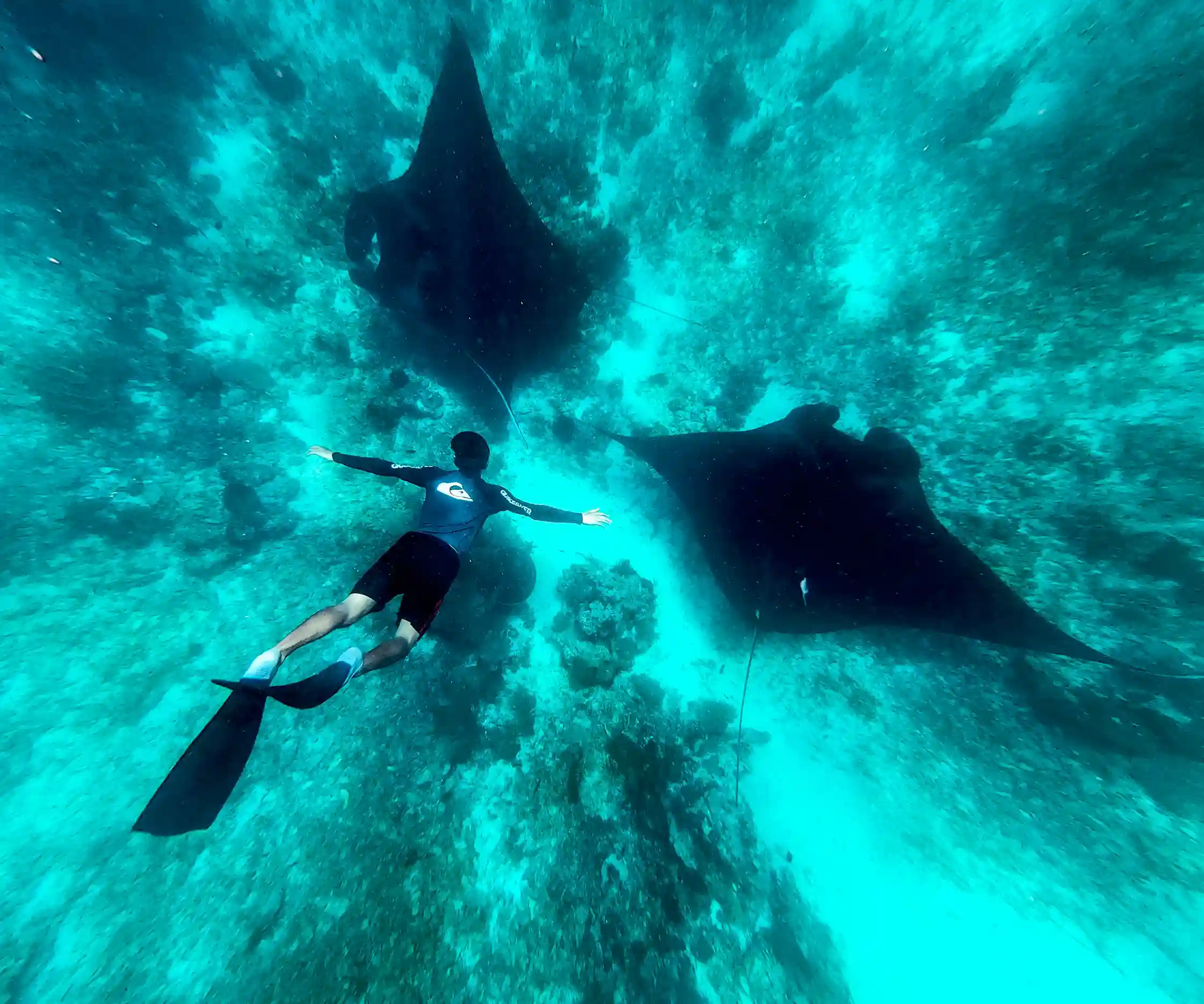
During favorable conditions, larger pelagic species visit the pinnacle. Eagle rays glide past the walls, occasionally joined by manta rays during the manta season. Reef mantas sometimes use the rocky areas near the pinnacle as cleaning stations, creating close-range encounters that combine the drama of manta encounters with the colorful reef backdrop that makes Batu Bolong so photogenic.
Batu Bolong is affected by tidal currents that can range from gentle drift to strong flow depending on the tidal state. The site is most commonly dived during slack tide or moderate current conditions, which provide enough water movement to keep the fish active while allowing comfortable exploration of the reef. During strong current, the site becomes challenging and is only suitable for experienced current divers under the guidance of knowledgeable dive professionals.
The standard dive profile at Batu Bolong begins with a descent along the wall to the planned maximum depth, typically 20 to 25 meters for recreational divers, followed by a gradual ascent as the dive progresses and the diver circles the pinnacle. The shallow sections between 5 and 10 meters are often the most impressive for coral coverage and fish density, making the safety stop at Batu Bolong one of the most entertaining in all of dive-dom.
Water temperatures range from 25 to 29 degrees Celsius depending on season and depth, with occasional cooler water patches below 15 meters during upwelling periods. Visibility is typically 15 to 25 meters, with the best clarity during incoming tidal flows that bring clean oceanic water across the reef.
During calm, slack tide conditions, Batu Bolong offers exceptional snorkeling directly above the shallow reef sections. The coral coverage visible from the surface is stunning, and the fish density in the top few meters of the water column provides a spectacular snorkeling experience. Sea turtles, reef fish, and even small sharks can often be spotted from the surface. However, snorkeling at Batu Bolong is only safe during specific current conditions and must be supervised by experienced crew. Your charter crew will assess conditions before allowing snorkeling access.
Batu Bolong delivers excellent diving year-round. The dry season from April through November provides the most consistent conditions and clearest visibility. The transition months of April through May and October through November often produce the most spectacular encounters, with warm water species and cooler water species overlapping and marine life activity at its peak. Morning dives typically offer the most marine life activity and best visibility conditions.
Experience Komodo’s most iconic dive site aboard a luxury dive safari charter. Batu Bolong delivers the kind of underwater magic that puts Komodo on every diver’s bucket list. Contact Komodo Boat Charter to include this legendary pinnacle in your diving itinerary.
Batu Bolong is consistently rated among the top dive sites in Komodo and frequently named the best overall. Its combination of exceptional coral coverage, extraordinary fish density, and reliable encounters with sharks, turtles, and pelagic species creates a complete diving experience that few sites anywhere can match.
Open Water certified divers can enjoy Batu Bolong during calm slack tide conditions. Advanced Open Water certification is recommended for the fullest experience, enabling access to the deeper wall sections where larger marine life tends to congregate. All dives are guided by experienced professionals from your dive safari charter.