A complete Komodo boat charter price covers eight things: the entire vessel with its crew and fuel, every meal cooked on board, unlimited drinking water, snorkeling equipment, a licensed English-speaking guide, hotel and airport transfers in Labuan Bajo, and — itemized in writing — your Komodo National Park entrance fees, ranger escort fees, and trekking permits. If a quote is missing any of these, or buries them under the phrase “excluding park fees,” you are not looking at a cheaper charter. You are looking at an incomplete one.
Last updated: August 16, 2026
We run boats out of Labuan Bajo, and a surprising part of the job is reading other people’s quotes. Guests forward them to us every week, asking why one operator’s figure sits so far below another’s. The answer is almost never a better deal. It is almost always a missing line. This page is the definitive checklist of what a legitimate charter must include, what may fairly cost extra, and the warning signs of a package engineered to look cheap until you are standing on the jetty with your wallet out.
First, a definition, because the words matter. A charter means you hire the entire vessel and its crew for your group alone — it is not a seat on a scheduled trip. When that is what you are paying for, the following belong inside the quoted figure. Not as options. Not “on request.” Inside.
Captain, engineer, deckhands, and a cook, plus fuel for the entire published itinerary — including tender runs to beaches, viewpoints, and snorkeling sites. A quote that reserves the right to bill fuel “depending on the route” is not a fixed-price charter; it is an open meter. The route and the fuel to sail it are one and the same thing, and they are priced together.
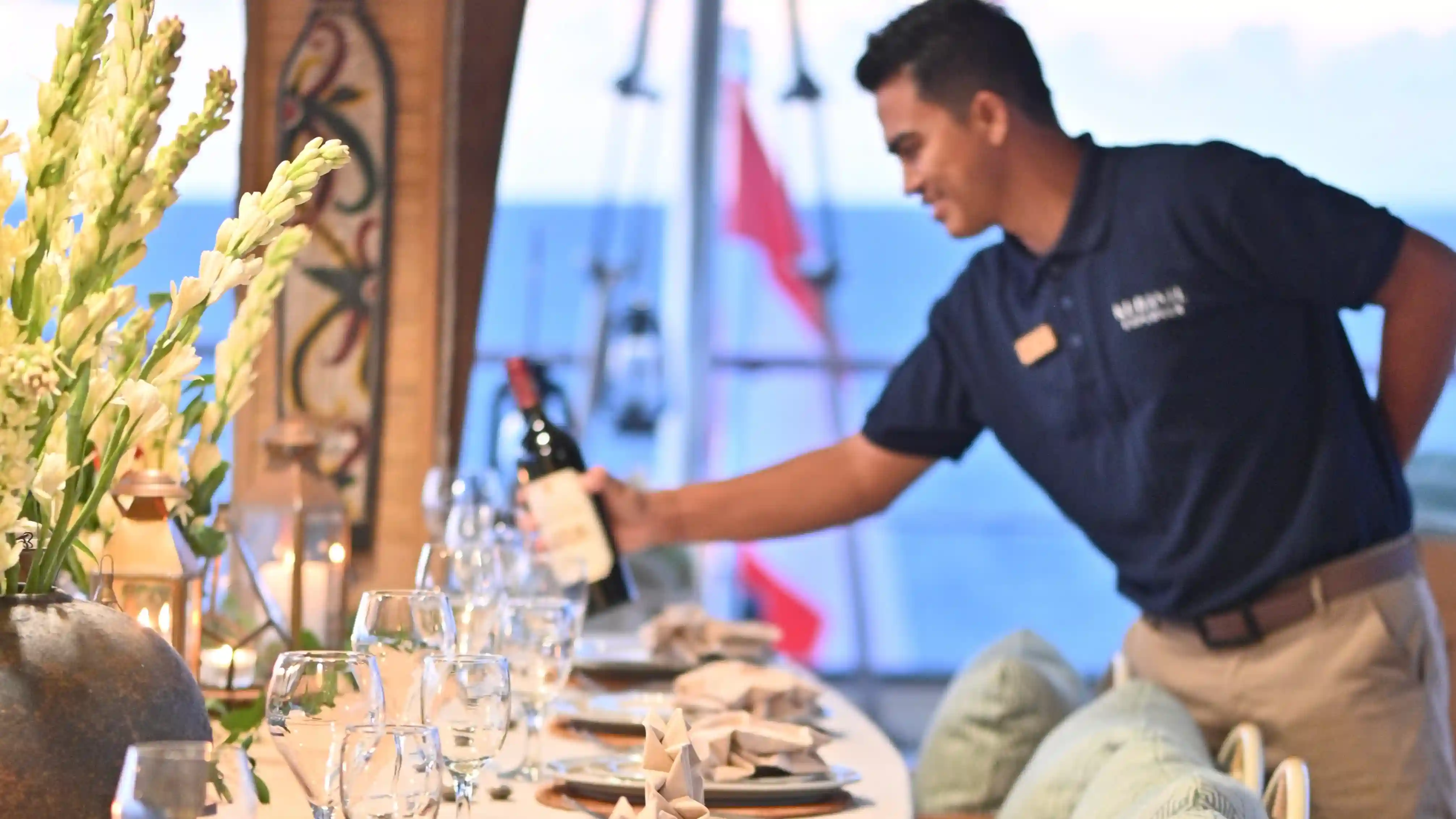
Every meal within the itinerary: breakfast, lunch, and dinner on multi-day sailings; lunch and fresh fruit on day itineraries; tea, coffee, and unlimited drinking water throughout. Meals are cooked on board, and this is where good operators quietly outperform cheap ones — grilled fish bought that morning in Labuan Bajo, Indonesian dishes made to order, fruit cut after every swim. Ask what the menu looks like. An operator who answers with specifics feeds you well. An operator who answers “standard meals” usually means instant noodles.
Mask, snorkel, and fins in your size, plus life jackets on board. The reefs at Taka Makassar and the manta aggregation sites are the reason half our guests come at all; equipment for them is not an upsell, it is the trip. Scuba is a different matter — more on that below.
Your guide manages timing, park logistics, trekking briefings, and the dozens of small decisions that make a day feel effortless. Note the distinction: the guide travels with your boat, while the national park ranger who escorts you past the dragons is assigned by the park itself, and the ranger’s escort fee is a separate line — one that must still appear in your quote, as we cover next.
Collection from your hotel or from Komodo Airport to the harbor, and the return at the end. It is a ten-minute drive. There is no honest reason to charge it separately, and reputable operators never do.
Komodo National Park charges an entrance fee per person, activity fees for trekking, snorkeling, and diving, and a ranger escort fee per group at Loh Liang on Komodo Island and Loh Buaya on Rinca. Since April 1, 2026, the park has also enforced a cap of 1,000 visitors per day. That cap changed the logistics entirely: permits are now secured in advance against your name and passport, not bought casually at a counter while your boat idles at the pier.
This is exactly why “park fees not included” became the favorite lever of the mystery package. Excluding them lets a seller publish a figure that looks lighter than everyone else’s, then hand you the difference at the harbor — where you have no negotiating position at all. A serious operator itemizes every park line under your exact group size and can show you the park’s own receipts afterward. For the full mechanics of how the fee system works, see our guide to Komodo National Park fees.
Under the daily cap, permit discipline is also a quality signal. An operator who processes permits properly — in advance, matched to your documents — is an operator whose paperwork you can trust on everything else too.
Not everything belongs in the base figure, and “extra” is not a dirty word when it is disclosed up front. Legitimate exclusions include:
The pattern to notice: every fair exclusion is named before you pay. The unfair ones surface after.
After years of reading forwarded quotes, we can usually spot a problem in the first three lines. Watch for these:
Our partner’s editorial team has documented these schemes in depth — the case studies in their guide to avoiding Komodo tour scams are worth ten minutes of your time before you transfer anything to anyone, including us.
The checklist above is universal, but its shape changes with the kind of trip you are taking.
A Komodo day trip compresses the park into one long, brilliant day, and speed is the whole product — a fast hull like Raja Hari exists so you spend your hours at Padar and the dragons rather than in transit. Everything on the checklist still applies: lunch, water, snorkeling gear, guide, transfers, and every park fee for that day, all inside one figure.
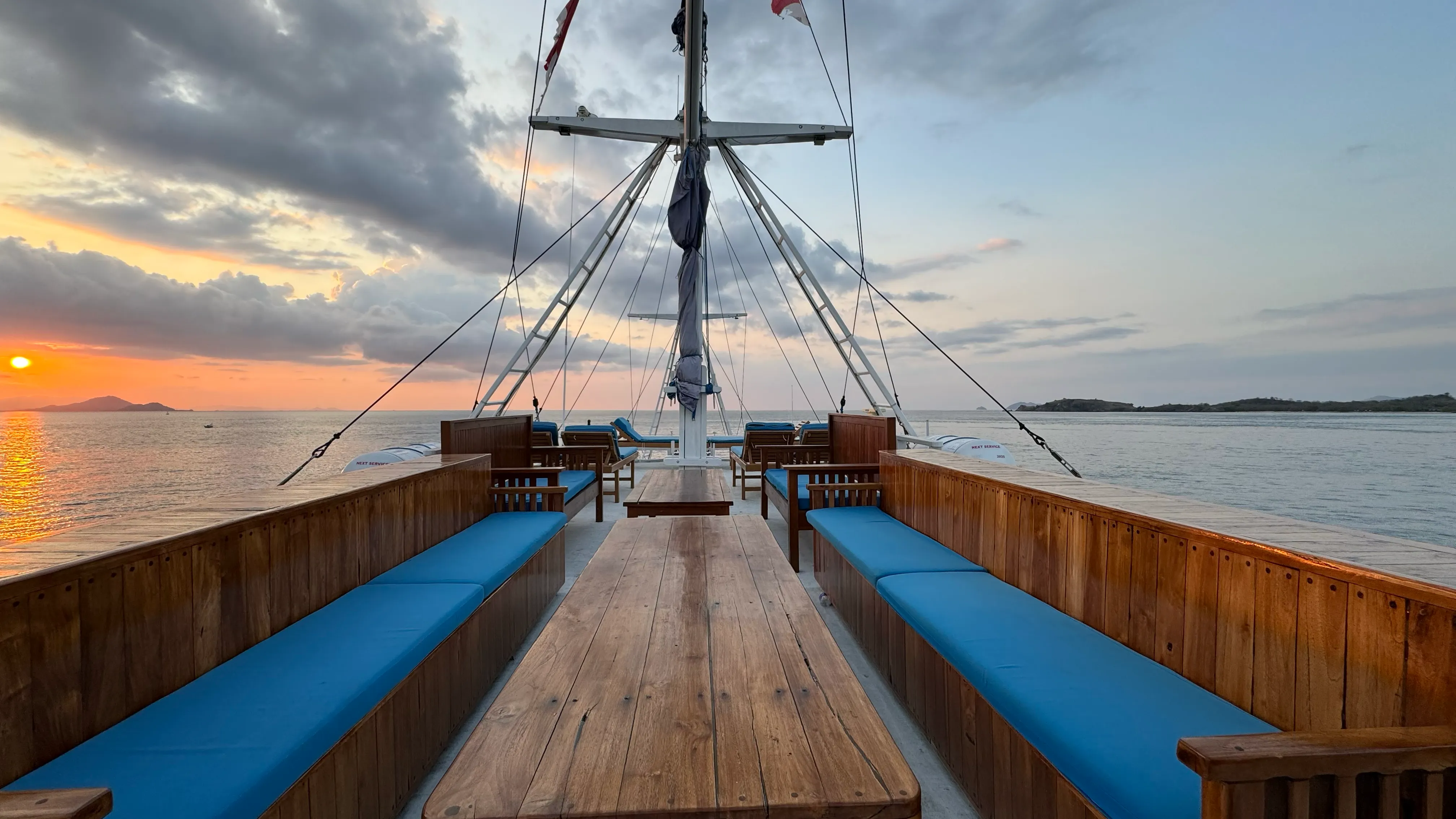
A phinisi is a traditional wooden ship of Bulukumba shipwright lineage, and boats like Mawar Biru are what most people picture when they imagine sleeping inside the park: en-suite cabins, a full galley, and dinner on deck at anchor. All meals, bedding, and cabin amenities join the checklist here. One decision changes the economics of everything: whether you take the whole boat or a cabin on a scheduled departure — our breakdown of private versus shared trips explains which suits which group.
A liveaboard is a multi-day diving platform, and its inclusion standard is its own discipline — tanks, weights, dive guides, and site scheduling belong in the base offer rather than the extras column. That standard is documented properly at komodoislandliveaboard.com, our sister reference for divers planning multi-day itineraries.
A yacht charter — a luxury vessel run by a professional crew for your party alone, such as Aurora — carries the highest inclusion expectation of all. At this tier, essentially everything on this page should be inside the figure without asking, and the conversation shifts from “what is included” to “what would you like.” The vessels we place guests on, from the speedboat Raja Hari to the phinisi Mawar Biru and the yacht Aurora, are operated in partnership with Komodo Luxury — a registered Indonesian PT under Juara Holding Group Limited with 1,500+ verified guest reviews (4.9/5). The same inclusion standard runs across the group’s wider Lamborajo, Ayvara, and Malca fleet.
Inclusions do not change with the calendar, but conditions do. April through November is the dry season — calm seas, clear trekking trails, the park at its most photogenic. November through March brings rain and livelier water, and with it the peak of manta season, when the plankton bloom draws rays to the cleaning stations in numbers the dry months rarely match.
One recent event deserves a plain answer, because guests keep asking. On August 15, 2026, a magnitude 7.7 earthquake struck roughly 200 kilometers offshore. It produced no destructive tsunami — the highest recorded wave was 0.36 meters — and sailings from Labuan Bajo resumed the same day. The practical takeaway is about communication: a professional operator tells you exactly this, in writing, unprompted. Silence during news events is its own red flag.
Specific answers that arrive quickly are the mark of an operator who has nothing to hide. Vague answers that arrive slowly tell you everything before you spend anything. For the questions we hear most often, our charter FAQ goes deeper — and when you are ready to compare actual figures line by line, our Komodo boat charter prices guide shows how a complete quote is built, so the number you agree to in Labuan Bajo is the last number you ever see.
With a reputable operator, yes — park entrance fees, ranger escort fees, trekking permits, and activity fees for snorkeling or diving should all be itemized inside the written quote. Since the park introduced its 1,000-visitor daily cap on April 1, 2026, permits must be secured in advance against each guest’s name, so an operator who excludes park fees or leaves them “payable on arrival” without a stated amount is a warning sign.
Yes. A complete charter includes every meal within the itinerary — breakfast, lunch, and dinner on overnight sailings, lunch and fruit on day trips — plus tea, coffee, and unlimited drinking water. Meals are cooked fresh on board. Alcohol is the standard exception and is fairly billed separately when disclosed up front.
It should be. Masks, snorkels, and fins for every guest, plus life jackets, belong in the base charter price. Certified scuba diving is different: tanks, weights, and a licensed dive guide sit outside a standard charter and are properly priced through a dedicated dive charter or liveaboard itinerary.
Fair, commonly disclosed exclusions are alcohol, certified scuba diving, the park’s separate drone-flight permit, special celebration setups, and discretionary crew gratuity. The test of a legitimate operator is not whether extras exist, but whether every exclusion is named in writing before you pay.
Ask five things: the vessel’s actual name with current photos, an itemized list of park and ranger fees for your exact group size, the specific meal plan, confirmation that Labuan Bajo transfers are included, and a written list of exclusions. Quotes with no vessel name, no fee breakdown, or payment requested to a personal bank account are the classic marks of a mystery package.
Yes — pickup from your hotel or Komodo Airport to the harbor and the return transfer are standard inclusions in any complete charter. The drive takes about ten minutes, and reputable operators never bill it as an extra.