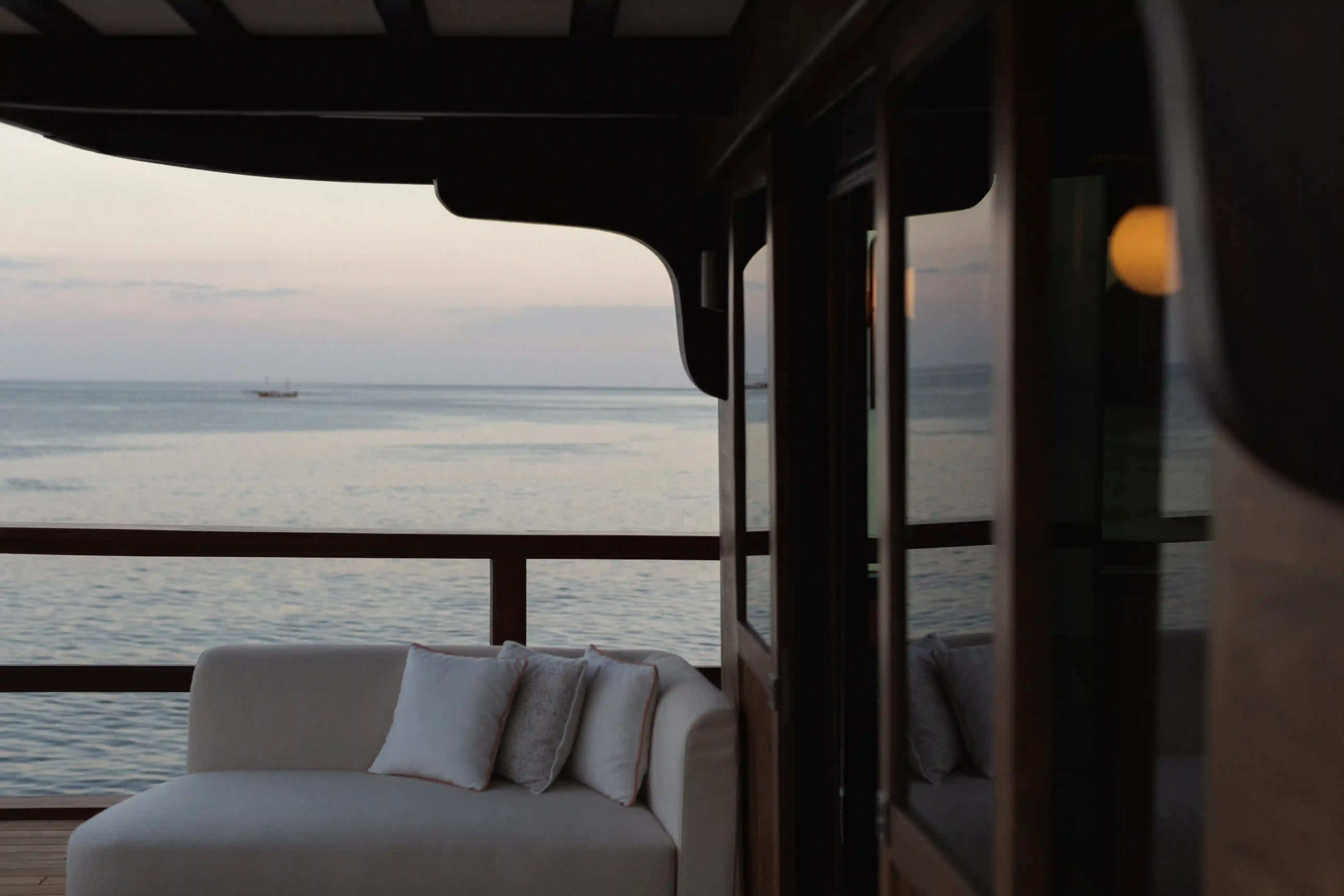
A private boat from Labuan Bajo is the most direct way to see Komodo National Park on your own schedule, and there are exactly three formats worth your attention: a speedboat for a fast one-day loop through the islands, a phinisi — the traditional wooden ship still hand-built in Bulukumba, South Sulawesi — for one to three slower days with cabins and open deck, or a yacht when you want a fully crewed vessel at genuine luxury grade. All three clear the same harbor mouth, pass the same park gates, and anchor off the same islands. What you are actually choosing is pace, space, and how the day feels — and that choice shapes the trip more than most first-time visitors expect.
Last updated: August 16, 2026
This guide is written from the operator’s side of the jetty. We watch charter guests board at first light and step off at dusk, salt-crusted and quiet, and we hear which decisions they were glad they made. komodoboatcharter.com is operated in partnership with Komodo Luxury — a registered Indonesian PT under Juara Holding Group Limited with 1,500+ verified guest reviews (4.9/5) — so the vessels discussed below are ships our own crews run out of Labuan Bajo, not listings we resell.
One note on vocabulary, because it gets muddled online. A charter means you take the entire vessel with its crew — captain, deckhand, usually a cook — for your group alone. Call it a boat hire or a boat rental if you prefer; those are the same arrangement in British and American English. A tour or trip, by contrast, is a scheduled product where you buy individual seats on someone else’s timetable. This page is about charters.
| Format | Built for | Pace | Overnight | Choose it when |
|---|---|---|---|---|
| Speedboat | Covering distance fast | Padar in under an hour | No — day charters | You have one day and want the full southern loop |
| Phinisi | Living aboard in comfort | Slow, deliberate cruising | Yes — private cabins | You want sunsets at anchor and no alarm clocks |
| Yacht | Crewed luxury | Moderate, seakindly | Yes — suites and service | The vessel itself is part of the occasion |
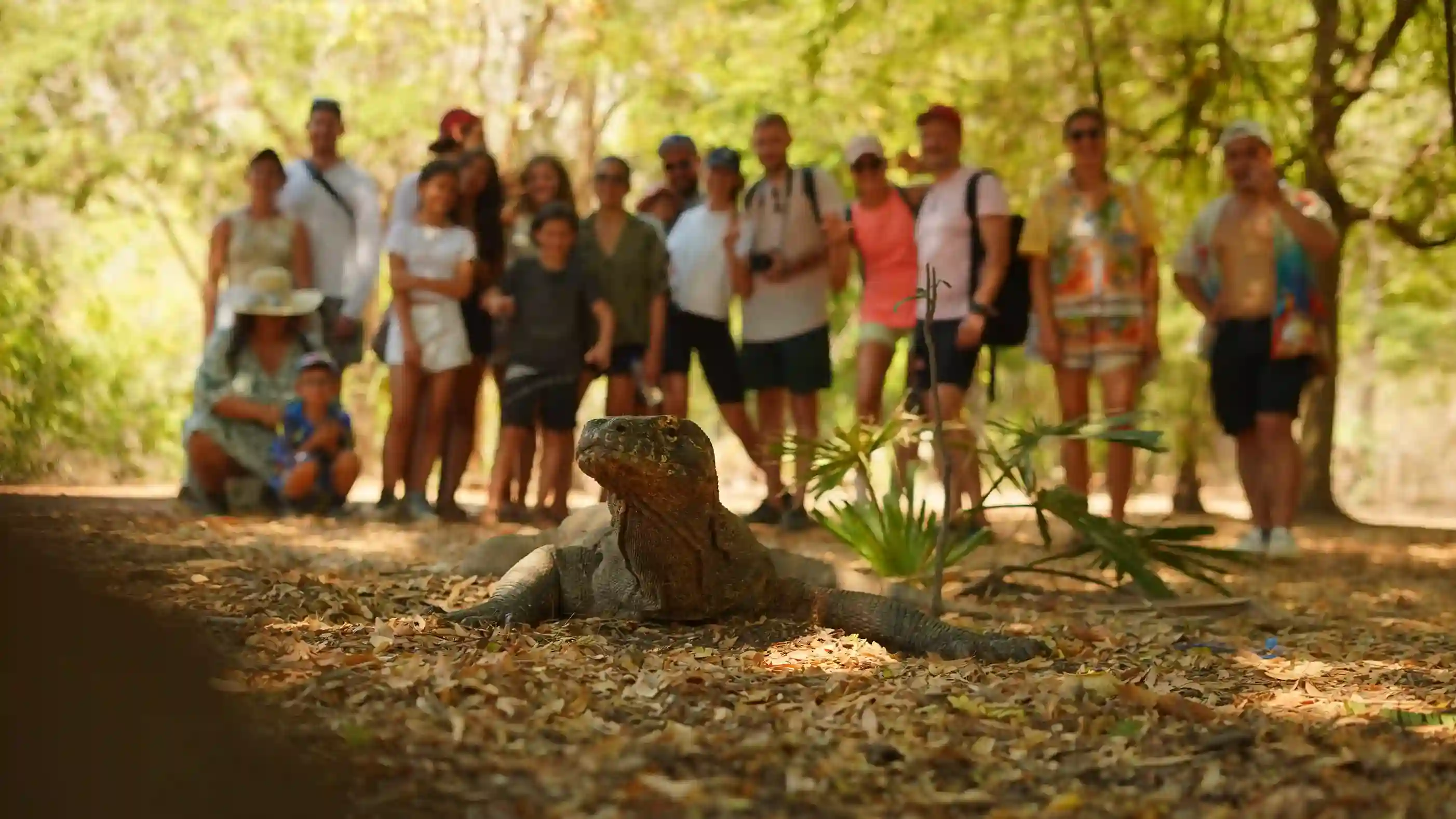
A modern speedboat with twin or triple outboards turns the western reach of the national park into a 45–60 minute run instead of a three-hour crawl. That speed is not about adrenaline; it is about arithmetic. The classic day — Padar’s ridgeline, Pink Beach, the dragon trek at Loh Liang, snorkeling over Karang Makassar — only fits inside daylight if the transits are short. Our flagship day boat, Raja Hari, was fitted out for exactly this arithmetic: a shaded cabin, a proper toilet, and enough freeboard for the afternoon chop on the run home across the Flores Sea. If you have a single day in Labuan Bajo and would rather spend it on islands than in transit, this is your format.
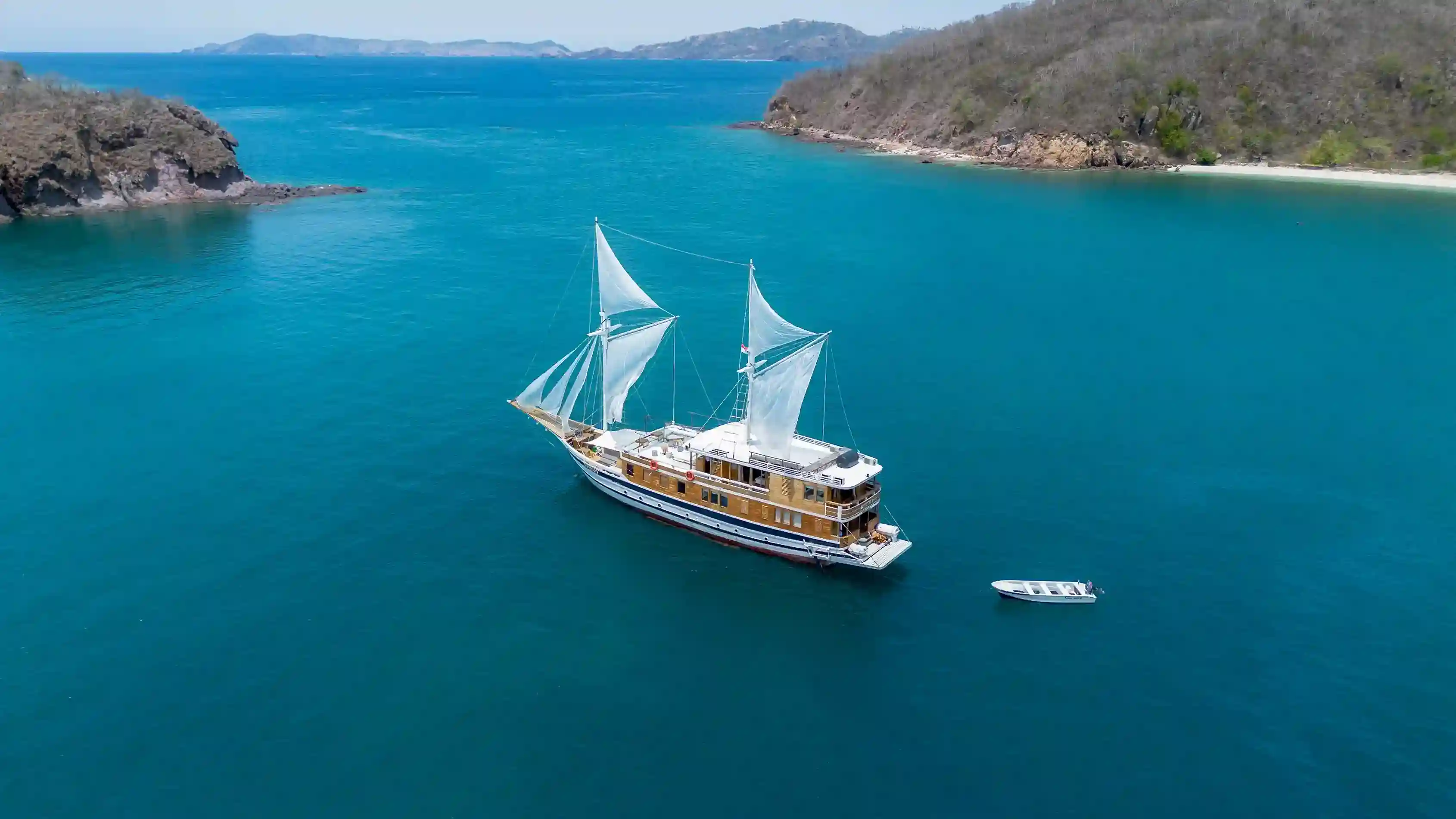
A phinisi is not a decorated tourist boat. It is the wooden sailing ship that Bugis shipwrights in Bulukumba, South Sulawesi, still build by hand — ironwood hulls, tall twin masts, wide teak decks — adapted over the last decade for guests. Chartering one changes the shape of the trip entirely. You stop racing daylight. The ship drops anchor in a quiet bay, dinner comes off the grill, and sunrise on Padar belongs to whoever slept nearest. Our Mawar Biru runs private charters in this style over one to three days, and the comfort aboard sits closer to what people expect from a small cruise than from a boat: real beds, en-suite bathrooms, a cook who shopped the Labuan Bajo market that morning.
A yacht, used correctly, means a luxury vessel with professional crew whose service — not merely transport — is what you are chartering. Cabins become suites, the galley behaves like a kitchen, and the itinerary bends around you rather than the other way. Aurora is our yacht for the park, and she earns her keep on honeymoons, milestone birthdays, and owners’ trips where the ship is part of the destination, not just the way to reach it.
If you want the line-by-line version — hull dimensions, guest capacities, shade coverage, snorkel equipment, toilets — we keep a full speedboat vs phinisi vs yacht comparison updated as the fleet changes.
Almost every private charter boards between 5:45 and 6:30 in the morning, either at the Waterfront marina or the Kampung Ujung jetty — both within a few minutes of any hotel in town, and hotel-to-jetty transfers are part of how we run mornings. The early start is not tradition for its own sake. The Flores Sea is at its flattest before ten. Padar’s light is at its best before nine. And the ranger stations at Loh Liang and Loh Buaya assign trekking groups to boats in the order they arrive. A private boat that clears the harbor at six runs ahead of the entire shared-boat wave for the rest of the day, and that gap compounds at every stop.
Three routes cover most of what guests actually want:
Our Komodo day trip page breaks the southern classic down hour by hour, including where it flexes when the sea has opinions.
Since April 1, 2026, the national park has capped entries at 1,000 visitors per day. The cap applies to everyone equally — no vessel jumps that queue — but a private charter absorbs it far better than a shared boat, for two reasons. First, departure flexibility: your boat leaves when you are aboard, not when the last of thirty strangers arrives, and early boats meet thinner crowds at every site. Second, route inversion: when a captain sees the Padar anchorage stacking up, a private boat simply runs the loop backwards and takes Padar in the empty late afternoon. A shared trip cannot vote to do that. We lay out the full trade-offs in our private vs shared trip breakdown.
Budget separately for park entry and ranger escorts, which are charged per person rather than per boat — the current structure is on our Komodo National Park fees page.
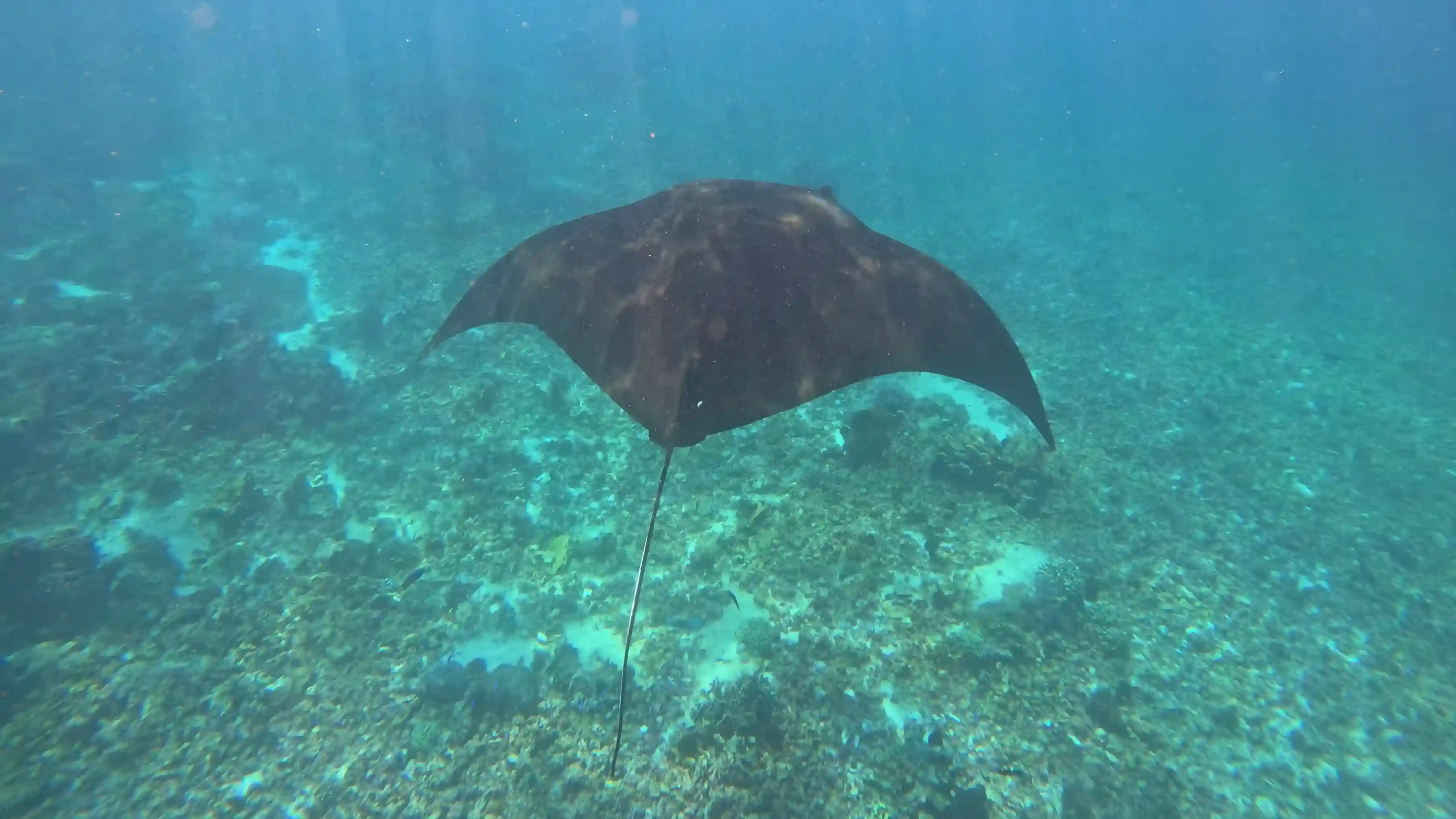
April through November is the dry season: light winds, flat mornings, savanna hills turned gold, and the calmest crossings of the year. November through March trades some of that calm for the park’s other headline — plankton-rich water pulls reef mantas onto Karang Makassar in numbers, and photographers gladly accept a passing squall for it. In both seasons, captains re-route around weather rather than through it; the park holds enough sheltered water that a rough forecast usually redraws the day instead of cancelling it.
About the earthquake, since guests ask: on August 15, 2026, a magnitude 7.7 quake struck roughly 200 km offshore. It produced no destructive tsunami — the highest recorded wave was 0.36 m — and Labuan Bajo’s harbor stayed open, with sailings running the same day. Crews here read the sea for a living. Watching conditions is daily work in this harbor, not crisis response.
If the southern classic feels compressed — and for keen snorkelers it usually does — the answer is a multi-day phinisi charter, which adds the northern park and subtracts the alarm clock. If your reason for coming is diving specifically, be honest with yourself and skip day boats altogether: a Komodo liveaboard — a vessel purpose-built for multi-day dive itineraries, with guides and gear aboard — is the correct tool for the park’s current-swept northern sites, and no day charter substitutes for it. And for larger groups or formats beyond our own three vessels, the wider Komodo Luxury charter fleet — Lamborajo, Ayvara, and Malca among them — extends the same operation across more hulls.
Whoever you charter with — us included — these questions separate serious operators from brokers with a phone:
However you weigh the three formats, the sequence never changes: pick the format first, the route second, the date third. The rest — crew, food, timing, the reading of the morning sky — is our job, and it is the part of this work we have never wanted to hand to anyone else.
full-boat hire: inclusions, routes, booking windows
Exploreevery charter format leaving the marina
Explorehire vs rental vs charter terminology, settled
Explorethe logistics if you start from Bali
Explorecurrent per-boat pricing
ExploreA charter gives your group the entire vessel and its crew — captain, deckhand, usually a cook — with a route built around you. A tour is a scheduled product where you buy individual seats on a fixed itinerary. Charters depart when you board, invert routes to dodge crowds, and linger where you want; tours cannot.
Yes. A speedboat covers the western park in 45–60 minute transits, which is what makes the full southern loop — Padar viewpoint, Pink Beach, the ranger-led dragon trek at Loh Liang, and Manta Point — fit into a single day, typically departing around 6 a.m. and returning by about 5 p.m.
For a single day, a speedboat with a shaded cabin and short transits works well; the gentler Kelor–Rinca–Kalong route keeps crossings calm. For families who prefer no time pressure at all, a phinisi charter with cabins lets children nap aboard while the ship repositions between islands.
Yes. The magnitude 7.7 earthquake on August 15, 2026 struck roughly 200 km offshore and produced no destructive tsunami — the highest recorded wave was 0.36 m. Labuan Bajo harbor remained open and sailings ran the same day, with crews monitoring sea conditions as part of normal daily operations.
April through November is the dry season, with calm seas, flat morning crossings, and the best trekking weather. November through March is manta season, when plankton-rich water draws reef mantas to Karang Makassar in numbers — worth the occasional squall for snorkelers and photographers.
The cap, in force since April 1, 2026, applies to all visitors equally, and park entry plus ranger fees are charged per person. Private charters handle it better in practice: they depart earlier than shared boats and can run routes in reverse to reach headline sites when they are quietest.