The Cauldron comprises a series of interconnected seamounts and ridges ranging from 10 meters at the shallowest pinnacle tops to 32 meters in the surrounding channels. GPS coordinates are approximately 8°31’14.8″S 119°25’58.2″E. The site’s defining feature is the dramatic bathymetric change—the seafloor rises abruptly from 35 meters to multiple 12-15 meter peaks within a 200-meter radius, creating compressed water flow and considerable turbulence.
The dive site actually comprises three distinct pinnacles (locally called “Towers”) with names reflecting diver slang: North Tower (deepest, 32m), Central Tower (15m at apex), and South Tower (12m at apex). Water temperature ranges 24-28°C year-round, with visibility typically 15-25 meters (excellent by Komodo standards, though thermoclines sometimes reduce visibility to 8-12 meters).
The Cauldron’s reputation stems from dramatic tidal current flows. During peak tidal exchange (typically 6 hours after low tide at Labuan Bajo), water accelerates through the site at 1.5-2.5 knots (0.8-1.3 meters/second). Experienced drift divers describe the sensation as being “shot” through the site—hence the local nickname.
However, current intensity is highly predictable and correlates directly to tidal range:
Your charter captain has detailed tide tables and will only schedule Cauldron dives during appropriate tidal windows. A competent operator avoids extreme-flow days unless the group explicitly consists of advanced technical divers with drift experience logged from other Indo-Pacific sites.
The site’s geology reflects Komodo’s volcanic origin. The pinnacles are consolidated volcanic rock (basalt) with lighter-colored coral growth and soft coral gardens. The current-swept slopes host primarily filter-feeding organisms—gorgonian fans (soft corals), black corals, and hydroids—rather than encrusting hard corals typical of calmer reefs.
A typical drift pattern descends the northern slope of North Tower, passes through the central channel between North and Central towers (maximum current zone), then exits around South Tower. The entire drift takes 35-45 minutes. Divers do not attempt to “fight” the current or maintain station at specific locations—they move with the water mass and observe fauna in passing.
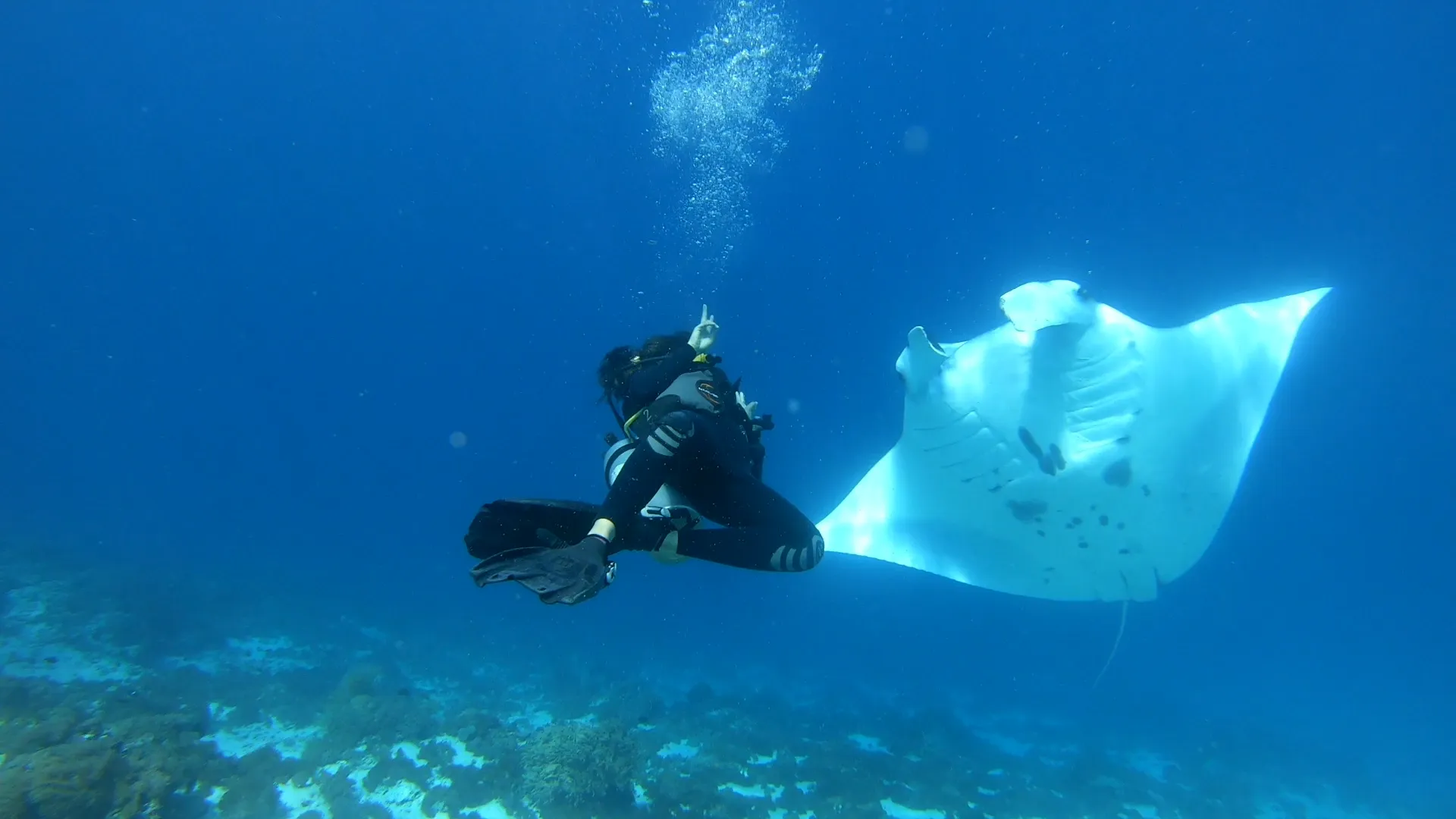
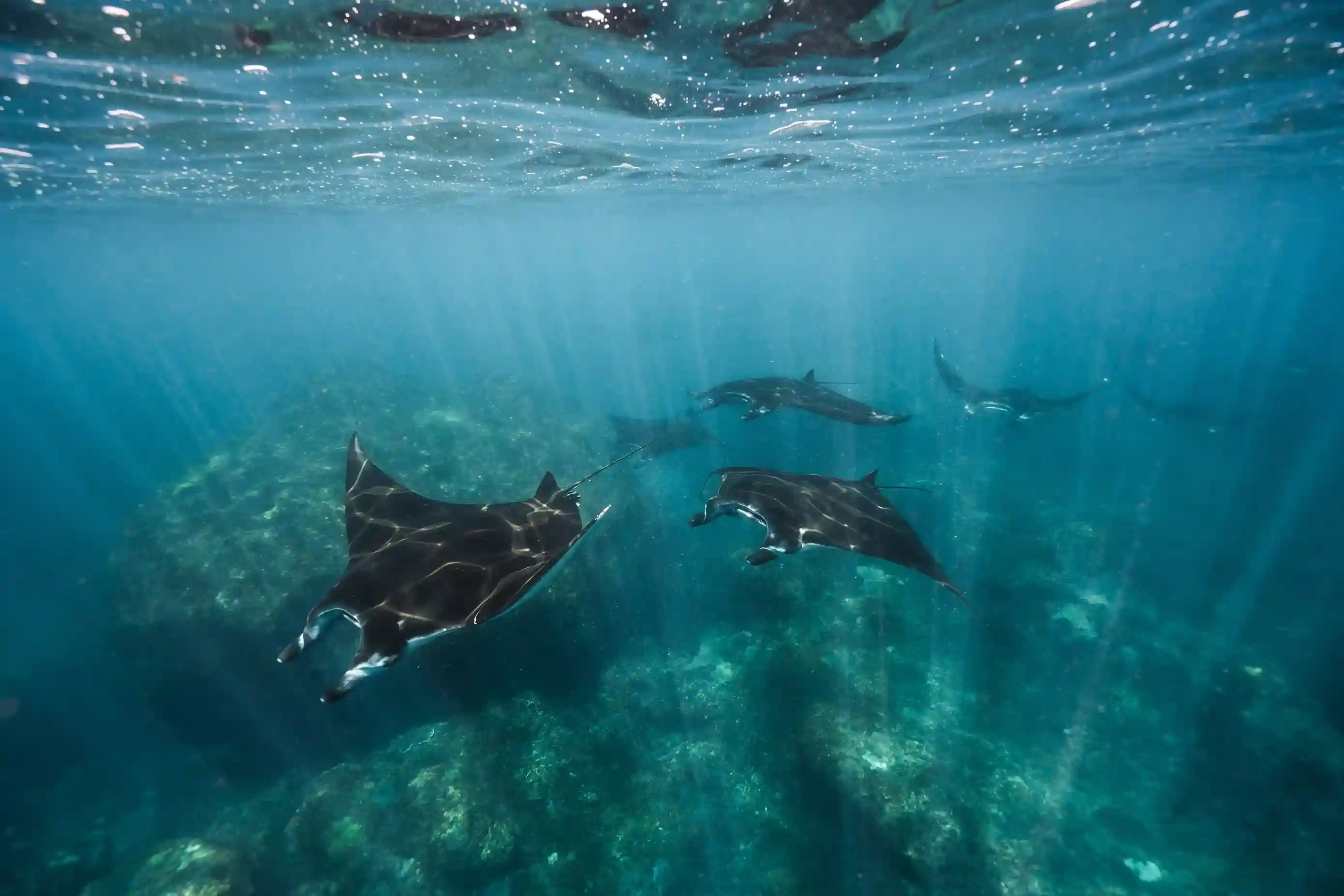
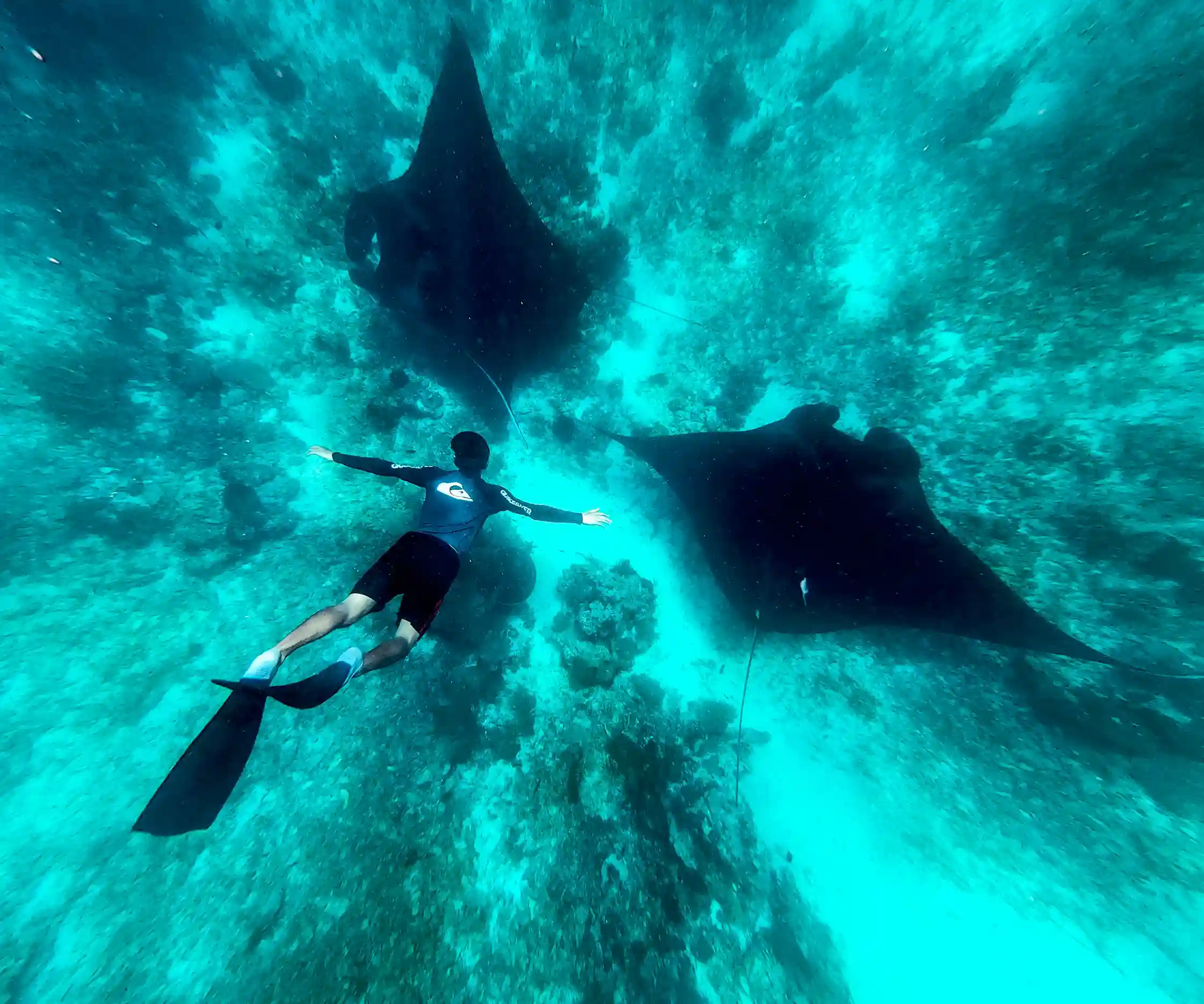
The compressed water flows concentrate nutrients, attracting large predatory fish and pelagic species rarely seen on calm reefs. Typical fauna includes:
Macro fauna is less prominent than on protected reefs—the strong current discourages small-colony corals—but includes nudibranchs, cleaner shrimp, and jawfish in more sheltered micro-habitats around the base of the towers.
The Cauldron is an Advanced Open Water minimum certification dive, and experienced operators recommend Advanced with Drift Specialization or equivalent (50+ logged dives with demonstrated competency). Specific skills required:
Divers with fewer than 30 logged dives, or without documented drift experience, are typically declined entry. Operators take this seriously—incident response at the Cauldron is complicated (deep water, strong current, distance from emergency facilities), and safety culture mandates conservative prerequisites.
The Cauldron is diveable April through November, with optimal conditions May-October:
Peak current periods (1.5-2.5 knots) occur around specific tidal states and can be forecasted by your charter’s dive guide using tide prediction tables. If you want to experience The Cauldron’s signature drift intensity, book during June-August when currents are strong enough for thrilling sensation but predictable.
The Cauldron is typically not a standalone dive—it’s one component of a 5-7 dive liveaboard itinerary targeting Komodo’s premium sites. Nearby sites accessed on the same charter include:
A typical 3-day komodo boat charter targeting advanced diving visits Castle Rock, The Cauldron, and Sabita Reef. A 5-7 day charter adds Manta Point, Kelor Island, and local reefs. Most liveaboards pre-program these sites and adjust daily itineraries based on current forecasts and diver feedback.
The Cauldron is accessed exclusively by boat—there’s no shore-based entry. Typical logistics:
Reputable operators provide separate pre-dive training if your drift experience is limited to calm-current sites. This training typically covers current-body positioning, hand signals specific to drift dives, and protocols for accidentally becoming separated from the group.
If you’re an experienced current diver familiar with Indo-Pacific drift sites, The Cauldron delivers premium pelagic encounters. The combination of compressed bathymetry, nutrient-rich water, and protected status creates a unique ecosystem. Bring nitrox cards, log your drift experience, and clearly communicate your skills to the operator. A well-planned Cauldron dive ranks among the world’s memorable diving experiences.
Ready to plan your advanced dive charter? Contact us via WhatsApp at +628113823875 for site briefings, recommended training prerequisites, and seasonal dive scheduling.
A: No. This is an advanced site. Most operators require Advanced Open Water certification (AOWD) or equivalent, and many recommend drift specialization. Divers with fewer than 30-50 logged dives are typically declined regardless of certification level. If The Cauldron is your target, plan training dives at calmer sites first.
A: Both are current sites, but Castle Rock (12-30m) is less intense and closer to moderate operator facilities. The Cauldron (10-32m) is further offshore and experiences stronger, more unpredictable current. Castle Rock is an excellent “warm-up” before Cauldron dives. Advanced divers comfortable with Castle Rock can usually handle Cauldron with proper briefing.
A: Absolutely. Many divers prefer dives during tidal ranges under 1.2 meters, when currents are 0.3-0.8 knots—manageable for practicing buoyancy without overwhelming intensity. These “easy” Cauldron dives provide pelagic fauna viewing with less physical demand. Ask your operator about tide forecasts before booking specific dates.
A: At 30-32 meters, nitrogen narcosis is moderate. Many divers use nitrox (EAN32-EAN36) to reduce narcosis sensation and extend bottom time. Standard air dives are common but require strict discipline—watch for impaired judgment, tingling in fingers, and slowed reaction time. If narcosis symptoms appear, ascend slowly.
A: Expect 20-30% higher air consumption than calm reef dives due to current-fighting instincts and deeper average depth. Many divers consume 180-200 bar in a 40-minute dive (vs 100-140 bar on shallow reefs). Using nitrox reduces consumption slightly. Always start with full tanks and plan conservatively.
A: No, not typically. The 4-6 grey reef sharks at the site are accustomed to divers and focused on hunting prey fish. Maintain distance (2-3 meters), avoid sudden movements, and don’t corner sharks. If a shark displays aggressive behavior (hunched back, exaggerated swimming), ascend slowly to shallower depth and signal surface support.
A: Abort and ascend slowly to surface. Deploy your surface marker buoy (SMB) at 5 meters. The surface support boat monitors all divers and retrieves anyone surfacing outside the expected zone. Stay calm, signal the boat, and drift with the current until picked up. Your dive guide will cover this scenario in the pre-dive brief.
A: Yes, but limit to 2-3 dives per liveaboard itinerary. Repeated deep-current dives accumulate nitrogen loading and fatigue. Standard protocol includes “easy dives” on intervening days at Sabita Reef or Kelor Island to manage nitrogen and allow physical recovery. Never do Cauldron dives on consecutive days.