Komodo Liveaboard vs Cruise — Which Trip Style Suits You? 📱 Get Expert Advice Quick Verdict Choose a luxury liveaboard if diving is your primary focus — dedicated dive decks, nitrox, camera rooms, and expert dive masters. Choose a luxury cruise if you want spacious comfort, diverse activities, and a resort-like experience at sea. Both explore the same stunning Komodo waters — the difference is where your priorities lie.
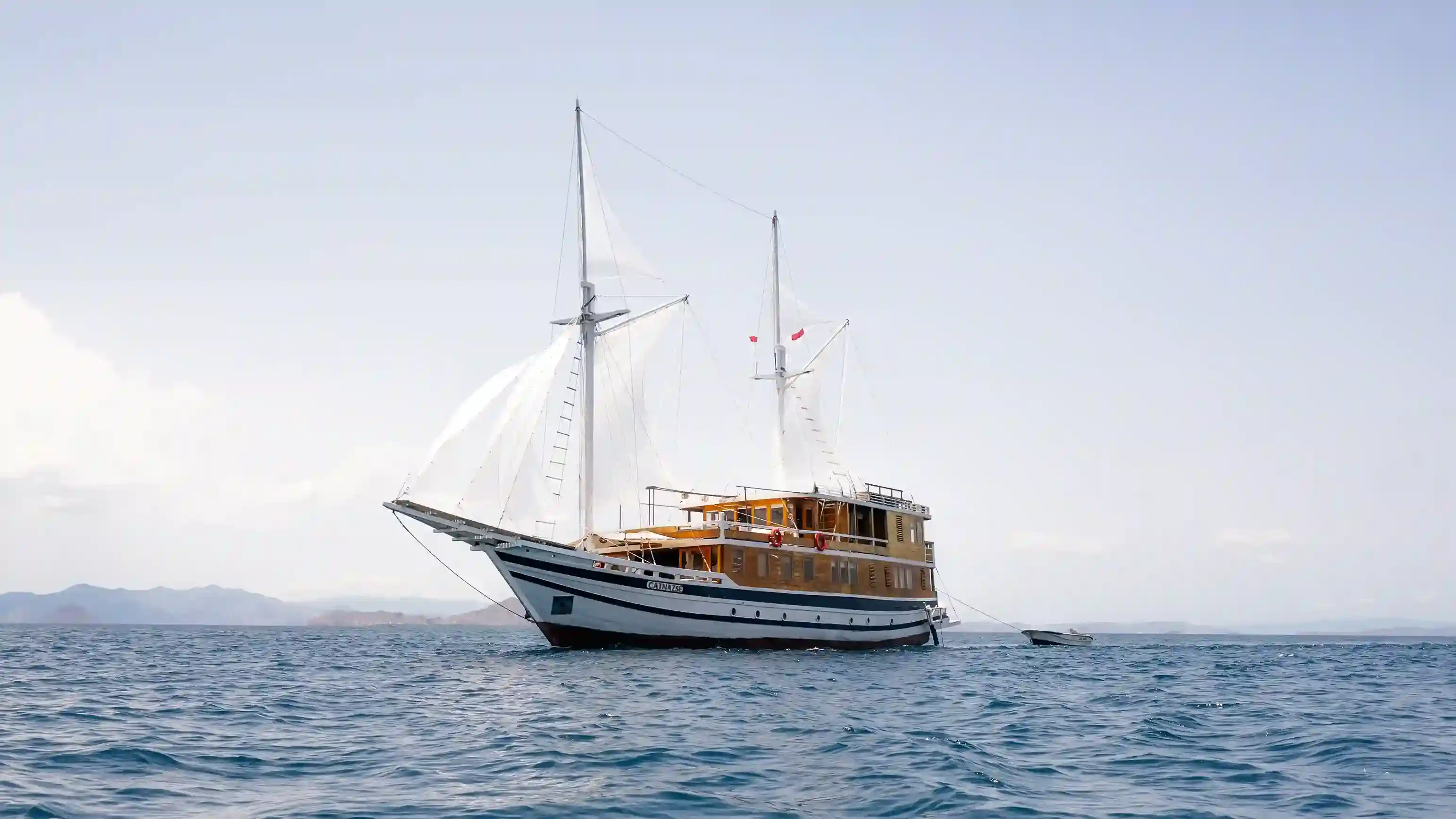
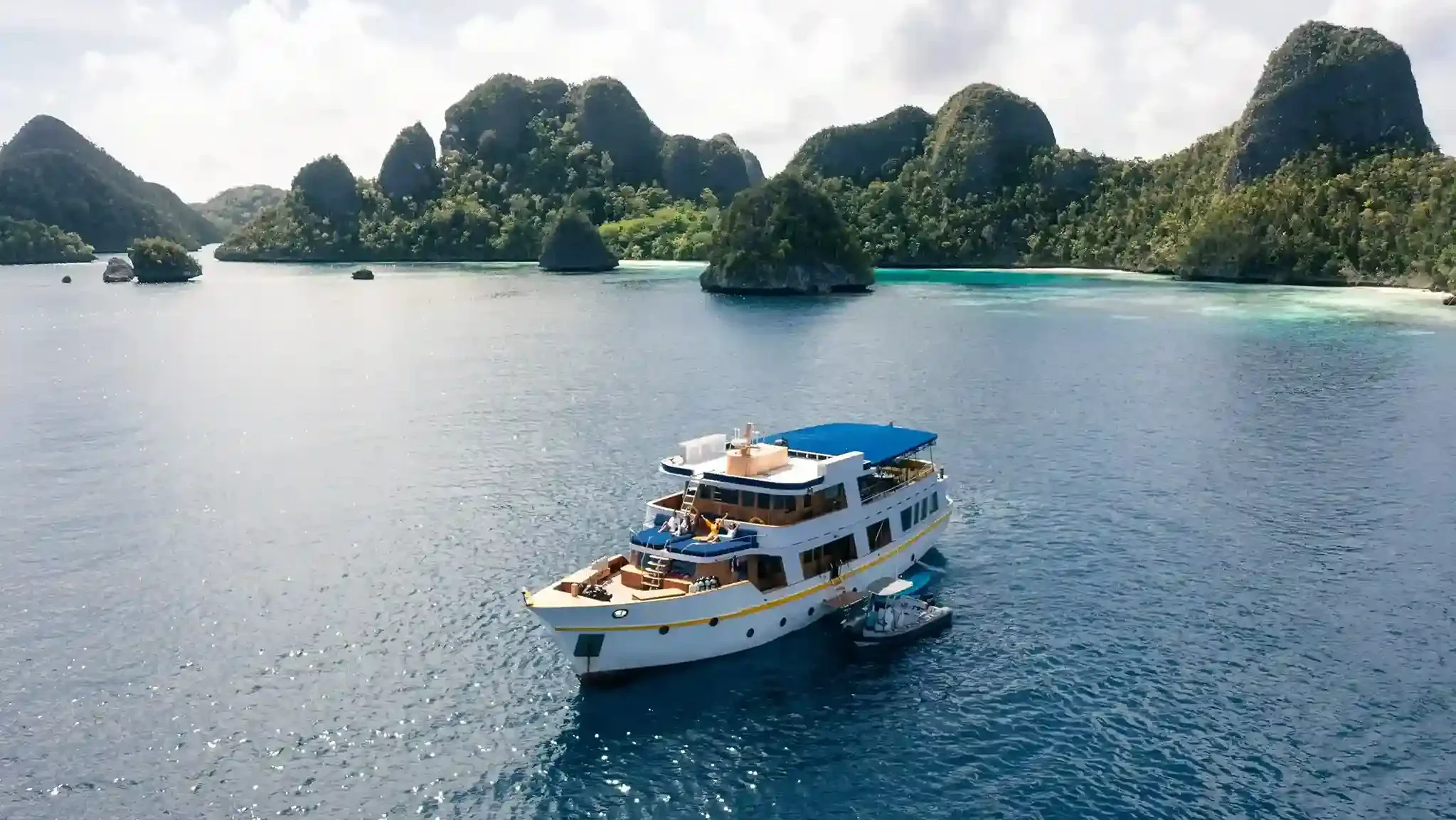
A luxury liveaboard is a purpose-built vessel designed primarily for multi-day diving expeditions. Our fleet includes 8 luxury liveaboards specifically configured for Komodo’s world-class underwater environments. These vessels feature dedicated dive decks with rinse stations, camera rooms with charging facilities, nitrox systems for extended bottom times, multiple tenders for simultaneous dive groups, and expert dive masters who know every site in the park.
Liveaboards are the preferred choice of serious divers who want to maximize their underwater time — typically 3–4 dives per day. Between dives, guests enjoy comfortable cabins, excellent cuisine, and the camaraderie of fellow diving enthusiasts. The schedule revolves around tides, currents, and marine life movements, ensuring you are at the right site at the optimal time.
Despite their diving focus, modern luxury liveaboards offer surprisingly comfortable accommodation. Air-conditioned cabins with en-suite facilities, spacious sun decks, and professional galleys serving gourmet meals between dives ensure that above-water time is equally enjoyable.
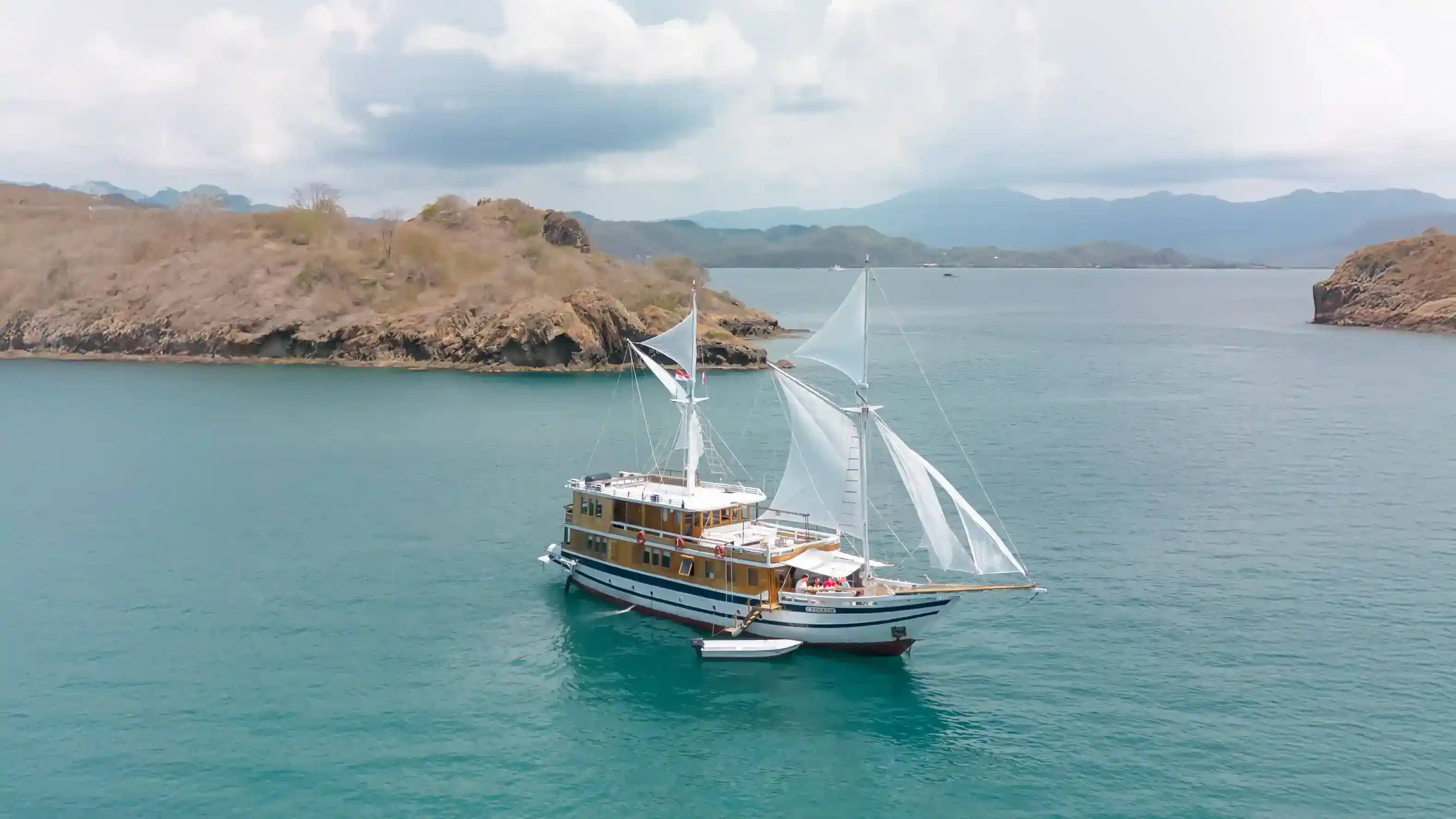
A luxury cruise vessel in our Komodo fleet offers the most spacious accommodations and diverse activity options. Our 7 cruise vessels are designed for travelers who want a premium, resort-like experience at sea — generous cabins, multiple dining areas, panoramic lounges, expansive sun decks, and a wide range of activities beyond diving.
Cruise charters appeal to a broader audience including families, corporate groups, and mixed groups where some members dive and others prefer above-water activities. The itinerary on a cruise vessel balances island exploration, cultural visits, beach time, water sports, and wildlife encounters — with diving and snorkeling available but not dominating the schedule.
The larger size of cruise vessels translates to more stable sailing, more indoor and outdoor social space, and a level of comfort that feels closer to a boutique hotel than a traditional boat. For travelers who prioritize comfort, variety, and a relaxed pace, luxury cruise charters deliver an outstanding Komodo experience.
| Feature | Liveaboard | Cruise |
|---|---|---|
| Primary Focus | Diving & underwater exploration | Luxury comfort & diverse activities |
| Fleet Size | 8 vessels | 7 vessels |
| Dive Facilities | Dedicated deck, nitrox, camera room | Basic dive equipment available |
| Dives per Day | 3–4 dives | 1–2 (optional) |
| Cabin Space | Comfortable, functional | Spacious, resort-style |
| Social Areas | Focused on dive briefings & gear | Multiple lounges, dining areas |
| Activities | Diving-centric | Diving, kayaking, hiking, cultural |
| Best For | Serious divers | Families, mixed groups, non-divers |
| Price Range | $1,800–$11,150/night | $5,063–$20,000/night |
If diving is your number one priority, a liveaboard is the clear choice. Liveaboard vessels are designed from the keel up for diving operations. The dedicated dive deck means gear is always organized, rinsed, and ready. Nitrox availability allows for longer bottom times and shorter surface intervals. Camera rooms with individual charging stations and rinse tanks protect your expensive underwater photography equipment. And the dive masters — often with thousands of Komodo dives logged — know exactly where to find mantas, sharks, pygmy seahorses, and other marine highlights.
Cruise vessels can accommodate diving, but it is typically one of several activities rather than the central focus. Dive gear may need to be stored in shared spaces, and the vessel’s schedule accommodates non-diving activities alongside dive stops. For occasional divers or snorkelers, this balance works perfectly. For dedicated divers who want 3–4 dives daily, a liveaboard delivers a fundamentally better experience.
Cruise vessels win on raw living space. Larger cabins, multiple dining areas, dedicated lounges, and expansive sun decks create a resort-like atmosphere. For travelers who spend significant time above water — reading, sunbathing, socializing, or simply enjoying the scenery — a cruise vessel provides more comfortable spaces to do so.
Liveaboards are comfortable but more functional. Cabins are well-appointed with air conditioning and en-suite facilities, but the design priority is efficient diving operations rather than maximum living space. That said, modern luxury liveaboards have narrowed this gap significantly, with some vessels offering surprisingly spacious and beautifully designed interiors.
Cruise vessels offer the broadest range of activities: island trekking (including Komodo dragon viewing), cultural village visits, beach picnics, kayaking, paddleboarding, fishing, bird watching, and photography excursions. The itinerary is designed to provide variety and suit diverse interests within a group.
Liveaboards focus primarily on diving but typically include snorkeling stops, Komodo dragon treks, and beach visits between dive sessions. The schedule is more structured around dive times and conditions, with above-water activities filling the gaps between dives.
Diving is your primary reason for visiting Komodo, you want 3–4 dives per day, you need nitrox and camera room facilities, you prefer to be with fellow diving enthusiasts, or you are an underwater photographer seeking the best conditions.
You want diverse activities beyond diving, you are traveling with non-divers, you prioritize spacious comfort, you are on a family trip with children, you prefer a relaxed resort-like pace, or your group has mixed interests.
Yes, most cruise vessels offer diving as an optional activity. However, the dive facilities are less specialized than a dedicated liveaboard.
Modern luxury liveaboards are comfortable for everyone, but the schedule revolves around diving. Non-divers may find a cruise vessel more engaging.
Cruise vessels are generally better for families due to more space, diverse activities, and schedules that accommodate all ages.
Liveaboards typically start at lower price points ($1,800/night) while cruise vessels start higher ($5,063/night). For divers, liveaboards offer exceptional value per dive.
Yes! Manta Point is accessible from both vessel types. Liveaboards may visit more frequently and at optimal times.
Both employ professional chefs. Cruise vessels may offer more elaborate dining setups and menus, while liveaboards focus on hearty, energy-rich meals for active divers.
Tell us about your group and interests — we will recommend the perfect vessel type.
Choosing between a liveaboard diving vessel and a luxury cruise ship for your Komodo expedition requires understanding their fundamentally different purposes, infrastructures, and experiences. While both traverse the same waters and deliver access to the world-renowned dive sites of Komodo National Park, they cater to distinctly different travel philosophies and priorities. A liveaboard is purpose-built as a floating dive resort, with every system optimized for underwater exploration and diver comfort. A luxury cruise ship, conversely, is a comprehensive resort destination where diving is one of many recreational offerings alongside fine dining, entertainment, wellness facilities, and port excursions.
Liveaboard vessels are engineered from the ground up with diving operations as their primary mission. These ships feature:
Luxury cruise ships, by contrast, are designed as all-encompassing vacation vessels where diving is accommodated within a broader leisure infrastructure. Their dive operations, while often excellent, must coexist with multiple restaurants, theaters, casinos, spas, swimming pools, and extensive entertainment venues. This fundamental design difference shapes every aspect of the guest experience.
Accommodation philosophies diverge significantly between these vessel types. Liveaboard cabins are typically compact and functional, ranging from 80–150 square feet. They emphasize:
Premium liveaboard operators offer suites with partial oceanview balconies and expanded living space (200–250 sq ft), but even these prioritize functional comfort over luxury amenities. Cruise ship accommodations, conversely, range from compact interior cabins to expansive suites with full-size balconies, marble bathrooms, premium bedding, and entertainment systems. A single cruise ship suite can exceed 500 square feet.
For divers, the liveaboard cabin’s proximity to dive operations and equipment storage offers significant convenience advantages. Cruise ship divers must navigate to a designated dive center, coordinate scheduling with ship operations, and manage equipment in dedicated storage areas—a process that consumes time and logistical overhead.
The diving ecosystem separates these vessel types most dramatically. Liveaboards offer:
Cruise ship diving, while often professionally executed, operates within constrained parameters:
For serious divers, this infrastructure advantage is transformative. A liveaboard offering four daily dives across a 7-day expedition delivers 24 dive opportunities, while a cruise ship typically provides 7–10, fundamentally different exposure to Komodo’s underwater world.
Liveaboard itineraries prioritize dive site quality and diversity. Vessels are nimble enough to adapt routes based on weather patterns, currents, and seasonal marine activity. A typical Komodo liveaboard might explore:
Cruise ship itineraries, constrained by published port schedules and established tenders, follow predetermined routes. A typical schedule includes Labuan Bajo port calls, organized land excursions to Rinca or Komodo Island, and designated offshore dive times. While competent, this approach sacrifices the flexibility to maximize diving opportunities in response to real-time conditions.
Cruise ships excel at organized land-based experiences. Multi-hour excursions to Komodo National Park, including guided dragon treks on Rinca or Komodo Island, ranger-led wildlife encounters, and village visits, are integrated seamlessly. These experiences appeal to passengers seeking cultural engagement and wildlife observation alongside diving activities.
Liveaboards typically limit land excursions due to operational constraints, though premium operators offer occasional morning hikes or village visits when moored near appropriate sites. The trade-off is clear: cruise ships balance diving with broad environmental exploration; liveaboards prioritize underwater immersion with minimal surface time.
Liveaboards attract specialized communities. Guest rosters typically include:
This homogeneity creates an intensely specialized social environment where conversations naturally revolve around dive sites, marine species identification, photography techniques, and diving theory. Meals become extended dive debriefs; evening entertainment consists of reviewing dive footage and planning next morning’s expedition. For diving-focused travelers, this creates unparalleled camaraderie.
Cruise ships host diverse passenger demographics—families with young children, honeymooners, retirees, diving enthusiasts, adventure travelers, and cultural tourists. While this diversity enriches social interactions and provides varied perspectives, it can dilute the shared diving passion that defines liveaboard communities. A diver might find themselves dining with passengers whose primary interests are shore excursions, theater performances, and casino gaming.
Liveaboard days follow strict dive schedules—early wake-ups (typically 5:30–6:00 AM), breakfast, first dive, surface interval, subsequent dives, meals, dive debriefs, and early retirements. Leisure time is minimal and devoted to equipment maintenance, rest, and meal enjoyment. Entertainment consists of casual socializing, marine documentary screenings, and online dive briefings.
Cruise ships offer extensive daytime and evening activities. While divers complete morning and afternoon dives, non-diving passengers enjoy multiple dining venues, spa treatments, fitness classes, cooking demonstrations, shore excursions, and entertainment shows. Evening activities include theater productions, live music, comedy shows, and casino gaming. Divers rejoin the broader passenger community for dinner and social events, creating a more balanced leisure-to-activity ratio.
Liveaboard cuisine balances nutritional excellence for active divers with resourcefulness in remote locations. Premium operators feature:
Dining is utilitarian yet hearty—divers gather communally, refuel efficiently, and transition back to dive preparation. Premium operators may offer themed nights or special preparations, but the emphasis remains nutritional support rather than gastronomic excellence.
Luxury cruise ships position cuisine as a primary amenity. Multi-venue dining includes elegant main restaurants, specialty steakhouses, international bistros, poolside grills, and 24-hour venues. Michelin-trained chefs craft tasting menus, wine pairings span premium vintages, and dietary accommodations range from vegan to kosher to allergen-free preparations. Multiple daily seatings and flexible dining enhance guest choice, and late-night venues satisfy varied preferences.
Liveaboard beverage service typically includes coffee, tea, and soft drinks throughout the day. Alcohol availability varies—some operators feature open bars, others restrict alcohol for safety reasons. Beer and wine are standard; premium spirits are charged separately. Importantly, many liveaboards strongly discourage alcohol consumption on dive days due to decompression sickness risks and impaired judgment hazards.
Cruise ships feature elaborate beverage programs with specialty coffee bars, premium wine collections, craft cocktail lounges, and all-day soft beverage stations. Beverage packages range from basic (non-alcoholic) to premium (unlimited premium spirits and wine). Passengers enjoy unrestricted drinking flexibility, though responsible alcohol management remains the diver’s responsibility.
Liveaboard pricing typically encompasses:
A typical Komodo liveaboard week (8 days/7 nights) costs USD $2,000–$3,500 per person for standard accommodations, or USD $2,800–$4,200+ for suites. All-inclusive structure provides excellent value for diving-focused travelers, as unlimited dives eliminate hourly fees or per-dive charges that would accumulate across 20+ dives.
Cruise ship pricing operates on a tiered structure:
A comparable Komodo cruise week (7-day voyage) costs USD $1,500–$3,500 base fare, but realistic per-person totals including gratuities, beverage packages, specialty dining, 5–10 dives (USD $400–$1,500), and land excursions (USD $300–$600) reach USD $2,500–$5,500 or higher. For dive-focused travelers, cruise ship pricing can exceed liveaboards when comprehensive dive packages are purchased.
Liveaboards, as smaller dedicated operations, maintain lower per-guest environmental footprints. Premium operators implement:
Large cruise ships, despite greater absolute environmental impact, distribute impact across thousands of guests, creating lower per-guest carbon footprints in some metrics. However, cumulative effects—fuel consumption, ballast water discharge, waste generation—exceed liveaboards considerably. Leading cruise operators are implementing LNG (liquified natural gas) power, advanced scrubbers, and waste management systems, but environmental advocacy groups continue scrutinizing cruise ship sustainability.
Liveaboards directly employ local guide staff, boat operators, and service personnel, generating distributed economic benefits within Indonesian coastal communities. Many premium operators contribute to marine conservation initiatives, coral restoration projects, and Komodo National Park stewardship through partnerships with environmental organizations.
Cruise ships employ smaller Komodo-based teams (local dive guides and excursion staff), with crew positions typically held by international workers. However, cruise operator spending on fuel, provisioning, and port services generates substantial local economic activity at scales unmatched by liveaboards.
Komodo diving operates year-round, but seasonal considerations significantly impact experience quality:
Liveaboards adapt schedules fluidly, repositioning routes to favor optimal conditions each day. A liveaboard encountering poor visibility at one location redirects to alternative sites, maximizing guest diving experiences within seasonal constraints.
Cruise ships follow fixed itineraries regardless of seasonal conditions. Passengers booked during shoulder seasons (February, March, November) may encounter compromised visibility or rougher seas, whereas dry-season passengers enjoy premium conditions.
Liveaboards are ideally suited for:
Cruise ships excel for:
Q: Which option offers better value for money?
A: Liveaboards provide superior value for diving-focused travelers. The all-inclusive pricing eliminates per-dive charges, and unlimited dives over 7–10 days create exceptional cost-per-dive economics. Cruise ships excel for diverse-interest groups where diving represents one of many activities, as base fares can be lower but accumulating à la carte charges (specialty dining, beverages, excursions, dive packages) often exceed liveaboard totals.
Q: Can non-divers or beginner divers enjoy these experiences?
A: Absolutely. Liveaboards accommodate certified divers at all levels, with many offering DSD programs for non-certified participants, though some operators restrict these to Open Water minimum. Cruise ships actively welcome non-divers and beginner divers, providing diverse activities for varied skill levels and interests.
Q: Which option is safer and better regulated?
A: Both are heavily regulated. Indonesian maritime authorities and dive industry certification bodies (PADI, IANTD, TDI) oversee liveaboard operations rigorously. Cruise ships comply with international maritime law (SOLAS) and extensive cruise line safety protocols. Liveaboards may involve smaller, specialized staff; cruise ships employ larger crews with specialized certifications. Safety outcomes are comparable when operators prioritize diver welfare.
Q: How does accommodation comfort compare?
A: Cruise ships offer superior cabin comfort, with spacious accommodations, premium amenities, and extensive onboard facilities. Liveaboard cabins are compact but functional. If luxury accommodation is a priority, cruise ships deliver measurably superior experiences.
Q: What’s the physical demand difference?
A: Liveaboards involve early rising, frequent diving, and minimal physical amenities. Physically demanding schedules suit active, experienced divers. Cruise ships accommodate varied fitness levels, with flexible scheduling and comprehensive wellness facilities.