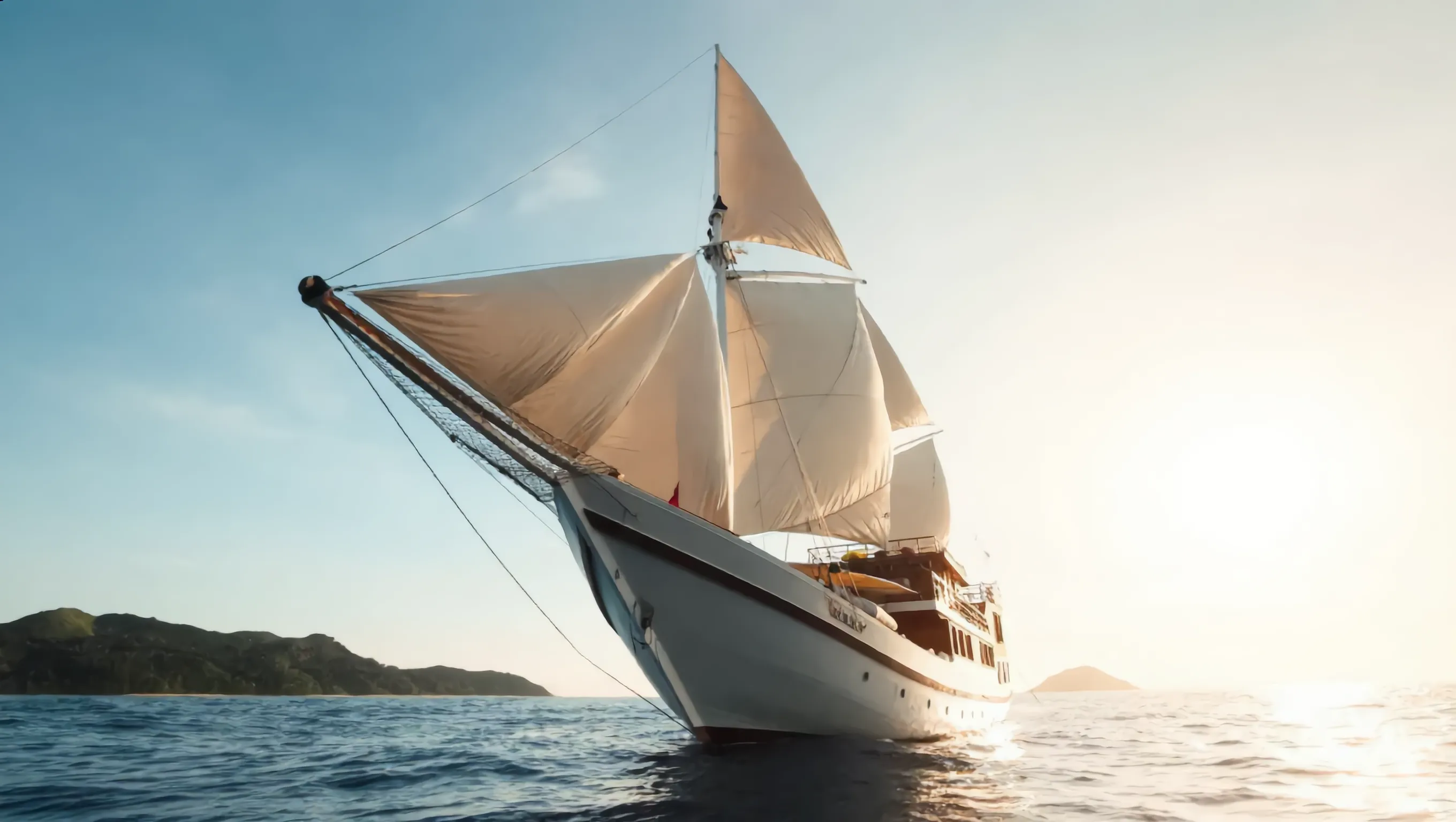
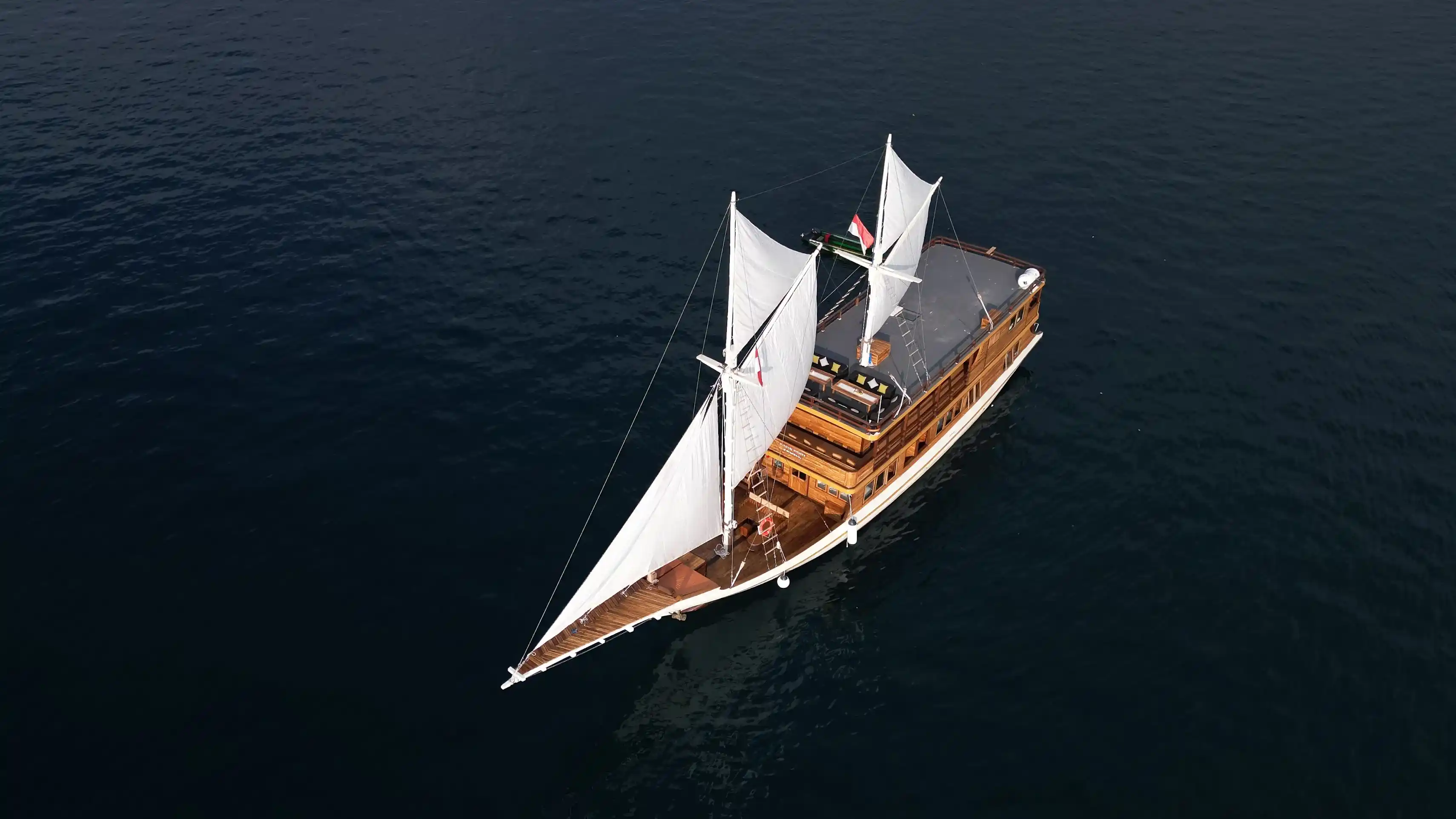
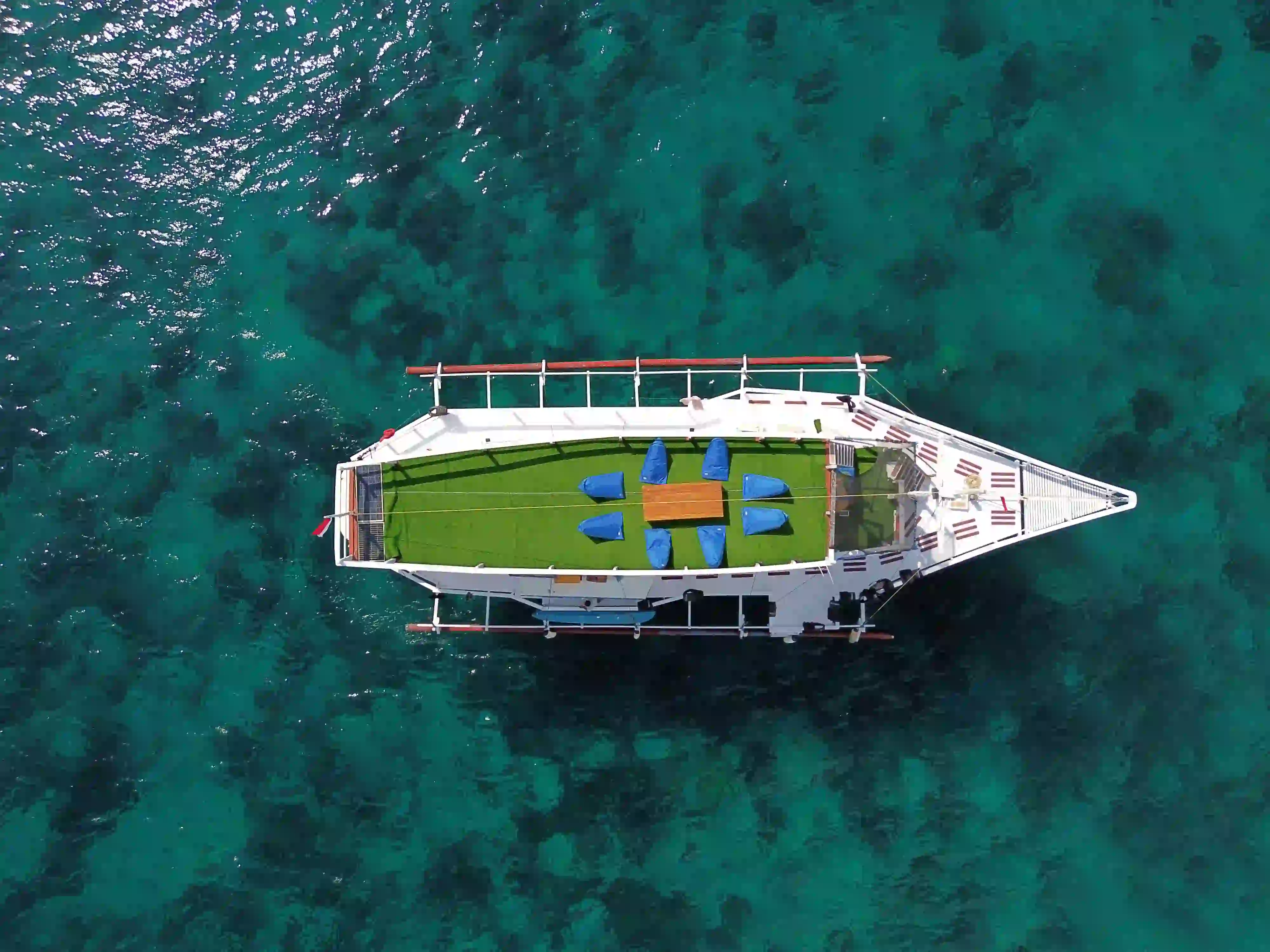
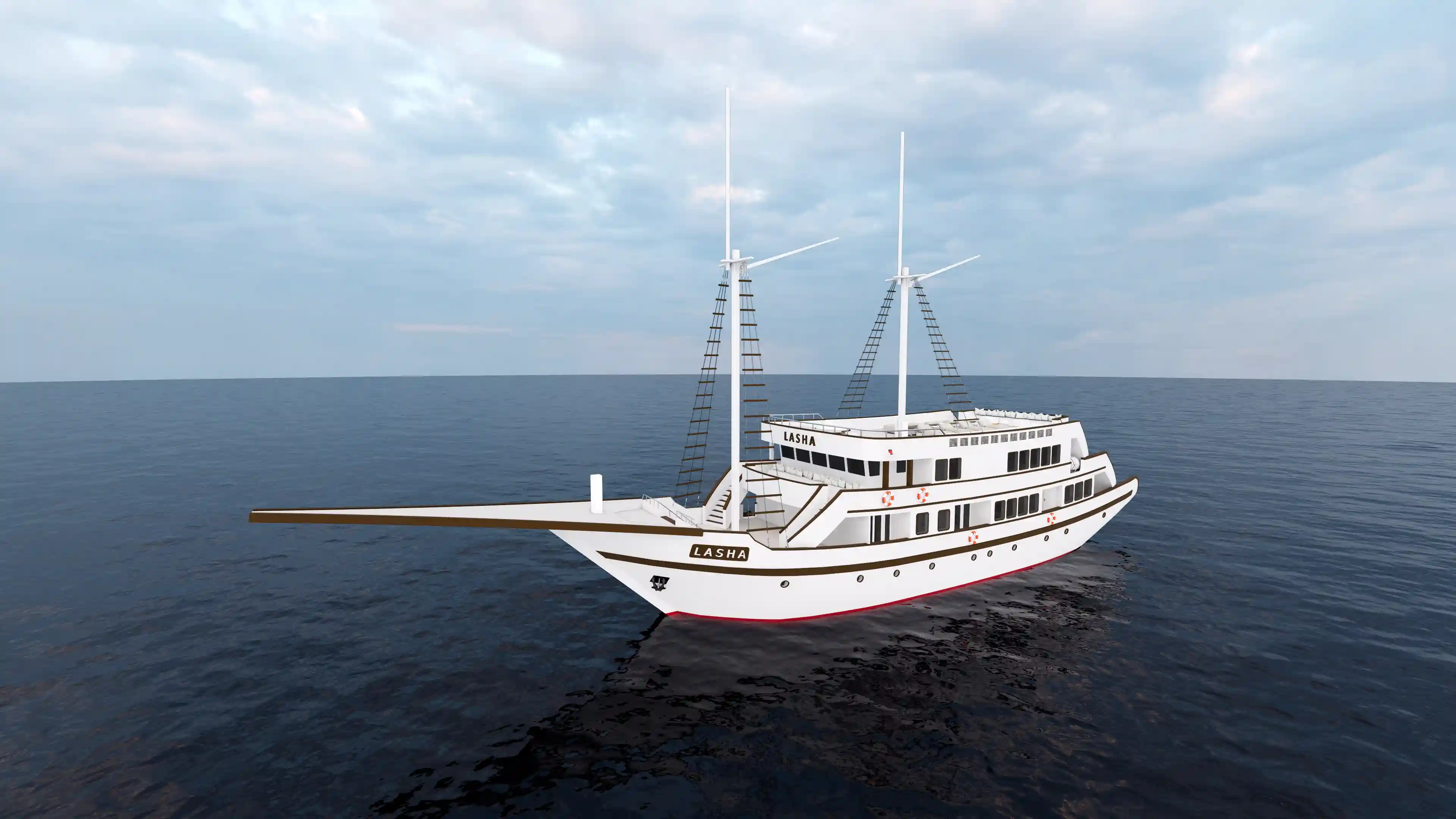
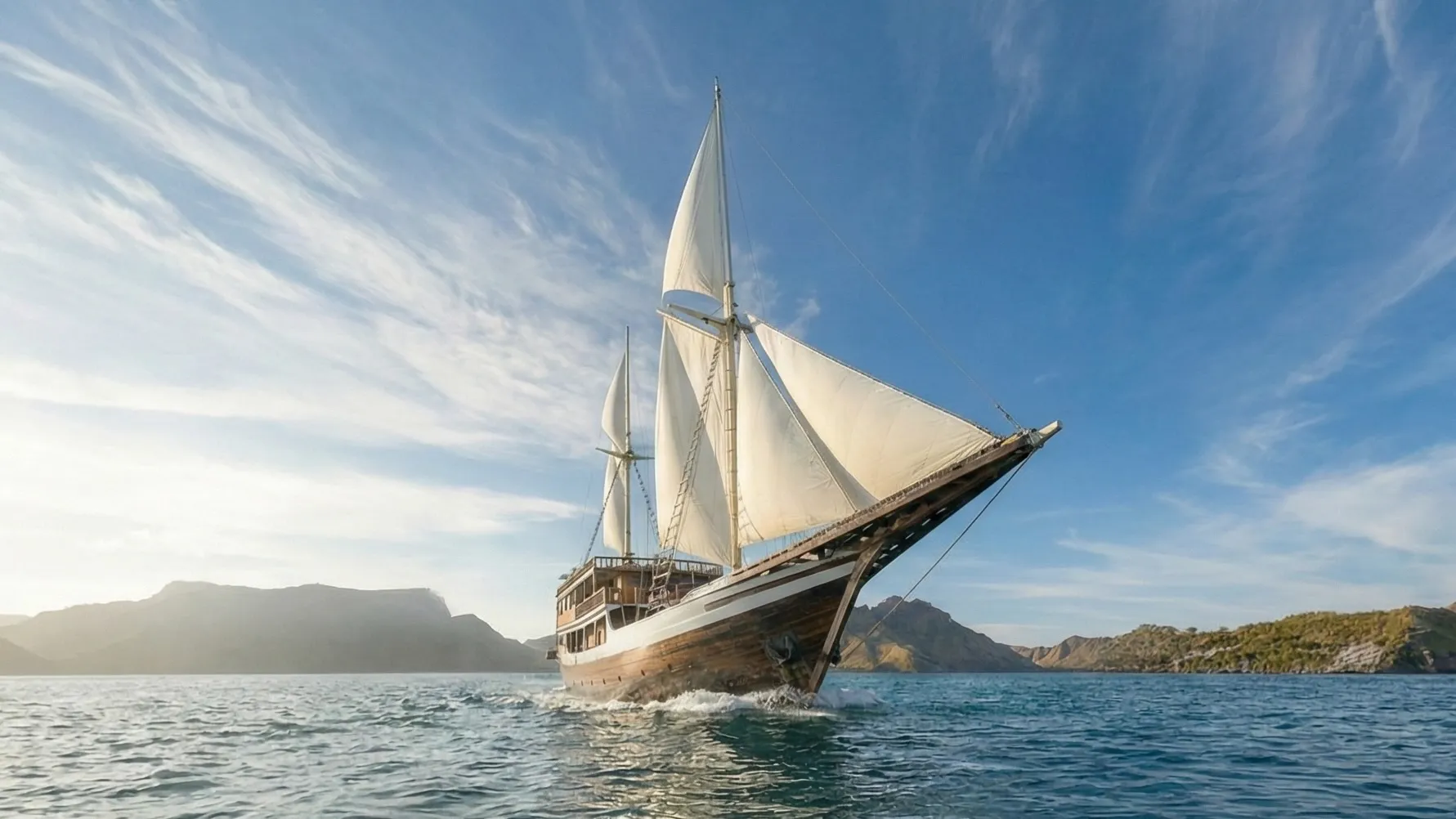
Our phinisi fleet represents the crown jewel of Indonesian maritime heritage. These traditional sailing vessels, built using centuries-old techniques, offer guests an authentic cultural experience while providing modern comfort and safety standards.
A phinisi is a traditional Indonesian sailing vessel originating from South Sulawesi. The term “phinisi” refers to both the boat design and the ethnic group (Buginese and Makassarese) who developed this iconic craft. These vessels have been used for centuries by Indonesian traders, spice merchants, and fishermen for long-distance ocean voyages throughout the Indonesian archipelago.
Distinctive Features:
In 2016, the Indonesian government submitted the phinisi to UNESCO for recognition as an Intangible Cultural Heritage of Humanity. This recognition acknowledges the vessel’s importance to Indonesian maritime culture, traditional knowledge systems, and sustainable boat-building practices.
Phinisis were the backbone of the spice trade for centuries, connecting Indonesia to regional and international commerce. They represented the technological pinnacle of wooden ship design, navigating treacherous waters and monsoon routes that European vessels initially avoided.
Today, phinisi charter tourism preserves this heritage while supporting traditional boat builders, craftspeople, and sailing crews. By chartering a phinisi, you directly support the continuation of these cultural traditions.
Materials: Traditional phinisis are constructed almost entirely from ironwood (jati iron), teak, and other dense tropical hardwoods. This material selection provides:
Construction Process: Master shipbuilders (tukang kayu) and their apprentices use hand tools and traditional joinery techniques. No detailed blueprints exist; the design lives in the craftsmen’s knowledge, passed down through generations. A phinisi typically requires 6-12 months of skilled labor to construct.
Sustainability Considerations: Responsible phinisi builders source wood from managed forests and replanting programs. Our fleet partners commit to sustainable practices and forest stewardship.
Characteristics: Budget-friendly traditional sailing experience with authentic aesthetic and functional cabins.
| Specification | Details |
|---|---|
| Length Overall | 60-70 feet |
| Beam (Width) | 14-18 feet |
| Gross Tonnage | 30-45 tons |
| Cabins | 6-8 cabins (twin/double) |
| Passenger Capacity | 10-16 guests |
| Crew | 6-8 crew members |
| Maximum Speed | 8-10 knots (sailing) |
| Auxiliary Engine | 180-250 HP diesel |
| Amenities | Basic cabins, shared bathrooms, communal dining |
| Pricing | IDR 8M-12M per night |
Characteristics: Enhanced comfort with improved furnishings, more spacious cabins, and refined dining experiences.
| Specification | Details |
|---|---|
| Length Overall | 70-80 feet |
| Beam (Width) | 16-20 feet |
| Gross Tonnage | 45-65 tons |
| Cabins | 8-10 cabins (double/suite options) |
| Passenger Capacity | 14-20 guests |
| Crew | 8-10 crew members |
| Maximum Speed | 9-11 knots (sailing) |
| Auxiliary Engine | 250-350 HP diesel |
| Amenities | Private bathrooms, AC, quality furnishings, à la carte dining |
| Pricing | IDR 12M-18M per night |
Characteristics: Premium traditional sailing with high-end accommodation, gourmet dining, and specialized services.
| Specification | Details |
|---|---|
| Length Overall | 80-95 feet |
| Beam (Width) | 18-22 feet |
| Gross Tonnage | 65-85 tons |
| Cabins | 10-12 suites with premium finishes |
| Passenger Capacity | 16-24 guests |
| Crew | 10-14 crew members (including chef) |
| Maximum Speed | 10-12 knots (sailing) |
| Auxiliary Engine | 350-450 HP diesel with electric stabilizers |
| Amenities | Ensuite bathrooms, AC, premium furnishings, gourmet cuisine, spa services |
| Pricing | IDR 18M-28M per night |
Characteristics: Exclusive ultra-luxury experience with bespoke services, private deck spaces, and concierge-level attention.
| Specification | Details |
|---|---|
| Length Overall | 90-110 feet |
| Beam (Width) | 20-25 feet |
| Gross Tonnage | 80-110 tons |
| Cabins | 10-14 luxe suites, some with private decks |
| Passenger Capacity | 16-28 guests (private charter capable) |
| Crew | 14-18 crew members |
| Maximum Speed | 11-13 knots (sailing) |
| Auxiliary Engine | 450-600 HP diesel with advanced stabilizers |
| Amenities | Luxury suites, multi-bathroom ensuites, Michelin-style cuisine, spa, concierge services |
| Pricing | USD 10,000-15,000+ per night |
Standard Class: Functional cabins with basic furnishings, communal dining, open deck lounge, snorkeling equipment, basic navigation technology.
Deluxe Class: Upgraded cabins with quality bedding, some AC units, private or semi-private bathrooms, dining salon with views, premium snorkeling gear, modern navigation systems.
Luxury Class: Spacious suites with premium bedding, full AC, ensuite marble bathrooms, gourmet dining room, lounge with entertainment, premium dive equipment, comprehensive communication systems.
VVIP Class: Bespoke suites with luxury bedding, full AC and climate control, marble bathrooms with soaking tubs, private dining options, premium bar service, spa facilities, advanced water sports equipment, satellite internet.
Authentic Experience: Sailing a traditional vessel connects you to centuries of Indonesian maritime heritage and culture.
Efficient Design: Phinisis are optimized for long-distance cruising with excellent fuel efficiency compared to modern motor yachts.
Environmental Responsibility: Wooden construction with renewable resources. When under sail, minimal fuel consumption and zero carbon emissions.
Passenger Comfort: Despite traditional design, modern phinisis incorporate AC, modern plumbing, and contemporary safety systems.
Value for Money: Competitive pricing compared to motor yachts while offering superior ambiance and cultural value.
Experienced Crews: Most phinisi crews have sailed these waters for decades, offering invaluable local knowledge and environmental expertise.
Typical Phinisi Crew Composition:
Services Provided: Full catering, housekeeping, activity coordination, safety enforcement, environmental education, cultural commentary, and 24/7 guest support.
Q: Will we actually sail, or is it just a motor yacht?
A: Weather permitting, we sail using traditional canvas and rigging. In calm conditions, we may use the auxiliary engine for efficiency while maintaining the sailing aesthetic.
Q: Is the traditional wood construction safe?
A: Yes. Ironwood is extremely durable and water-resistant. All vessels meet international maritime safety standards with modern navigation, communication, and life-saving equipment.
Q: How are phinisis maintained?
A: Regular haul-outs, wood treatment, engine servicing, and safety inspections per maritime regulations. We maintain detailed maintenance logs.
Q: Can we visit the fleet before booking?
A: Yes, if timing permits. We arrange pre-charter site visits for interested guests in Labuan Bajo or Lombok.
Q: What’s the difference between a phinisi and a gulet?
A: Phinisis are Indonesian traditional designs with distinctive twin masts. Gulets are similar Turkish charter vessels. Both offer traditional sailing experiences with different regional characteristics.
Q: Are phinisis suitable for divers?
A: Absolutely. Many phinisis have dedicated dive equipment, dive platforms, and staff familiar with diver requirements.
The phinisi schooner is not simply a vessel — it is the cultural and maritime soul of the Indonesian archipelago. Built by the Bugis and Makassar seafarers of Sulawesi using techniques passed down through centuries, these traditional wooden sailing boats now serve as the most sought-after platform for exploring Komodo National Park in style, comfort, and authenticity.
Traditional phinisi boats are constructed from ironwood (ulin) and teak, without metal fastenings in the hull — held together by precision joinery and wooden pegs. This ancient construction method creates a hull that flexes slightly with ocean movement, remarkably resilient and long-lasting in tropical marine conditions. Modern charter phinisi boats maintain traditional hull aesthetics while incorporating updated electrical systems, reinforced structural elements, and safety equipment meeting Indonesian maritime standards.
A standard charter phinisi ranges from 25 to 45 meters in length, with beam widths of 6-10 meters providing exceptional deck space. The two-masted design features a characteristic raked forward mast and a taller main mast. While modern phinisi charter boats rely primarily on diesel engines for maneuvering in the Komodo channel currents, sails are still raised when wind conditions allow — creating genuinely magical sunset sailing moments.
Komodo Luxury’s phinisi fleet offers a range of cabin configurations to suit different group sizes and preferences. Standard charter phinisi feature 4-6 private cabins, each with its own en-suite bathroom (western toilet, freshwater shower). Cabins range from twin-bed arrangements to queen and double bed configurations. The master cabin, typically located aft at the waterline level, offers the most stable ride and private deck access.
Above-deck sleeping arrangements are available on the main deck for those who prefer sleeping under stars — a beloved feature of warm-season Komodo charters. Sleeping decks are fitted with foam mattresses, mosquito nets, and privacy screens. Many guests find deck sleeping preferable to cabins during calm-weather crossings.
Each charter day begins with the crew anchoring in a sheltered cove or bay, ready for morning activities before the day’s heat builds. Breakfast is served on deck — fresh tropical fruit, eggs, local bread, and Flores coffee. Morning dives or snorkel sessions at the first site of the day run from approximately 7:00-10:00 AM in the best light and calmest conditions.
By midday, the boat relocates — sometimes motoring 30-60 minutes to the next destination. Lunch is served aboard, typically featuring freshly caught fish, Indonesian rice dishes, and vegetables. The afternoon brings more water activities, island trekking, or relaxed deck time. Sunset is observed from the bow or deck with cold drinks, and dinner is served after dark at anchor in a protected bay.
Every Komodo Luxury phinisi operates with a minimum crew of captain, engineer, cook, and two deck hands/dive guides. Our captains hold Indonesian maritime certification appropriate to vessel size and operating area. Crew members are trained in first aid, emergency procedures, and guest hospitality. Communication equipment, life rings, life jackets, and emergency signaling devices meet current Indonesian safety regulations.
The onboard cook is the unsung hero of every phinisi charter — preparing three meals daily from fresh ingredients purchased in Labuan Bajo before departure. Guest dietary preferences and restrictions are accommodated with advance notice. Expect fresh seafood, Indonesian home-cooking, and genuine hospitality that makes a phinisi charter feel more like visiting someone’s home than staying at a hotel.
Phinisi charters are priced per-boat rather than per-person, making them most economical for groups of 6-12 passengers. Charter duration ranges from full-day (single departure and return) to multi-week expeditions. Minimum charter periods for overnight trips are typically 2 nights/3 days. Contact our team for current vessel availability, pricing, and custom itinerary planning.
Komodo Luxury phinisi boats accommodate 6-16 guests depending on vessel size, with 6-12 the typical charter sweet spot for a balanced experience. Day trip configurations allow slightly more guests as all sleeping cabins are not in use.
Phinisi boats have a relatively deep keel and wide beam that provides good stability in most conditions. In calm Komodo seasons (May-October), seasickness is rarely an issue at anchor or on sheltered island crossings. We recommend Dramamine or scopolamine patches for the rare choppy-weather crossing. Cabins at water level are more stable than upper deck areas.
Komodo National Park is a UNESCO World Heritage Site and one of Indonesia’s most ecologically sensitive marine environments. All charter operations within the park are required to comply with BTNGK (Balai Taman Nasional Komodo) regulations governing anchor use, waste disposal, wildlife interaction distances, and visitor conduct. Responsible charter operators maintain zero-discharge policies for all waste in park waters, use mooring buoys where available rather than anchoring on reef, and brief guests on wildlife interaction guidelines before each activity.
Komodo Luxury is committed to sustainable charter operations. Our crew are trained in reef protection protocols, plastic-free provisioning is prioritized, and a portion of charter revenue supports local conservation initiatives through our partnership with Komodo Survival Program. Booking your charter with certified, responsible operators is one of the most direct contributions you can make to long-term protection of this irreplaceable ecosystem.
The optimal Komodo charter season runs from April through October — the dry season months when weather conditions are most reliable, seas are calmest, and visibility underwater reaches maximum clarity. July and August are peak season with the highest prices and highest demand; book these months 3-6 months in advance to secure your preferred vessel and dates.
April-June and September-October offer excellent conditions at shoulder-season pricing — often the smartest booking windows for experienced travelers. The wet season (November-March) brings increased rainfall and sometimes rough sea conditions between islands, though Komodo diving during this period can yield exceptional plankton-driven encounters including whale sharks. Flexibility and experience are required for wet season charters.
To arrange your Komodo charter, contact the Komodo Boat Charter team via WhatsApp or email with: preferred departure date, charter duration, group size, specific activity priorities (diving, trekking, photography), and budget range. We’ll respond within 24 hours with vessel availability, itinerary proposals, and pricing options. Custom itineraries are developed in consultation with you to ensure your charter maximizes both the sites you visit and the quality of each experience.