Last updated: August 16, 2026
The one-day format is a speedboat product, full stop. A wooden hull cannot cover Padar, Komodo Island, Pink Beach, Taka Makassar, Manta Point, and Kanawa between a dawn departure and a sunset return — a fast fibreglass boat can. Departures leave Labuan Bajo harbor between 5:30 and 6:00 AM precisely because the Padar stair climb is brutal after 10 AM and the dragons at Loh Liang retreat to shade by midday. Our speedboat Raja Hari was set up around this exact circuit. If you have one spare day in Labuan Bajo, the format works remarkably well; the full site-by-site breakdown is in our Komodo day trip guide. What it cannot give you is stillness. You share every stop with the rest of the day fleet, and you see the park only in its busiest window.
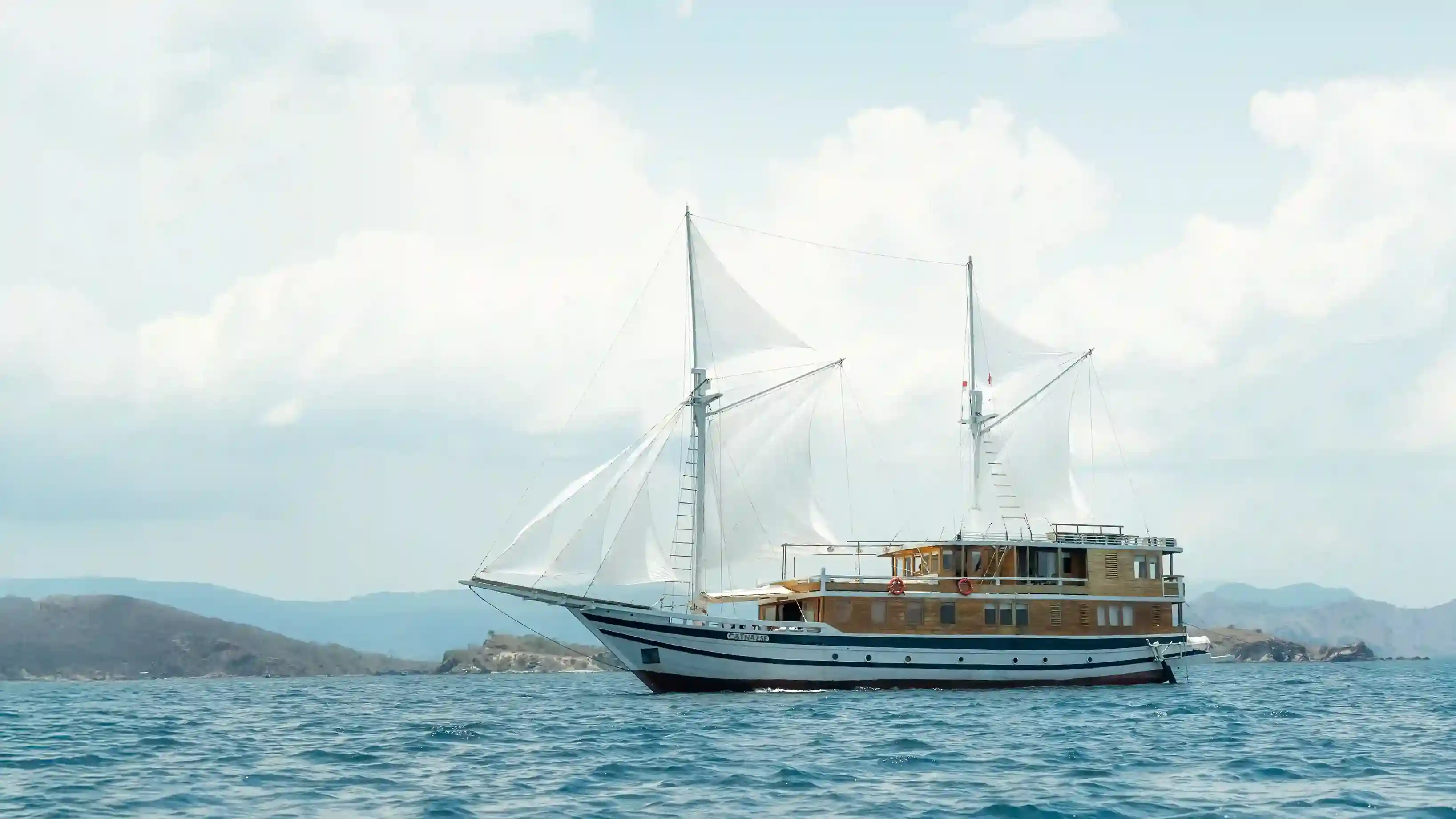
One night at anchor changes the arithmetic of the whole trip. A 2D1N sailing puts you at the base of Padar before the first speedboats leave the harbor, which means you climb in cool air and photograph the three-bay panorama with almost nobody in frame. The pace suits a phinisi — the traditional two-masted wooden ships built by Bugis shipwrights in Bulukumba, South Sulawesi — because the vessel itself becomes part of the experience: dinner on deck in Komodo’s silence, sleeping to the sound of water on a wooden hull. Mawar Biru, our Bulukumba-built phinisi, runs this itinerary more than any other. Two days also absorbs weather. If the swell postpones Manta Point by three hours, a day trip loses the site; an overnight trip simply reorders it.
Three days is when the itinerary stops being a highlights reel. You add the northern anchorages — Gili Lawa Darat’s ridgeline sunset, Sebayur’s house reef — plus a second, unhurried session at Manta Point and usually a ranger walk on Rinca at Loh Buaya, where dragon sightings are statistically more reliable than on Komodo itself. Snorkelers get the most from this format: Siaba Bay’s turtle grass, the coral gardens off Kanawa and Taka Makassar, each at the right tide rather than whenever the schedule allows.
Four days three nights reaches the corners of the park most visitors never hear about — the south around Padar’s back bays, Manta Alley when conditions allow, long empty beaches with no other mast on the horizon. Certified divers considering this length should look specifically at liveaboard itineraries, since a liveaboard is a vessel organized around multi-day diving: compressors, tender-based drift dives, dive guides on crew. Our partner network runs dedicated diving programs through Komodo Luxury’s liveaboard fleet, and the specialist comparison at Komodo Island Liveaboard covers how dive-focused itineraries differ from cruising ones. For non-divers, 4D3N is about depth of a different kind: the park with the crowds subtracted entirely.
Every Komodo boat trip draws from the same map; the difference between a good operator and an average one is sequencing. The core sites cluster around the Linta Strait, where tidal currents dictate when Manta Point is a gentle drift and when it is unswimmable. A competent crew reads the tide tables before setting the day’s order, which is why two boats running “the same itinerary” can deliver completely different trips.
The sequencing question got sharper in 2026, when the park authority introduced a cap of 1,000 visitors per day. The cap has not made the park feel restrictive — spread across a park of more than 1,700 square kilometers of land and sea it is a light footprint — but it has made permits and timing part of the operator’s job. Boats that secure entries early and route away from the fleet’s rhythm now deliver a visibly quieter trip than boats that follow the convoy.
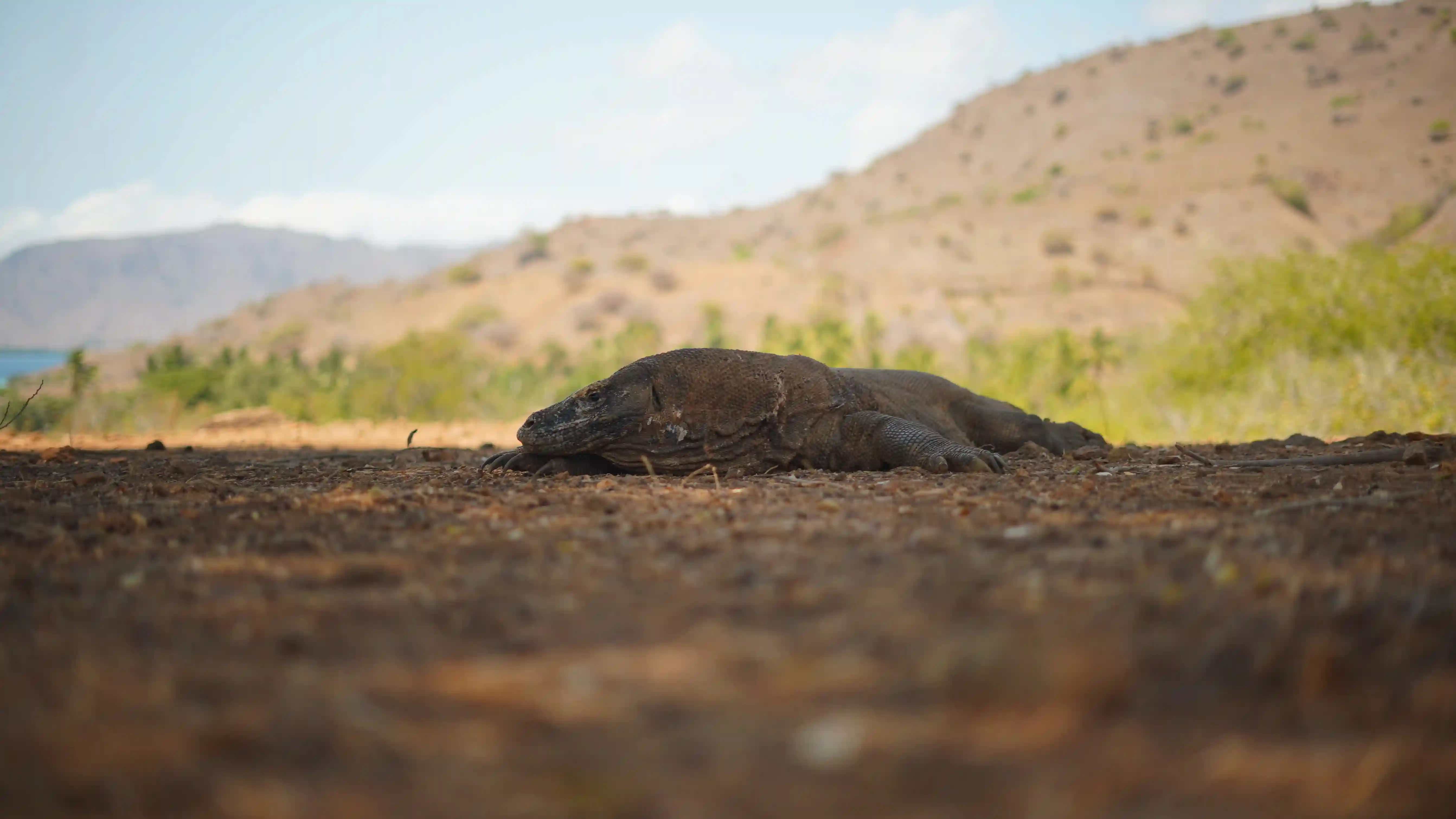
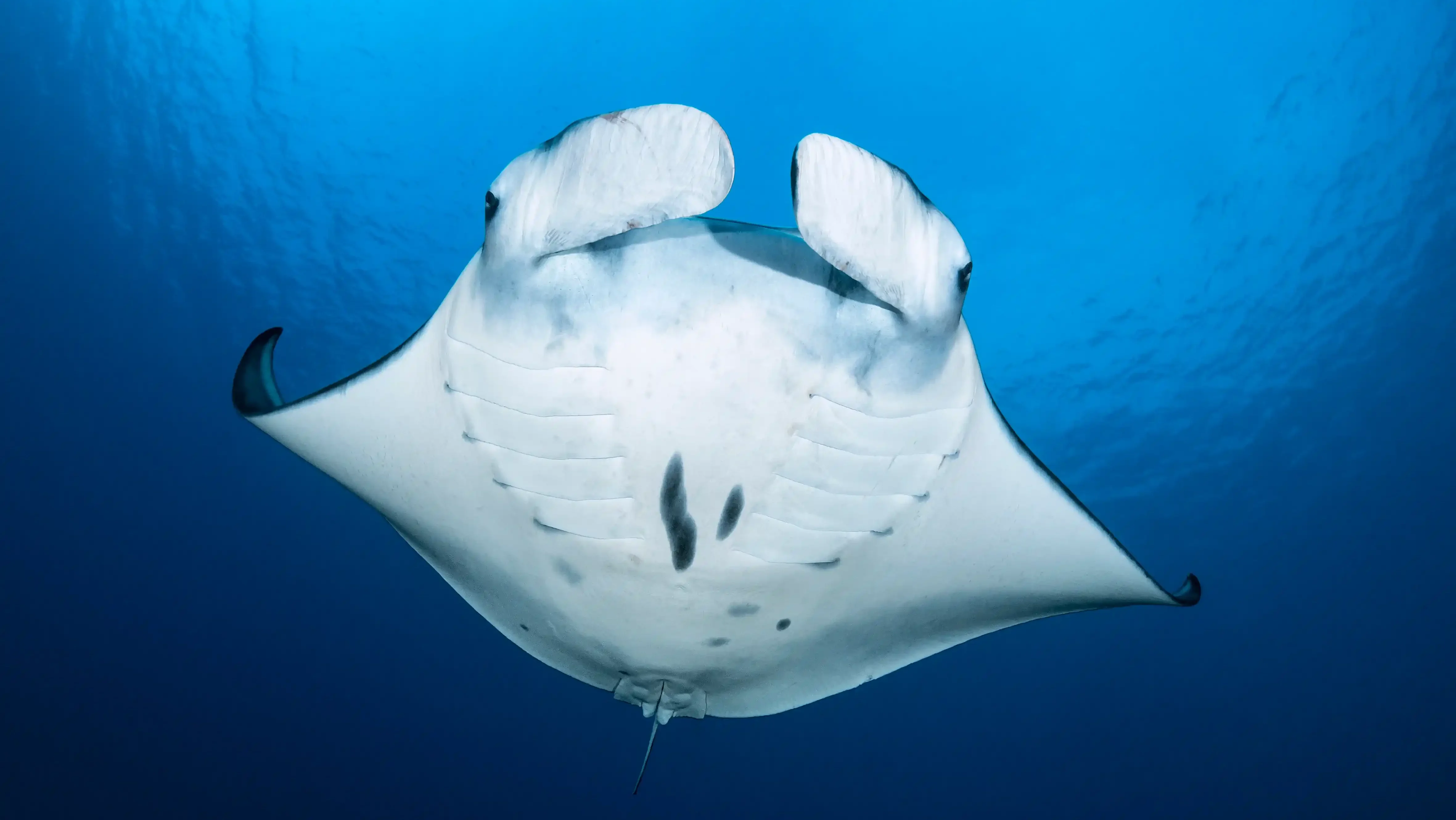
The anchor sites, in the order an overnight itinerary usually takes them: Padar Island at first light for the viewpoint climb; Komodo Island’s Loh Liang for the ranger-guided dragon trek; Pink Beach, whose color comes from crushed red organ-pipe coral; Taka Makassar, a crescent sandbar that barely clears the tide; Manta Point, a cleaning station where reef mantas hold in the current; and Kalong Island at dusk, when tens of thousands of flying foxes lift off the mangroves in a single unbroken stream. Day trips sample this list; overnight trips complete it.
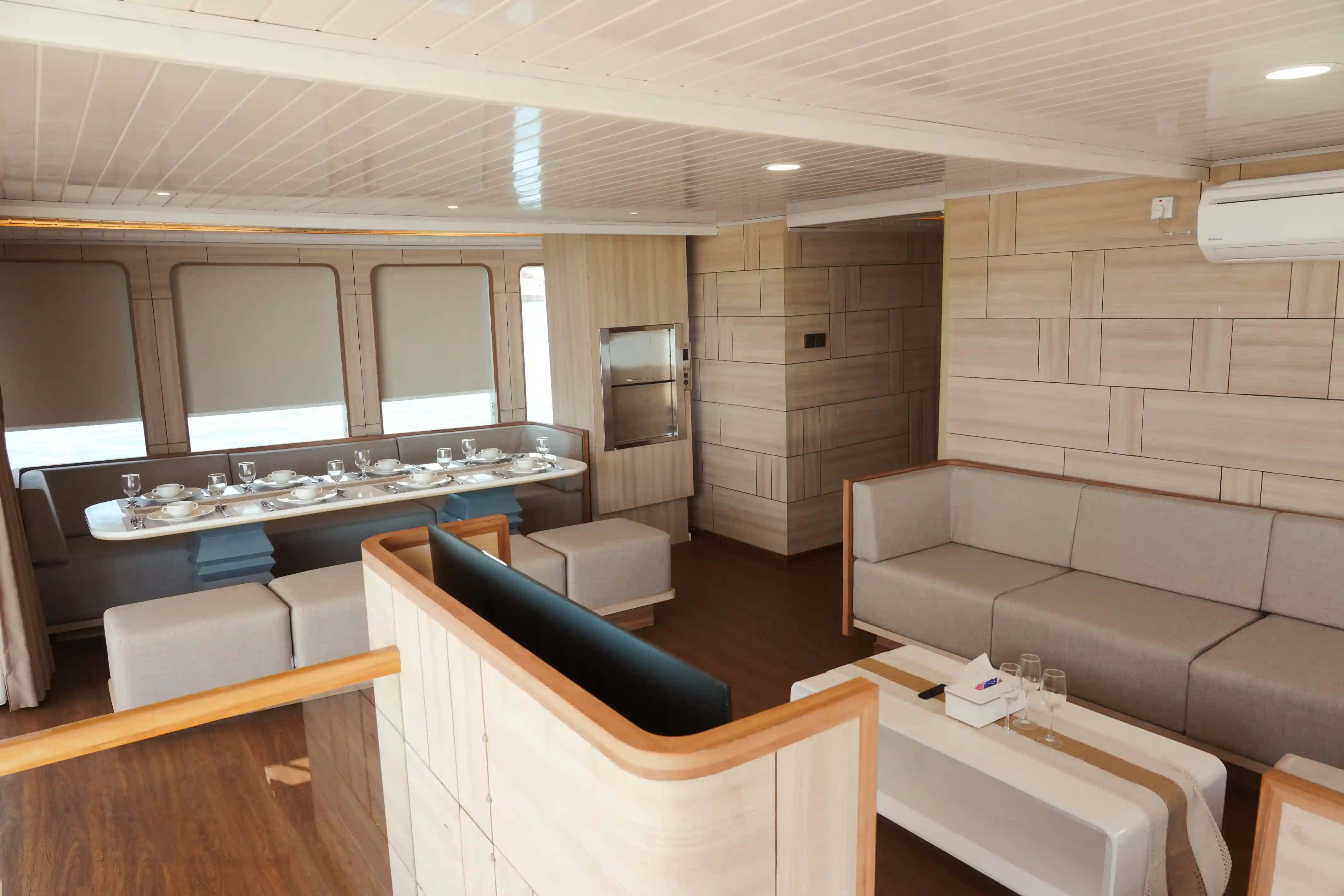
The vocabulary matters, because the market blurs it and travelers pay for the confusion. A phinisi is a specific thing: a traditional wooden sailing ship of Bulukumba lineage, now typically motor-driven, refitted with cabins — the soul-of-the-archipelago option. A speedboat trades atmosphere for range and is the only honest way to run a day trip. A yacht means a luxury private vessel with professional crew — in Komodo, Aurora is our reference point for that standard — chartered whole, never sold by the seat. A catamaran is the modern twin-hull answer for travelers who want stability in a beam sea. And a cruise describes the passenger-comfort end of the overnight spectrum: en-suite cabins, chef-prepared meals, a crew-to-guest ratio that lets you forget logistics exist. We compare all of them, hull by hull, in our Komodo boat types comparison.
Cutting across every hull type is one commercial distinction: a charter means you take the entire vessel and its crew — your route, your pace, your group only — while a trip or tour is a scheduled departure sold per person. Couples and solo travelers usually join scheduled trips; families and groups of four or more often find a charter costs less per head than they assumed. The honest trade-offs are laid out in our private vs shared trip comparison.
Komodo has two seasons, and both have a case. April through November is the dry season: calm seas, reliable visibility, the golden-brown savanna hills that made Padar famous. This is the easiest window for first-timers and the safest bet for photographers. November through March brings rain, greener hills, fewer boats — and it is manta season, when plankton-rich water draws reef mantas to the cleaning stations in numbers the dry season rarely matches. Divers and manta-focused snorkelers deliberately choose these months.
On the question we have been asked most this week: yes, sailings are running normally. The magnitude 7.7 earthquake of August 15, 2026 struck roughly 200 kilometers offshore; the recorded wave reached 0.36 meters and no destructive tsunami occurred. Port authorities cleared vessels the same day, and boats departed Labuan Bajo on schedule that afternoon. Crews here treat sea-state protocols as routine, not exception — it is part of what operating in these waters full-time means.
Strip away the marketing and top-rated tours share four traits: the operator owns or directly manages its vessels rather than brokering strangers’ boats; crews are licensed locals who run the strait weekly and read its tides; itineraries are sequenced against the crowd rather than with it; and reviews are verifiable in volume, not curated in screenshots. This site is operated in partnership with Komodo Luxury — a registered Indonesian PT under Juara Holding Group Limited with 1,500+ verified guest reviews (4.9/5) — whose Lamborajo, Ayvara, and Malca fleets set the benchmark we hold our own vessels to. Between that fleet and our own Raja Hari, Mawar Biru, and Aurora, every format on this page — speedboat day trip, phinisi overnight, private yacht charter — is covered by boats we actually know, crewed by people we actually employ.
Travelers type both phrases, and the results they get back are nearly identical — which matches how the water actually works. In Labuan Bajo, a Komodo boat tour and a Komodo boat trip describe the same product family: a guided journey by sea through Komodo National Park, sold either per person on a scheduled departure or as a whole-boat private booking. The word “tour” leans toward the guided, scheduled end of the spectrum — a crew, a set itinerary, a licensed ranger at every dragon site — while “trip” is the umbrella that also covers private charters. Nothing about the boats, routes, or sites changes with the vocabulary.
What does change is the booking decision behind each phrase, and it is worth making deliberately:
If you arrived here searching for a Komodo boat tour rather than a trip, every section on this page still applies to you — formats, routes, boat types, and seasons are identical whichever word you searched.
Pricing moves with format, hull, season, and group size, so a single number here would mislead you — a shared speedboat seat and a whole-yacht charter are different products in every dimension. Our charter price guide keeps current figures for each vessel class and explains what is bundled and what is not. Budget separately for Komodo National Park fees, which are set by the park authority, paid per person, and never included in a quote that looks suspiciously complete.
The short version of fifteen years on this water: match the format to your time, the hull to your temperament, and the season to what you most want to see. Do those three things and there is no bad Komodo boat trip — only different ways of meeting the same extraordinary place.
published rates for every format on this page
Exploreshared open trip or private charter — which fits
Explorethe guided tour lineup, day and multi-day
Exploreflights, transfers and boarding logistics
ExploreTwo days one night (2D1N) is the sweet spot for most first-time visitors: it covers Padar, the dragon trek, Pink Beach, and Manta Point while adding a sunrise start that day trips cannot match. Choose a day trip if you only have one day in Labuan Bajo, and 3D2N or 4D3N if you want the northern anchorages, a second manta session, or the quiet southern corners of the park.
A speedboat day trip is genuinely worth it if one day is all you have — it reaches five to six major sites between dawn and sunset. Overnight trips are better value per hour of experience, because you visit Padar and the dragon trails before the day fleet arrives and see the park at its emptiest.
A trip or tour is a scheduled departure sold per person on a shared vessel. A charter means you take the entire boat and its crew privately — your own route, pace, and group. Couples usually join scheduled trips; groups of four or more often find a private charter costs less per person than expected.
April through November is the dry season: calm seas, clear visibility, and the golden hills Padar is famous for. November through March is manta season, when plankton-rich water draws reef mantas to cleaning stations in far greater numbers. Both windows are good — they simply reward different priorities.
No. The magnitude 7.7 earthquake on August 15, 2026 struck about 200 km offshore, produced a maximum recorded wave of 0.36 meters, and caused no destructive tsunami. Port authorities cleared vessels the same day and sailings from Labuan Bajo resumed that afternoon.
Yes — every standard itinerary from a day trip upward includes both a ranger-guided dragon trek on Komodo or Rinca and a snorkel stop at Manta Point. Overnight formats improve your odds at Manta Point because the crew can time the visit to the tide rather than to a fixed schedule.