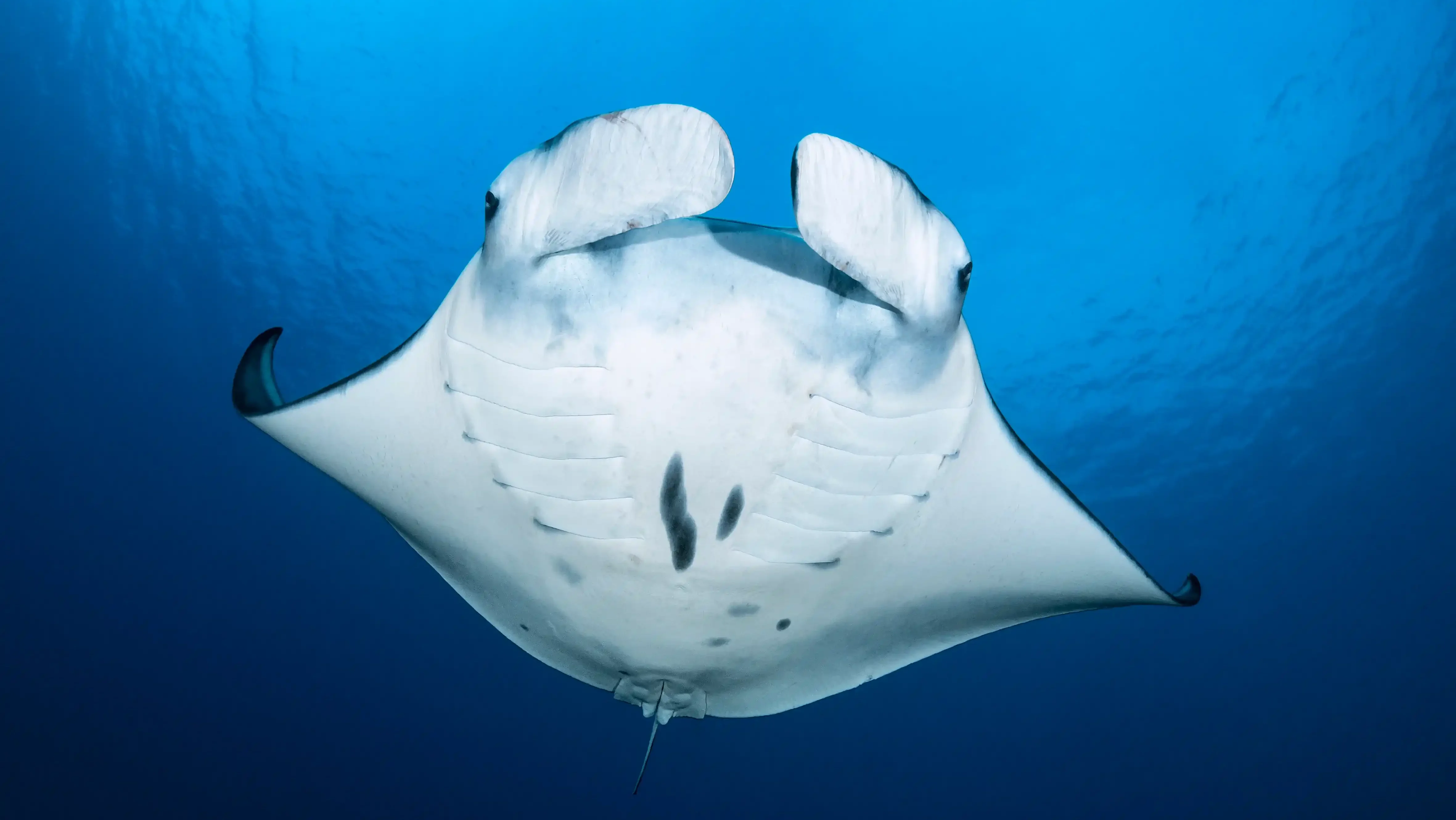
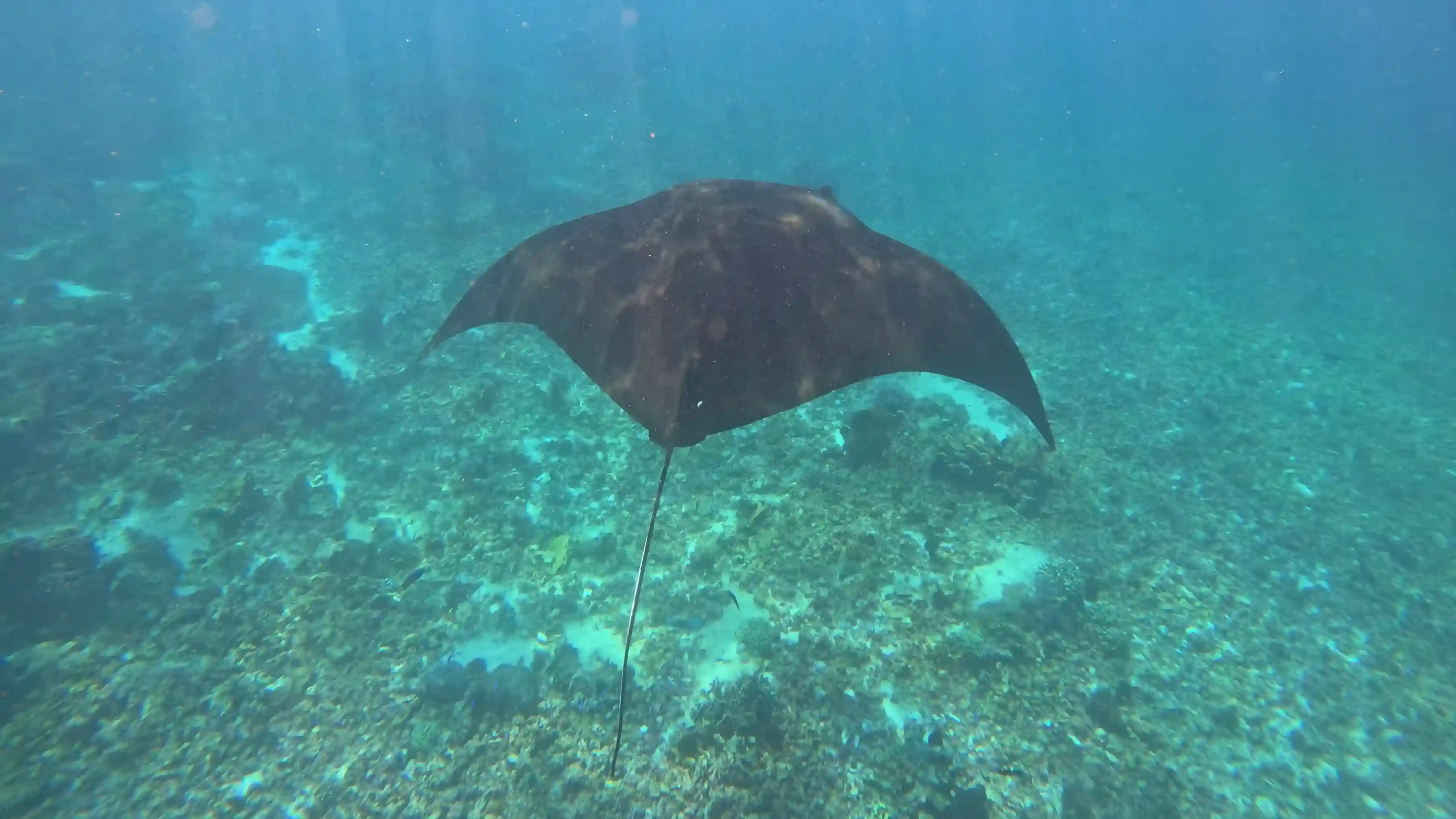
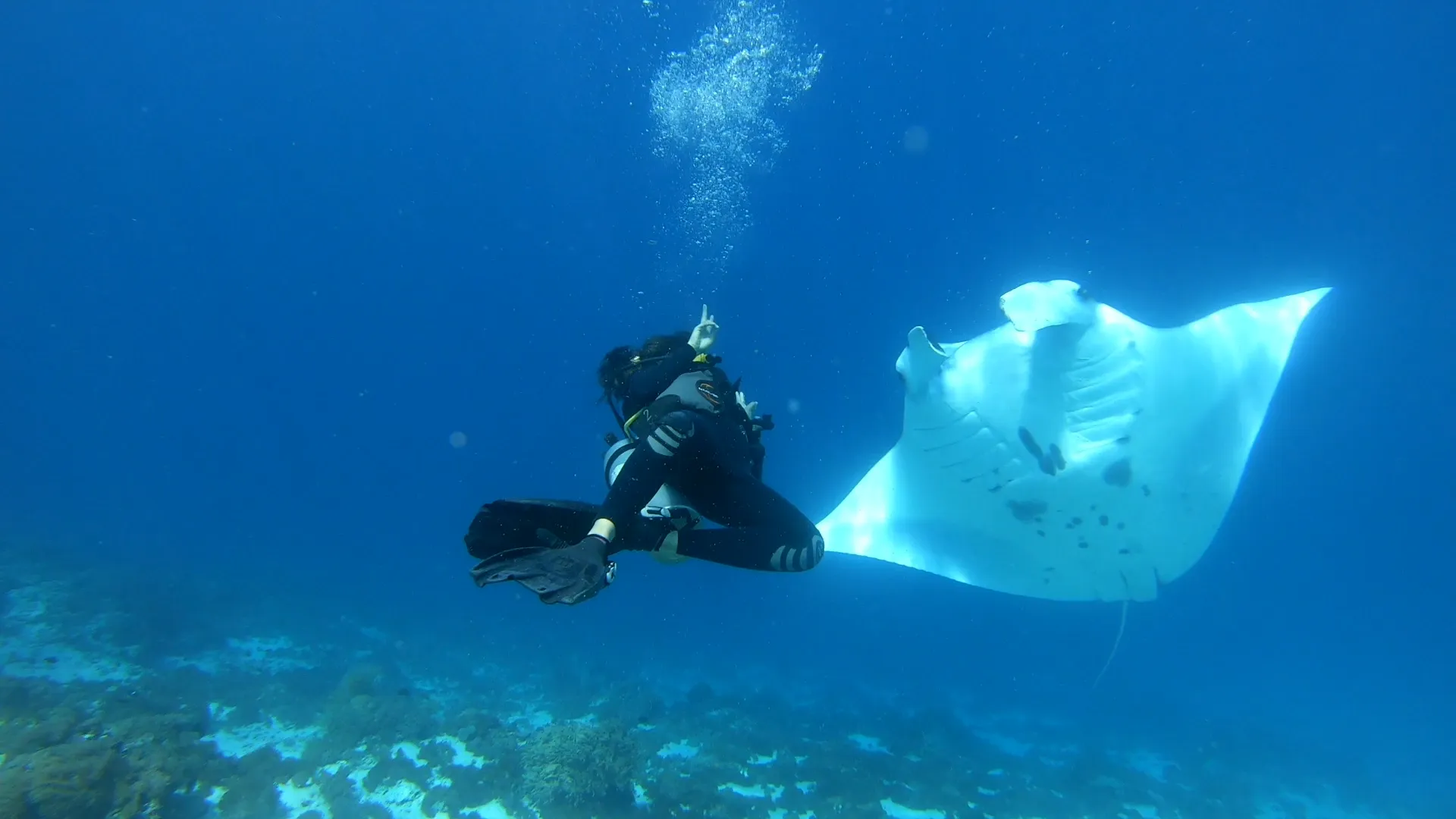
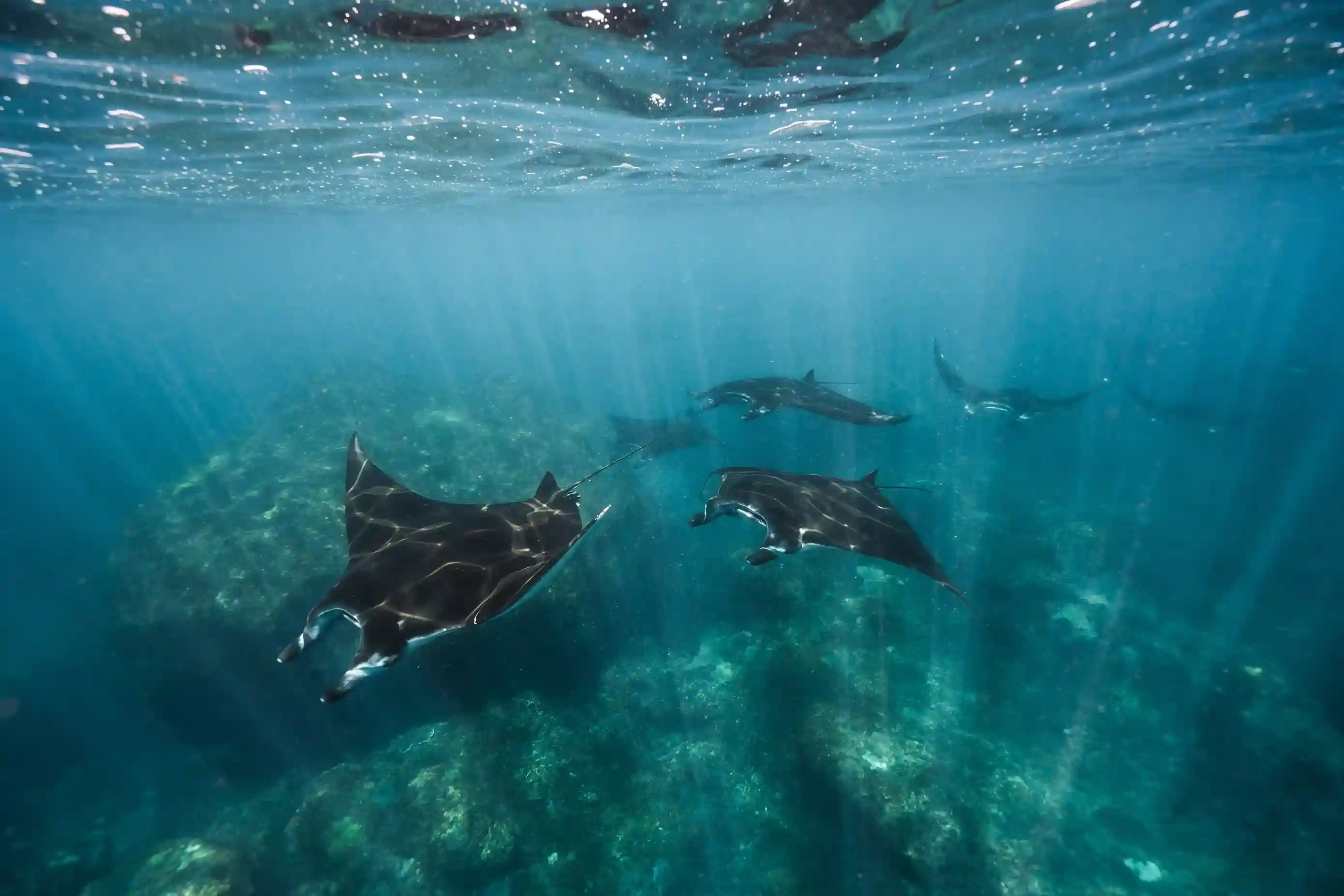
Manta Point, locally known as Makassar Reef or Mawan, is the premier manta ray encounter site in Komodo National Park and one of the most extraordinary marine wildlife experiences available anywhere in the world. Located in the southern waters of the park between Komodo Island and the smaller islands of Mawan and Lawa Darat, Manta Point serves as a critical cleaning station and feeding ground for resident populations of reef manta rays (Mobula alfredi) and occasional visiting oceanic manta rays (Mobula birostris) that can reach wingspans exceeding 5 meters.
For visitors aboard a luxury phinisi charter or private yacht, Manta Point represents one of the most emotionally powerful moments of any Komodo itinerary. Swimming alongside these gentle giants as they glide effortlessly through the crystal-clear water, their enormous wings casting shadows across the reef below, creates a memory that travelers consistently describe as life-changing and profoundly moving.
The manta rays found at Manta Point Komodo are predominantly reef manta rays, a species that reaches typical wingspans of 3 to 4.5 meters and can weigh up to 700 kilograms. These magnificent animals are among the most intelligent marine creatures, possessing the largest brain-to-body ratio of any fish species. Individual manta rays can be identified by the unique pattern of spots on their underside, similar to human fingerprints, and research programs in Komodo have catalogued hundreds of individual mantas over the years.
Manta Point functions primarily as a cleaning station, a specific location on the reef where manta rays congregate to have parasites and dead skin removed by smaller fish species known as cleaner wrasse and cleaner shrimp. During cleaning, mantas hover nearly motionless above designated coral formations, allowing the tiny cleaner fish to access their gills, mouths, and body surfaces. This behavior creates ideal conditions for snorkelers and divers who can observe the mantas at close range while the animals are relaxed and stationary.
The site also serves as a feeding area, particularly during periods of plankton concentration driven by tidal currents. When feeding, manta rays perform elegant barrel rolls and somersaults as they funnel plankton-rich water through their gill plates, creating a spectacular underwater ballet that can involve dozens of mantas simultaneously during peak conditions.
Manta rays can be encountered at Manta Point throughout most of the year, though sighting frequency and the number of individuals present vary significantly by season and conditions. Understanding these patterns allows charter guests to optimize their itineraries for the highest probability of extraordinary manta encounters.
The peak manta season at Komodo runs from December through February, when warmer water temperatures and plankton blooms attract the largest aggregations of manta rays to the cleaning stations and feeding areas. During peak season, encounters with 10 to 30 individual mantas in a single session are not uncommon, and the mantas tend to be particularly relaxed and approachable.
The shoulder seasons of March through May and October through November also offer excellent manta encounters with somewhat smaller numbers. The dry season months of June through September see fewer mantas at the traditional cleaning stations, though encounters are still possible and the overall diving and snorkeling conditions during this period are often superior with better visibility and calmer seas.
The best time of day for Manta Point visits is typically mid-morning between 8:00 AM and 11:00 AM, when tidal conditions often create the plankton concentrations that attract feeding mantas. Your charter captain will monitor local conditions and adjust the itinerary to maximize the probability of manta encounters based on real-time information from the network of local guides and rangers.
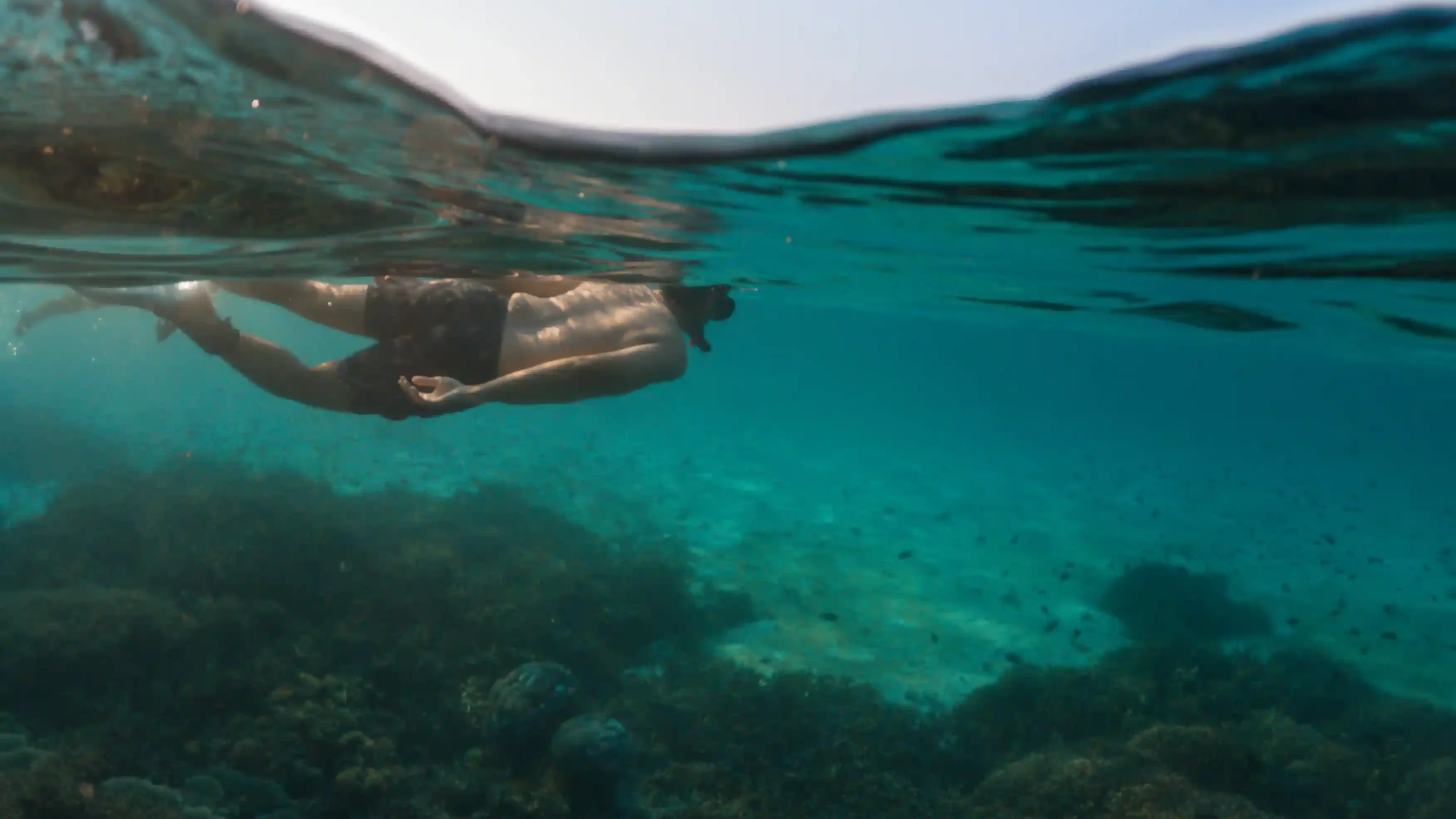
One of the remarkable aspects of Manta Point is that world-class manta encounters are accessible to snorkelers as well as divers. The cleaning stations are located in relatively shallow water, typically between 5 and 12 meters depth, and the mantas frequently rise to within 1 to 3 meters of the surface, placing them within easy viewing distance for snorkelers floating above.
Snorkeling at Manta Point requires calm observation and respect for the animals. The key to a successful manta snorkeling encounter is to float quietly on the surface without making sudden movements, splashing, or attempting to touch the animals. Mantas are naturally curious creatures and will often approach motionless snorkelers, circling beneath them or rising close enough to make eye contact. These voluntary approaches by the mantas, rather than any pursuit by humans, create the most magical and respectful encounter experiences.
For guests on a Komodo snorkeling trip, our crew provides detailed briefings on manta etiquette before entering the water, ensuring that every guest understands proper behavior around these sensitive animals. The crew also monitors water conditions and manta activity from the boat, directing snorkelers to the areas of highest activity and providing safety oversight throughout the session.
For certified divers, Manta Point offers an elevated level of manta encounter intimacy. Diving at the cleaning stations allows you to position yourself at reef level, watching as mantas glide directly overhead with their massive wings spanning your entire field of vision. The proximity and perspective available to divers at the cleaning stations is simply not replicable from the surface, making Manta Point one of the strongest motivations for incorporating diving into a Komodo charter itinerary.
The dive site itself features a series of coral bommies and ridges at depths ranging from 8 to 20 meters, with the primary cleaning stations concentrated between 8 and 15 meters. Current conditions vary from mild to moderate depending on tidal state, and experienced dive guides from your dive safari charter will time the dive to coincide with manageable current conditions that are conducive to manta activity.
Beyond the manta rays, the reef system at Manta Point supports abundant marine life including reef sharks, eagle rays, various species of sea turtle, moray eels, octopus, and dense schools of tropical fish. The combination of megafauna encounters with rich reef biodiversity makes Manta Point one of the most complete and satisfying dive sites in the entire Komodo region.
Indonesia declared full protection for manta rays in 2014, making it illegal to catch, trade, or harm manta rays throughout the country’s vast territorial waters. This landmark legislation was driven in part by the economic argument that live manta rays in places like Komodo generate far more revenue through tourism than dead mantas ever could through the gill raker trade. A single manta ray in Komodo is estimated to generate over one million US dollars in tourism revenue over its lifetime, compared to a few hundred dollars from a single fishing kill.
Research programs at Manta Point contribute to global manta conservation by monitoring population health, tracking individual movement patterns, and studying the impacts of tourism on manta behavior. Photo identification databases allow researchers to track individual mantas over years and even decades, providing invaluable data on population dynamics, site fidelity, and behavioral changes.
As a charter guest, you can contribute to manta conservation by following encounter guidelines, reporting sightings to the Manta Project Indonesia, and choosing charter operators like Komodo Boat Charter that enforce responsible wildlife interaction practices. Every respectful encounter helps demonstrate the economic value of living mantas and strengthens the case for continued protection.
To maximize your Manta Point experience, bring an underwater camera or GoPro to capture the encounter, reef-safe sunscreen to protect the marine environment, a rash guard or wetsuit for sun and jellyfish protection, and a snorkel mask that fits properly without leaking. Most luxury liveaboard charters provide quality snorkeling equipment, but many experienced travelers prefer using their own well-fitted mask for optimal comfort and clarity during these once-in-a-lifetime encounters.
Swimming with manta rays at Manta Point is an experience that transcends ordinary travel and enters the realm of life-defining moments. Book your luxury Komodo charter with Komodo Boat Charter and let our experienced crew guide you to the most spectacular manta encounters the park has to offer. Contact us today to design your dream manta ray itinerary.
Peak manta season runs from December through February, but mantas can be encountered year-round. The shoulder months of March through May and October through November also offer excellent encounter rates. Your charter captain will optimize the itinerary based on current conditions and local intelligence.
Absolutely. Snorkeling with mantas is one of the most popular activities in Komodo National Park. The cleaning stations are in shallow water, and the mantas frequently rise close to the surface, providing spectacular views for snorkelers floating above.
No, manta rays are gentle filter feeders that pose no danger to humans. Unlike stingrays, mantas have no stinging barb. They have tiny teeth that serve no defensive purpose and are naturally curious and tolerant of respectful humans in the water. Following your crew’s briefing on proper manta etiquette ensures a safe and magical experience.
The reef manta rays commonly encountered at Manta Point have wingspans of 3 to 4.5 meters. On rare occasions, oceanic manta rays with wingspans exceeding 5 meters are spotted in the waters around Komodo, representing one of the largest fish species in the ocean.