Last updated: August 16, 2026
People lump November and December together because they sit side by side and both fall inside manta season. On the water they behave nothing alike. November is the tail of the April-to-November dry season: light winds, long settled spells, and a park that has exhaled after the European summer. December belongs to the holiday calendar. The weather begins its slow turn toward the northwest monsoon, but the defining force of the month is demand, not meteorology.
| November | December | |
|---|---|---|
| Sea state | Calm dry-season water for most of the month | Generally workable; occasional swell as the monsoon transition begins |
| Crowds | The quietest stretch of the manta season | Builds steadily toward the Christmas-to-New-Year peak |
| Manta activity | Season opening; sightings ramp up through the month | Established; plankton-rich water and consistent activity |
| Planning lead time | Relaxed — weeks work | Long — the holiday window is settled months out |
| Character | An operator’s month | A celebration month |
Ask a Labuan Bajo captain when he would take his own family into the park and November comes up more often than any other answer. The reasons are practical. The dry season has done its work — hills gone gold, visibility long, swell minimal — but the fleet that fills every bay in July and August has thinned dramatically. You get Pink Beach in the morning without negotiating for anchor room. You get the ranger walks on Komodo and Rinca at a conversational pace. And critically, you get the opening weeks of manta season layered on top of dry-season comfort, a combination that exists only in this one month.
November is also the sensible month to study how Komodo boat charter pricing is structured, because the shoulder period is when the structure works hardest in your favour: the same vessels, the same crews, the same itineraries that carry the peak months, on a calendar page most travellers overlook. We say this every year and every year November guests write back mildly annoyed that the secret is being published.
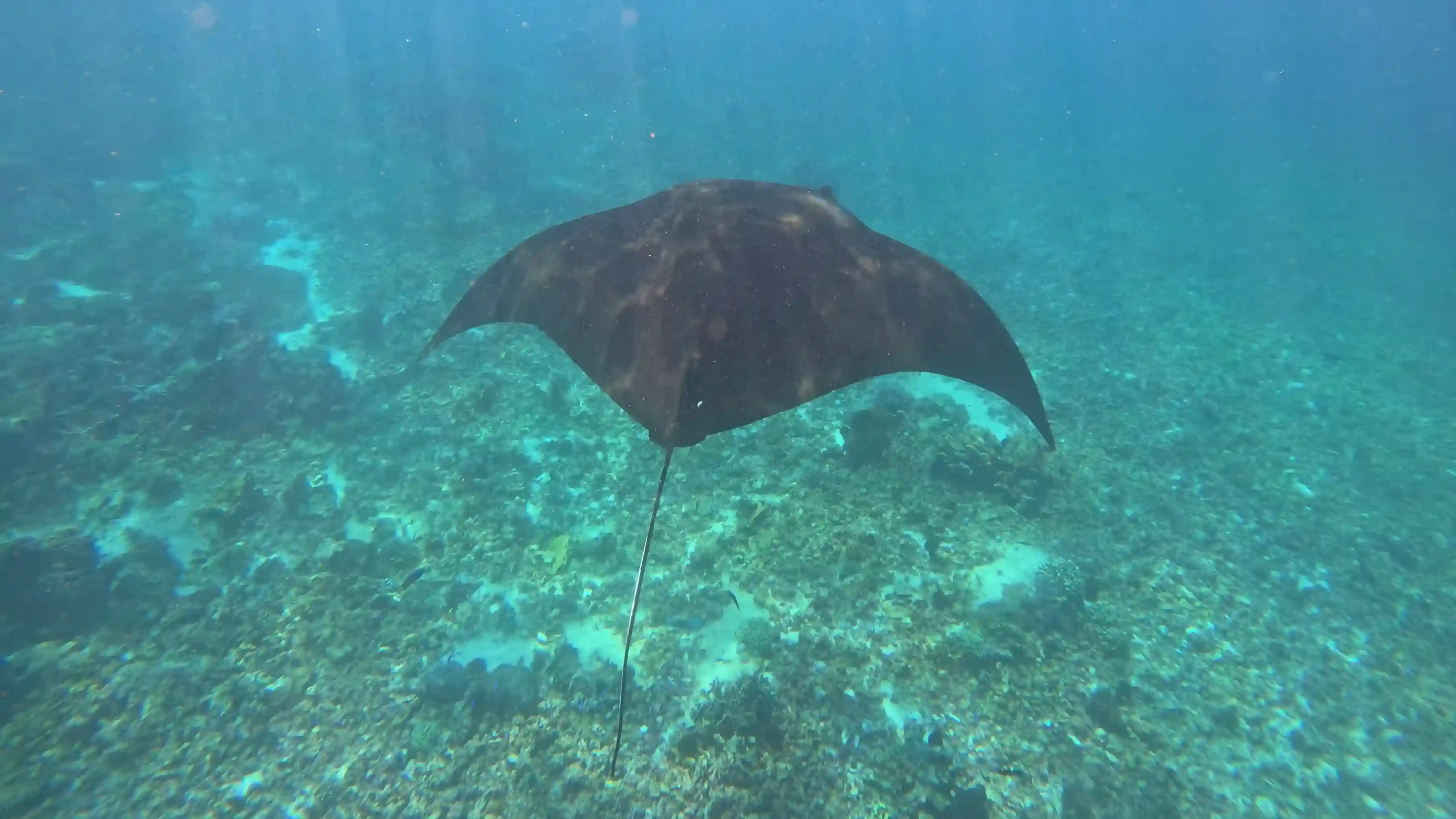
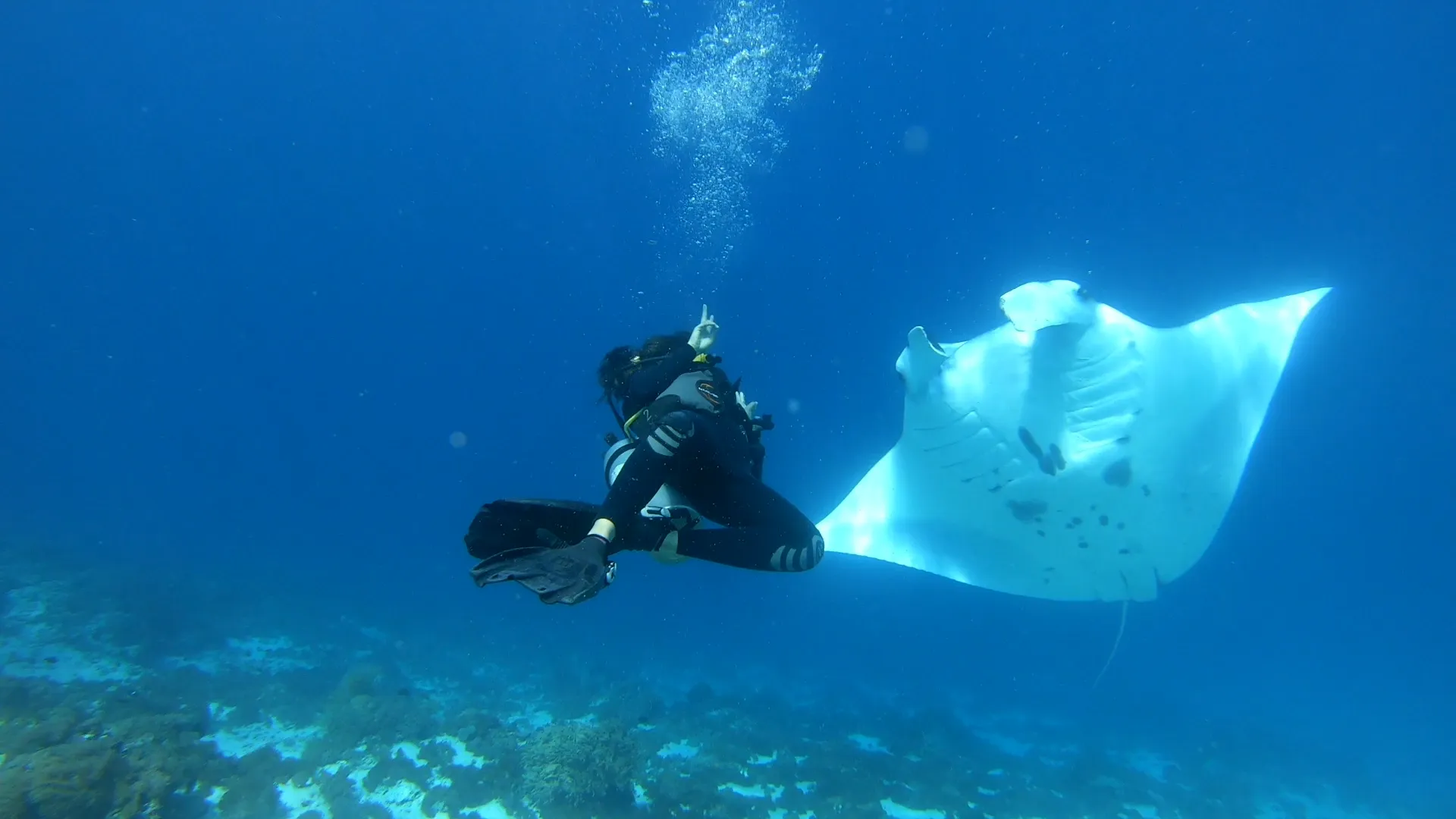
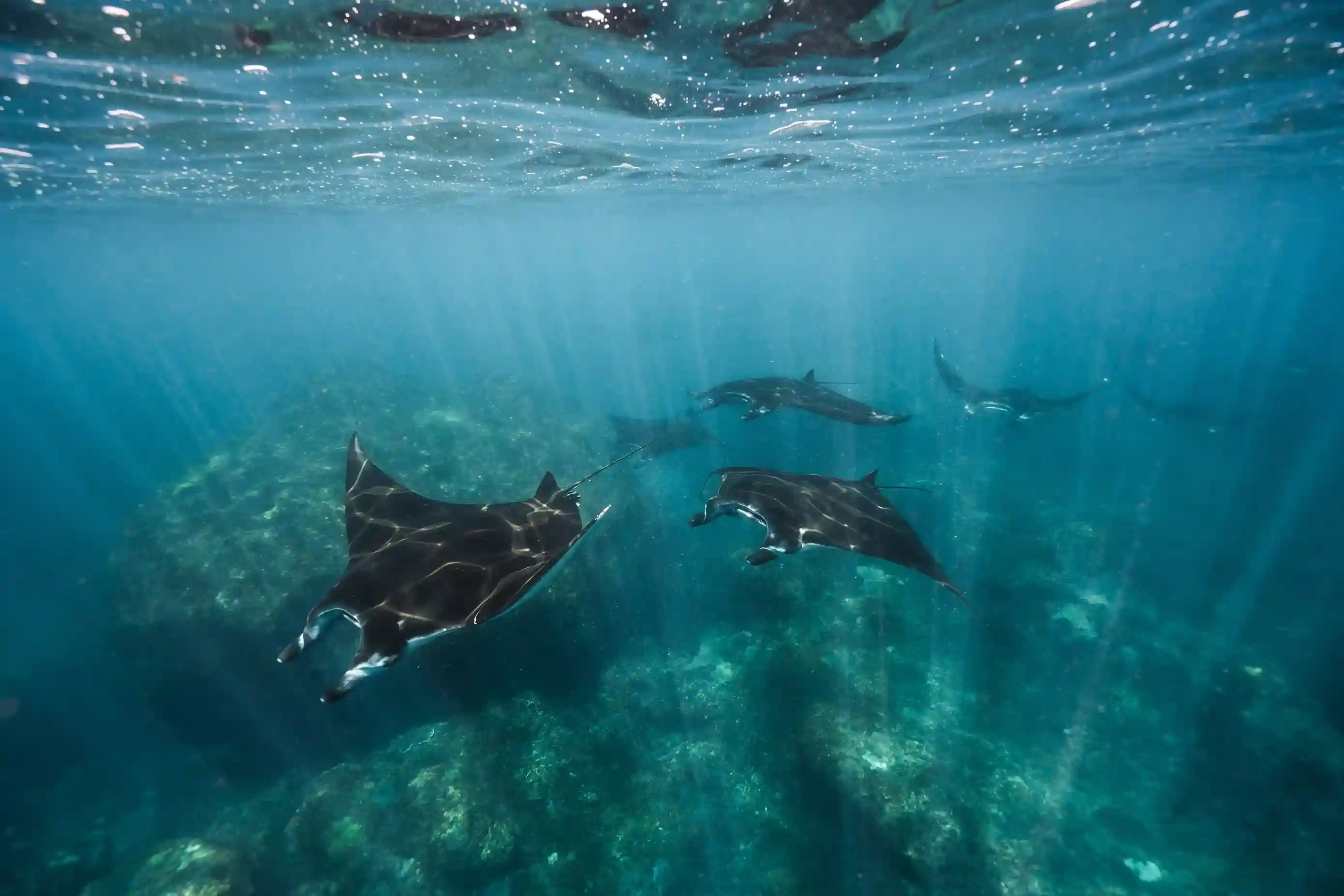
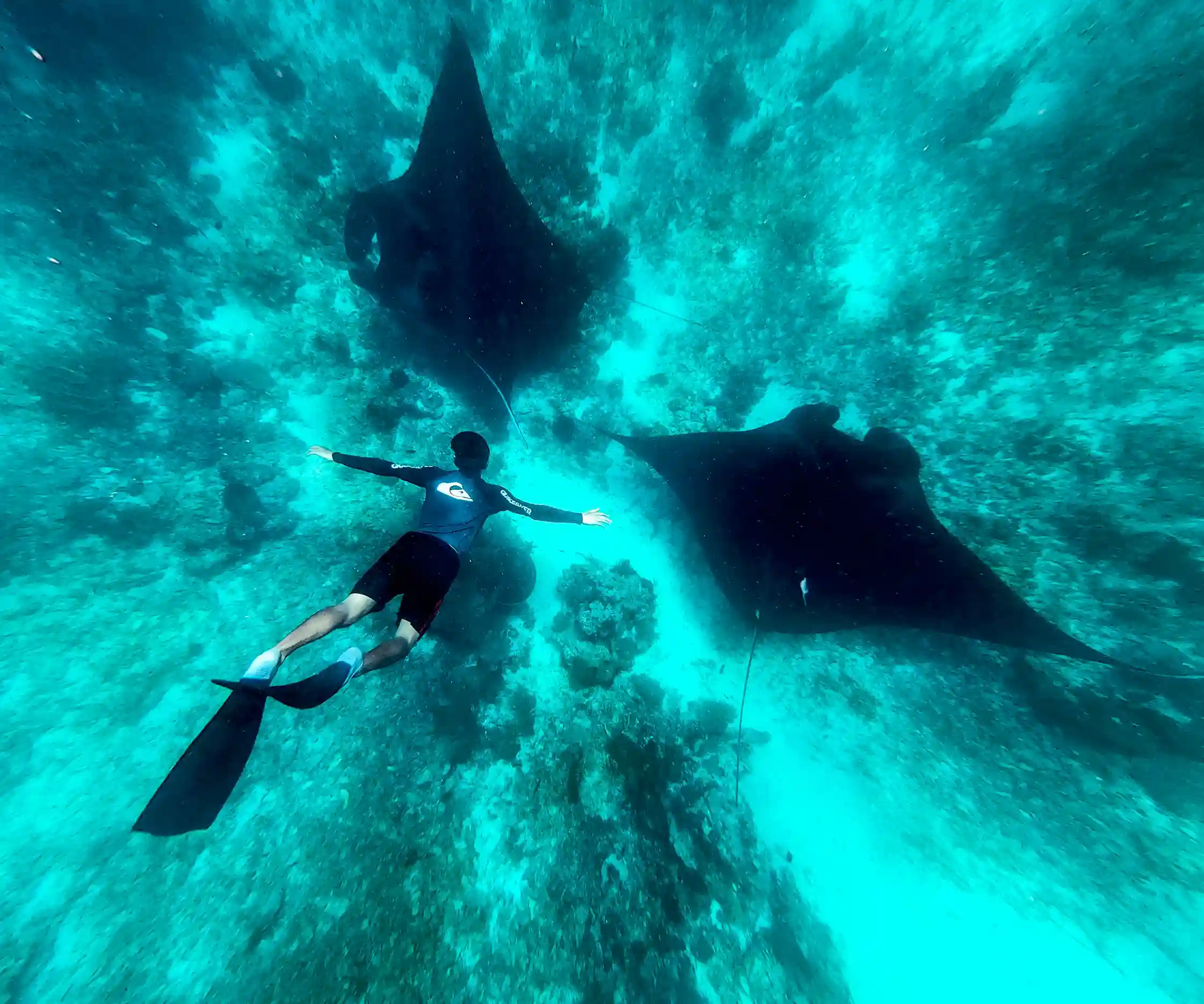
From November through March, plankton-rich water moves through the park and the reef mantas follow it. The best-known aggregation site is Manta Point, a wide, current-swept plateau where the animals queue at cleaning stations and barrel-feed when the water turns green with food. Early November sightings are real but building; by December the season is properly established and multiple animals on a single drift is a normal morning rather than a lucky one.
A note on honesty, because it matters: mantas are wild animals riding invisible currents, and no operator controls where plankton drifts on a given Tuesday. What a good crew controls is timing, tide reading, and the discipline to sit out a slack window until the site switches on. That judgment is most of what you are chartering.
Snorkellers do well from any properly crewed vessel — Manta Point works from the surface when the animals are shallow. Divers should look at a dedicated Komodo dive charter with tanks, a compressor, and a divemaster who reads the site daily, or step up to a true liveaboard — the multi-day diving format where you sleep aboard and hit the sites at first light before the day fleet arrives. For itineraries built specifically around the season, see the Komodo liveaboard programs run under the Komodo Luxury flag and the season-focused routes at Komodo Island Liveaboard.
December in Komodo is shaped by one ten-day stretch: Christmas through New Year. It is the most requested window of the entire year, and it behaves accordingly. Enquiries that would be casual in November become time-sensitive; family groups plan around school holidays with zero date flexibility; and the vessels with the strongest reputations are the first ones spoken for. None of this is a sales line — it is simply how the month has run every year we have operated here, and pretending otherwise would do you no favours.
Our practical advice is unglamorous: decide early, confirm early, and put the celebration itself in the crew’s hands. A phinisi deck on New Year’s Eve, anchored in flat water with the Flores sky doing what it does, is one of the finest places on earth to see a year out. Routing and planning for exactly this window follow the same rule as everything else in late December: the group that decides first gets the widest choice of vessels and anchorages.
Outside those ten days, early and mid-December are quietly excellent — established manta activity, softer demand, and a park that has not yet filled with holiday traffic. Travellers with flexible dates should look hard at the first half of the month.
The pattern is simple to state: April to November is the dry season, with calm seas and reliable conditions; November to March is manta season, and from late December the northwest monsoon brings passing showers and occasional swell to exposed channels. The two overlap in November and December, which is precisely why these months reward a crew that knows the park’s lee shores. When weather moves through, an experienced captain re-sequences the itinerary — Padar at dawn instead of midday, the north sites before the wind fills in — and guests mostly notice only that the trip kept working.
On resilience, the record speaks plainly. When a magnitude-7.7 earthquake struck roughly 200 kilometres offshore on August 15, 2026, the resulting tsunami measured 0.36 metres — no destructive wave reached the park — and sailings from Labuan Bajo operated the same day. Fleets here are run by people who read the sea for a living, coordinate with the harbourmaster daily, and treat conservative seamanship as the default setting rather than the exception.
Terminology matters more in these two months than at any other time, so use the words precisely. A charter means the whole vessel and its crew are yours — routing, pace, and table all answer to your group. A phinisi is the traditional wooden sailing vessel of the Bulukumba shipwrights, and it is the romantic backbone of the Komodo fleet; our Mawar Biru is a working example of the type. A yacht is the luxury tier — private, crewed, finished to a standard where the vessel is a destination in itself — and Aurora fills that role in our group. A speedboat such as Raja Hari compresses the park into a fast, dry Komodo day trip when your calendar allows nothing longer. A liveaboard is the multi-day diving platform; a cruise emphasises passenger comfort over sport. The wider group fleet — Lamborajo, Ayvara, and Malca among them — spans these categories, which is why an honest conversation about your group beats a scroll through photographs.
For November, almost any format works because conditions are so forgiving; the choice is about ambition. For the December holiday window, groups celebrating aboard tend toward the phinisi and yacht end, where cabins, crew, and galley carry a multi-night program comfortably. If you want the whole vessel to yourselves — and in these months most groups do — start with our guide to a private Komodo boat charter. Every vessel we field is operated in partnership with Komodo Luxury — a registered Indonesian PT under Juara Holding Group Limited with 1,500+ verified guest reviews (4.9/5) — so the standard behind the name is the same across the fleet.
Since April 1, 2026, Komodo National Park has operated under a cap of 1,000 visitors per day. In November the cap is an abstraction — the shoulder season runs comfortably beneath it. In late December it becomes a real planning input: the cap is one more reason the holiday window rewards early commitment, because a confirmed charter with permits arranged is worth far more than a boat with no path ashore. The full breakdown of tickets, ranger fees, and how permits attach to your trip lives on our Komodo National Park fees page.
The cap has had one welcome side effect: the marquee moments feel protected again. The ridge line at Padar Island at sunrise in late November — three bays below, manta season in the water, and a fraction of August’s foot traffic on the trail — is the park operating exactly as it should.
For November: fix your dates a few weeks out, build the itinerary around Manta Point and the central park, and leave one flexible morning for the crew to chase conditions. For December: work backwards from the holiday. Settle the vessel first, the permits second, and the menu last — the crew handles the rest. In both months the park delivers something the peak season cannot: in November, the feeling of having Komodo nearly to yourself at the exact moment the mantas arrive; in December, the rarest kind of holiday, the one your group will measure every future December against. Either way, the sea decides the details. That has always been the deal here, and it is a good one.
November is arguably the best-value month of the year. The dry season’s calm seas hold through most of the month, the first reef mantas of the November-to-March plankton season arrive at sites like Manta Point, and the park is at its quietest between the August peak and the Christmas holiday rush.
Yes. Manta season runs from November through March, and by December it is well established. Plankton-rich water draws reef mantas to cleaning and feeding stations such as Manta Point, where both snorkellers and divers regularly encounter multiple animals on a single drift. Sightings are never guaranteed with wild animals, but December sits squarely inside the reliable window.
Months ahead, not weeks. The Christmas-to-New-Year stretch is the most requested window of the entire Komodo year, family groups plan around fixed school holidays, and the best-regarded vessels are typically the first spoken for. Settling your vessel and park permits early is the single most useful planning move for a December holiday charter.
November is the tail of the April-to-November dry season: light winds, calm seas, and long settled spells. December remains generally workable, with the northwest monsoon transition bringing passing showers and occasional swell late in the month. Experienced crews re-sequence itineraries around conditions, using the park’s sheltered lee shores so the trip keeps running smoothly.
Komodo National Park has capped entries at 1,000 visitors per day since April 1, 2026. In November the shoulder season runs comfortably beneath the cap. In late December the cap becomes a genuine planning factor and one more reason to commit early, so your charter has park permits arranged well before the holiday peak.
On August 15, 2026, a magnitude-7.7 earthquake struck roughly 200 kilometres offshore. The resulting tsunami measured just 0.36 metres, no destructive wave reached the park, and sailings from Labuan Bajo operated the same day. The fleet coordinates daily with the harbourmaster and treats conservative seamanship as standard practice.