Last updated: August 16, 2026
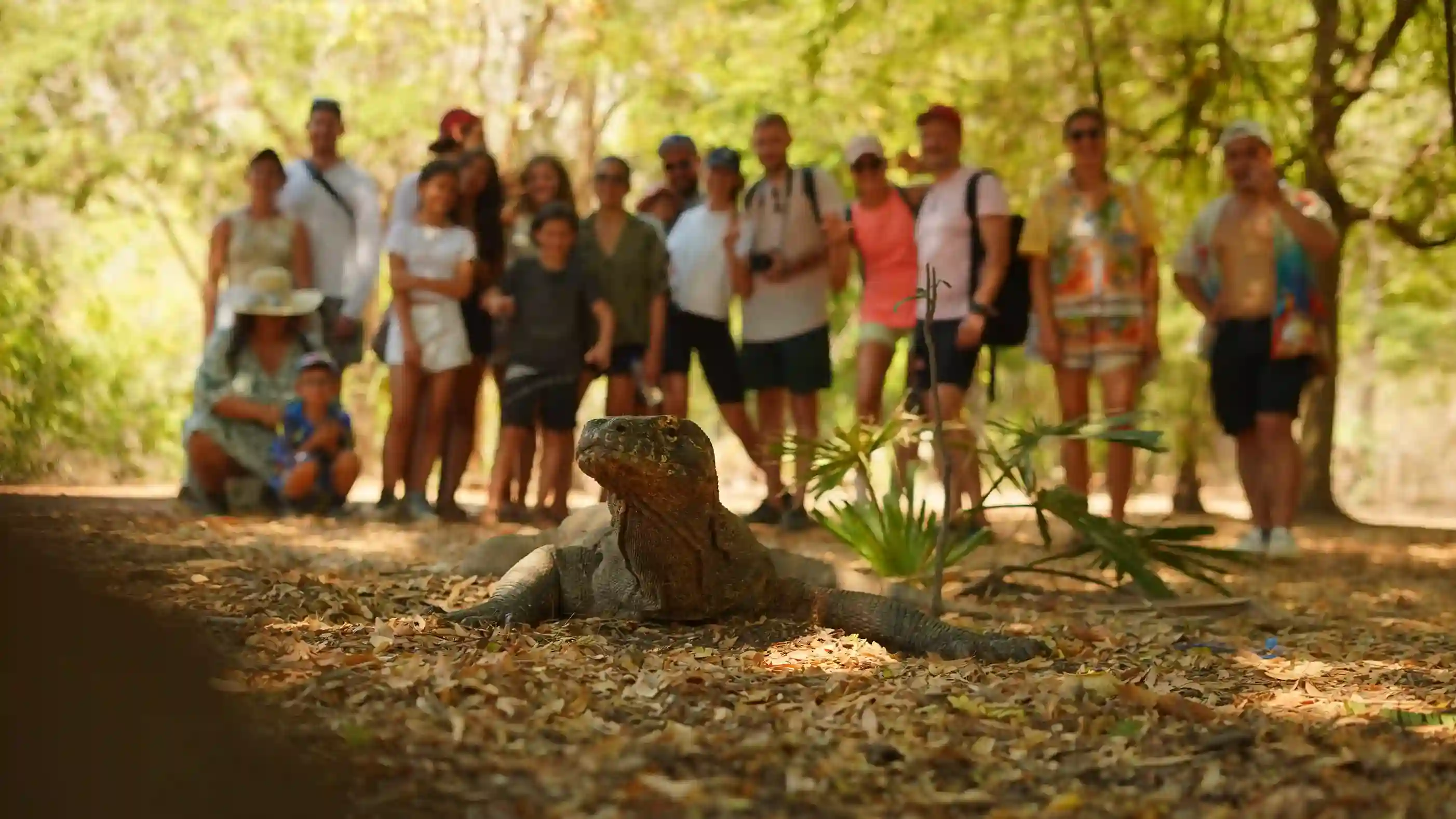
The cap took effect on April 1, 2026, and it is exactly what it sounds like: a daily ceiling on how many people may enter the park, counted across every point of entry — the dragon trails at Loh Liang on Komodo and Loh Buaya on Rinca, the ridgeline at Padar, the dive and snorkel sites inside park waters. The stated purpose is conservation, and having worked these waters for years, we will say plainly that the purpose is sound. Fewer footprints on Padar’s spine. Less pressure on dragon territory. Reef sites that are not holding a flotilla at nine in the morning.
What the rule killed was spontaneity. Before the cap, you could land in Labuan Bajo, stroll the harbourfront over dinner, and be on the water by seven the next morning. That version of Komodo is gone. Every visitor must now exist on a filed manifest before the vessel clears the harbour, and ranger posts inside the park check names against paperwork, not against good intentions. We have watched a traveller argue with a clipboard at a ranger station. The clipboard won.
Slots are consumed in the order they are registered, and registration runs through licensed operators, because permits attach to a vessel’s sailing documents rather than to an individual wandering up with a passport. That single administrative detail is the whole story of this page: whoever files earliest, through the proper channel, holds the day. In high season, the practical difference between a confirmed charter and a hopeful walk-up is the difference between standing on Padar at sunrise and photographing it from the deck of a boat that cannot land you.
A charter means you take the whole vessel and its crew for your dates — not a seat on somebody else’s schedule. Whether you call it a charter, a hire, or a rental depends mostly on which side of the Atlantic taught you English; the substance is identical. Under a capped park, that substance matters more than it ever did, because the entry slots follow the vessel’s paperwork, and the paperwork follows your booking. Your names go onto the manifest the moment your dates are fixed, which is why charter guests are, administratively speaking, already inside the park while they are still packing.
Before you land in Labuan Bajo, a properly run operation has already filed the sailing clearance with the harbour authority, registered park entry for every name in your party, and arranged the ranger guides required for any island trekking. The park’s own charges are a separate, regulated matter — we keep a plain-language breakdown on our Komodo National Park fees page — but the operational point is this: none of it is your job. You are asked for passport details once. Everything downstream of that is ours.
Compare that with a shared open trip, where you are one name among thirty on a fixed weekly schedule. The operator still files the slots, so a reputable shared tour remains a legitimate way in — but you inherit the itinerary, the pace, and the dates. If anything shifts, the trip flexes around the group, never around you. We wrote a candid comparison in private versus shared Komodo trips; the short version is that a cap makes flexibility more valuable than it used to be, and a private charter is where the flexibility lives.
Two seasons, two different parks. From April to November the weather is dry and the seas are calm — this is trekking-and-photography Komodo: golden savannah, glassy morning crossings, and the sunrise climb on Padar in conditions that flatter every camera ever made. From November to March the rains arrive, and so do the mantas. Plankton-rich water pulls the big animals onto the reefs, and Manta Point becomes reliable enough that divers build whole itineraries around it — which is precisely what a dedicated Komodo dive charter does with the wet months.
Now lay the cap over that calendar and a pattern emerges. July and August will press against the ceiling hardest, with the year-end holidays close behind. May, June, September and October deliver the dry season’s weather with less competition for the daily count. If your dates are flexible, aim there. If they are not — school holidays are school holidays — then early planning stops being a nicety and becomes the plan itself. The travellers who treat the cap as a January problem will spend 2027 discovering it was a September-of-2026 problem all along.
The cap counts people, not boats, so your choice of vessel is about how you want to experience the park, not how you enter it. The terms get muddled online, so here they are used precisely.
A speedboat is the day-trip tool: fast crossings, more hours at the sites, back in Labuan Bajo for dinner. Our Raja Hari runs exactly this profile, and a well-planned Komodo day trip under the cap still covers dragons, the Padar ridge and a manta stop without feeling rushed — provided the slots were filed early. A phinisi is a traditional wooden ship built in the Bulukumba shipbuilding tradition of South Sulawesi; Mawar Biru is ours, and she turns the journey into a cruise in the true sense of the word — the comfort of living aboard, meals on deck, and quiet anchorages no day schedule ever reaches. A yacht such as Aurora is the luxury tier: private, crewed, and finished for guests who want the park with polish. And a liveaboard is a diver’s word — a multi-day itinerary organised around tanks and tide windows rather than trails.
Our fleet planning runs in partnership with Komodo Luxury — a registered Indonesian PT under Juara Holding Group Limited with 1,500+ verified guest reviews (4.9/5) — whose Lamborajo, Ayvara and Malca vessels extend the range of what we can put under a single itinerary. For dedicated multi-day diving, their Komodo liveaboard programmes are the deep end of the same operation, and the independent roundup of the best Komodo liveaboards for 2027 is a sensible cross-reference while you weigh options.
On August 15, 2026, a magnitude 7.7 earthquake struck roughly 200 kilometres offshore. The tsunami the headlines braced for arrived as a wave measured at 0.36 metres — about knee height — and caused no destructive damage. Labuan Bajo’s harbour stayed operational and vessels sailed the same day; ours were among them. The park’s landscapes, trails and reefs are what they were on August 14. This region sits on the Ring of Fire, and the sea here has always asked for respect rather than fear — the difference between a seismograph reading and a reason to cancel a trip is a real one, and this event was firmly the former.
For a fuller picture of how charter arrangements are shaping up for next season, our Komodo boat charter guide for 2027 tracks the moving parts in one place.
The 1,000-a-day rule reads like a restriction, but from the wheelhouse it looks like the strongest argument yet for doing Komodo properly: quieter trails, emptier reefs, dragons that are not performing for a crowd. The only travellers who lose under this regulation are the ones who arrive hoping. Do not be one of them. Plan 2027 the way the park now requires — early, in writing, with an operator whose everyday job is the gate.
Since April 1, 2026, Komodo National Park has operated under a daily cap of 1,000 visitors, counted across all entry points including Komodo, Rinca and Padar islands and the park’s dive sites.
Yes — it is the most dependable route in. Entry slots are filed in advance through licensed operators and attached to the vessel’s sailing documents and guest manifest, so charter guests are registered for the day before they arrive, while independent travellers compete for whatever allocation remains.
The earlier your dates are fixed, the earlier your operator can file the permit paperwork. For peak windows such as July, August and the year-end holidays, planning several months ahead is the sensible standard; shoulder months like May, June, September and October carry less pressure on the daily count.
Yes. The magnitude 7.7 earthquake on August 15, 2026 struck roughly 200 km offshore and produced only a 0.36-metre wave with no destructive tsunami. Labuan Bajo’s harbour remained open and vessels sailed the same day; the park itself was unaffected.
April to November is the dry season — calm seas and ideal trekking and photography conditions. November to March is manta season, when plankton-rich water makes sightings at Manta Point most reliable, which is why divers favour those months.
Yes. Every person entering the park counts toward the daily ceiling, whether arriving by speedboat for a day trip or staying aboard a phinisi or liveaboard for several nights, so day-trip guests need their slots filed in advance just like everyone else.