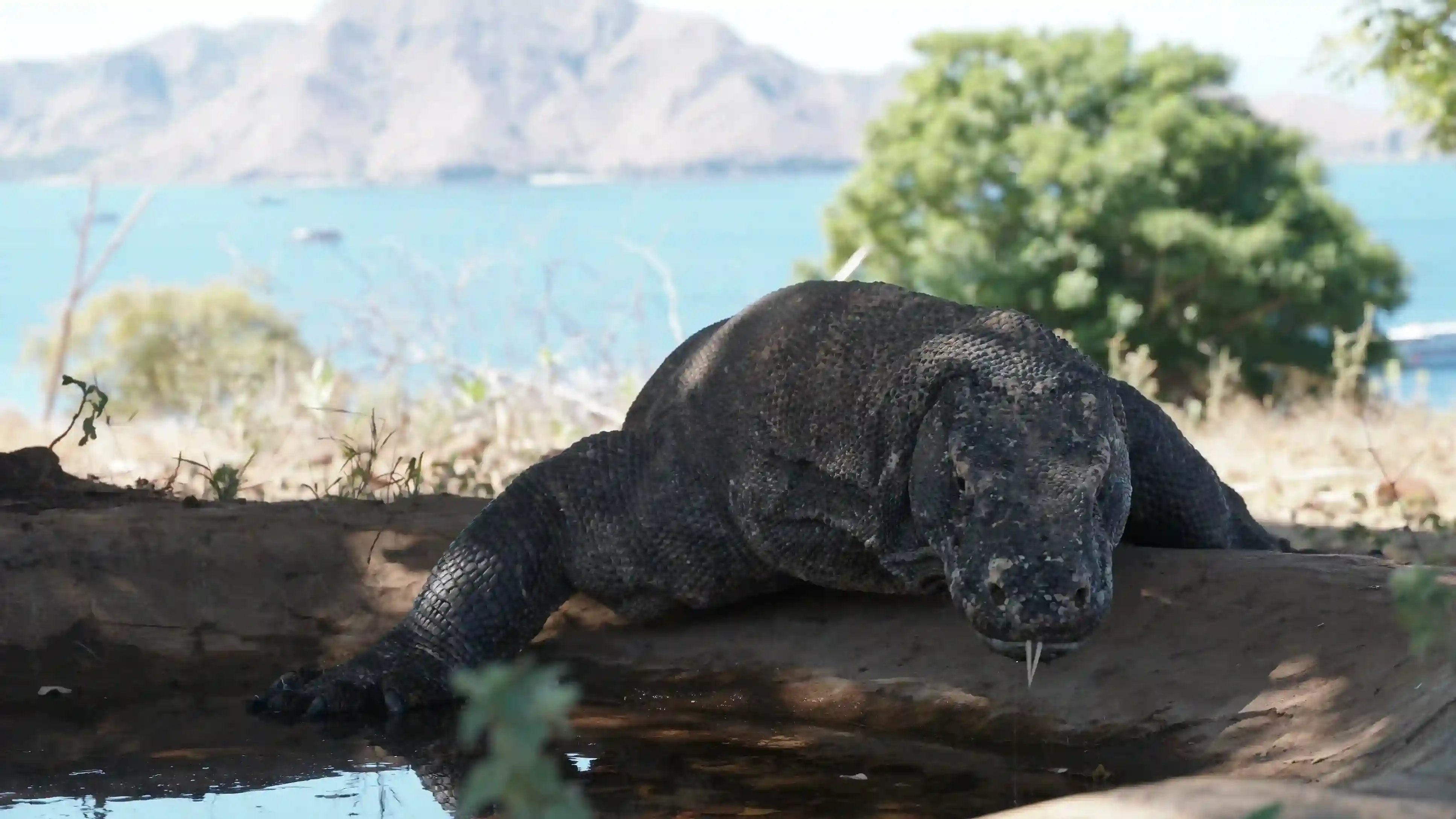
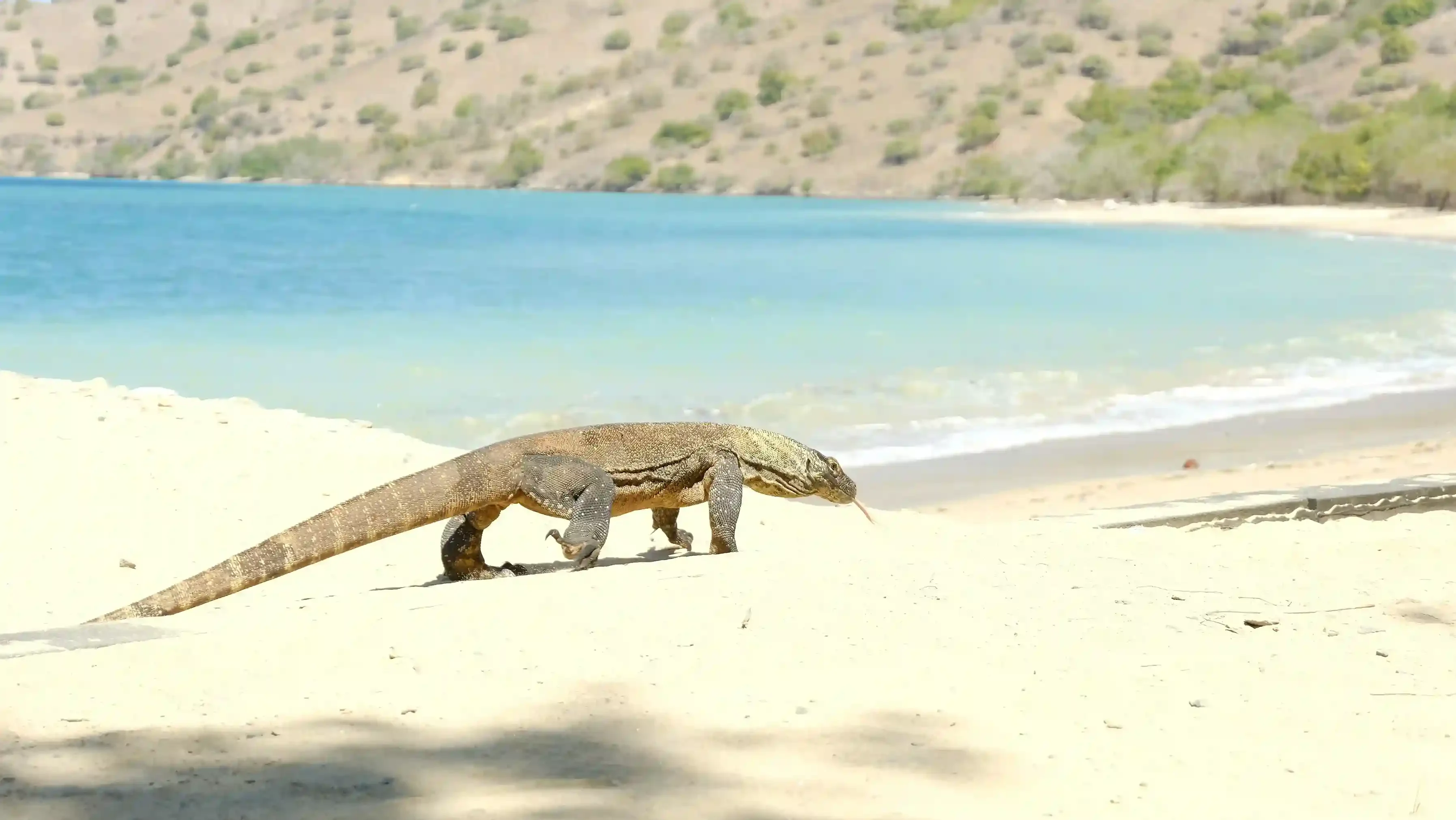
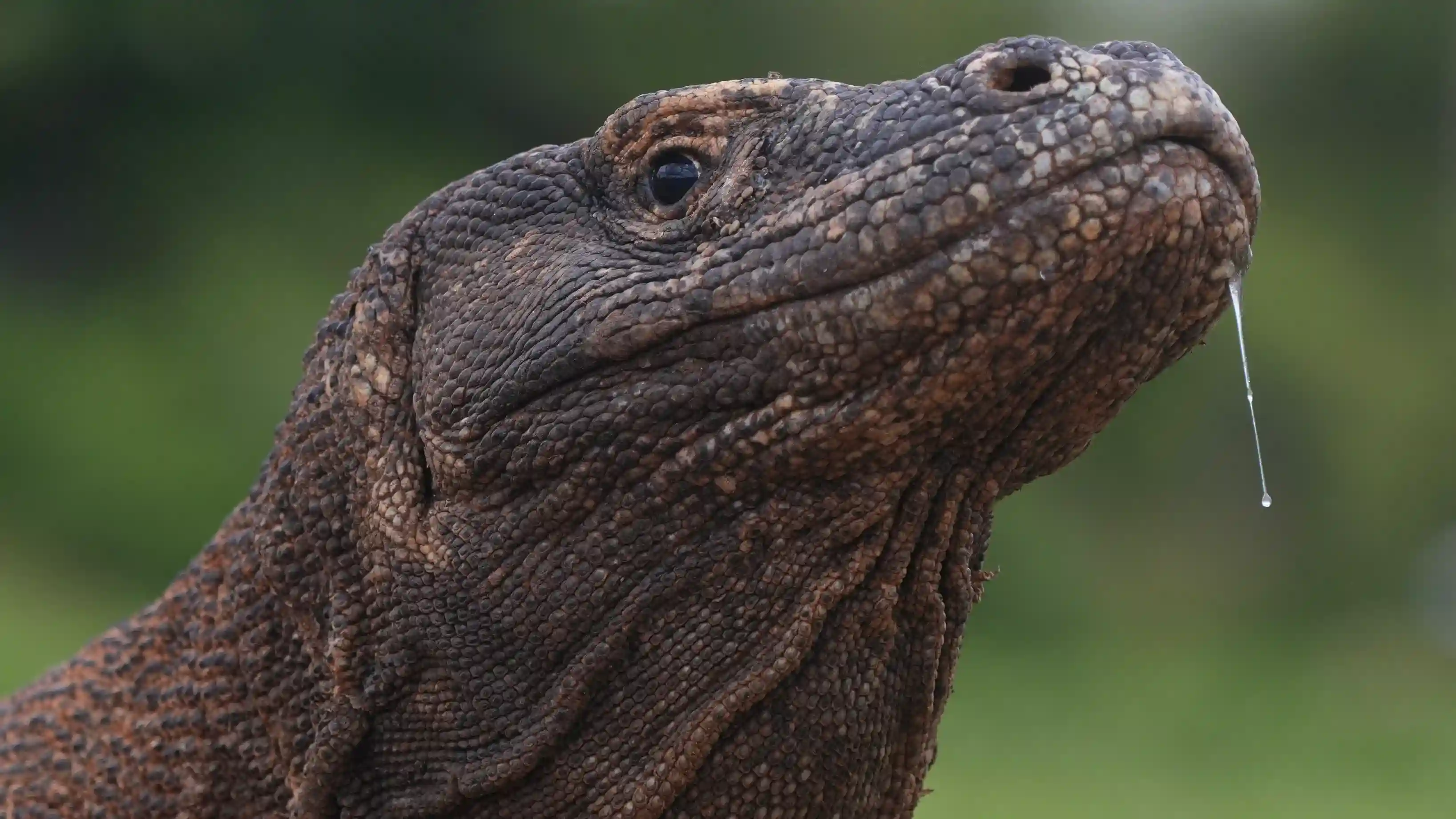
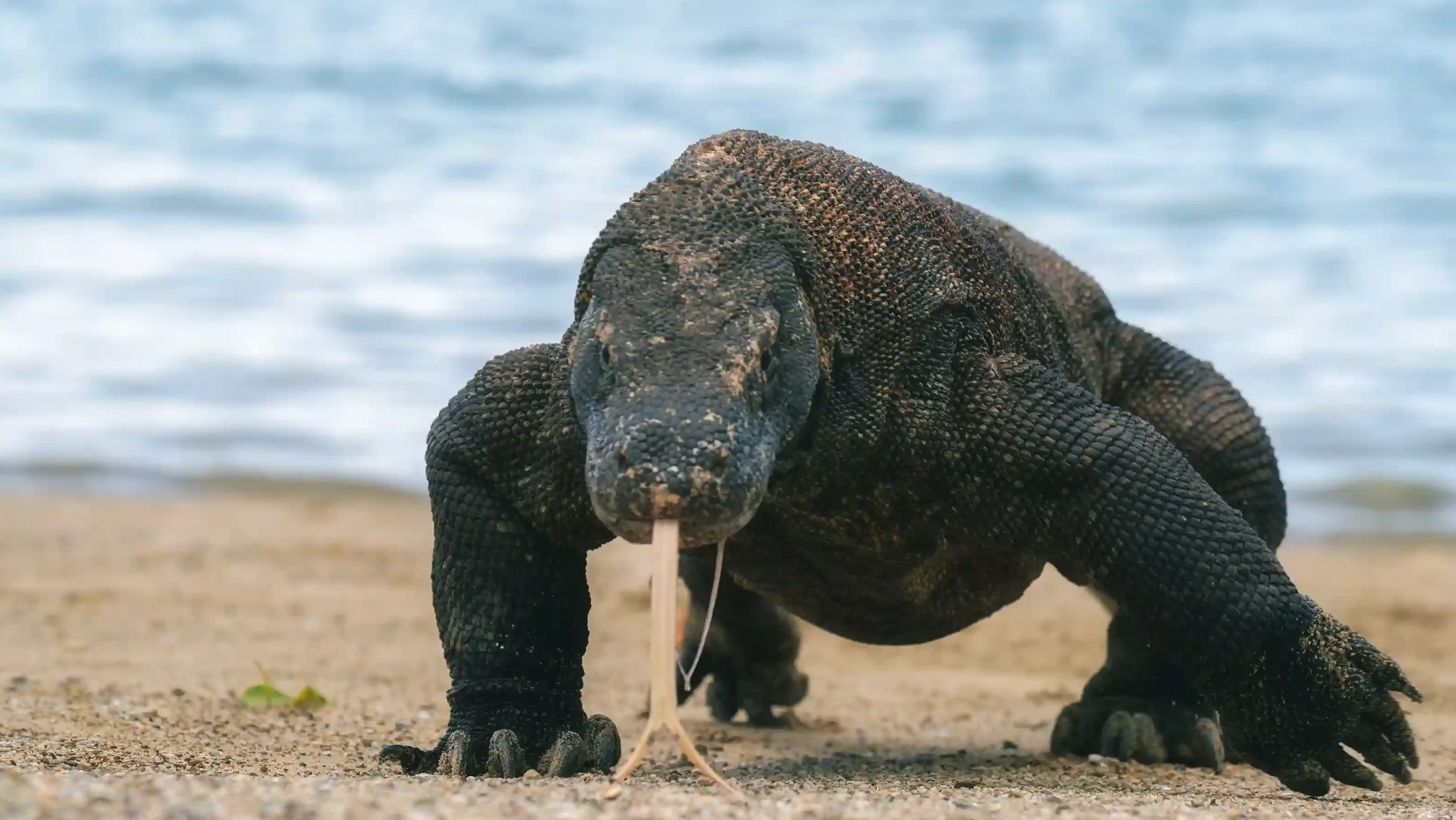
The Komodo dragon (scientific name Varanus komodoensis) is the world’s largest living lizard species. Adult males reach 8-10 feet (2.4-3 meters) in length and weigh 200-300 pounds (90-136 kilograms). Females are slightly smaller, typically 6-8 feet long and 150-200 pounds. The largest documented specimen was over 10 feet long and weighed 360 pounds.
These massive reptiles evolved in isolation on a handful of Indonesian islands for millions of years, developing hunting strategies and physical characteristics unmatched by any other modern lizard. Their scientific classification places them within the monitor lizard family (Varanidae), but Komodo dragons represent an evolutionary branch specifically adapted to apex predator roles in their island ecosystems.
Approximately 3,000-5,000 Komodo dragons remain in the wild, with roughly 1,700 inhabiting Komodo Island proper—the primary destination for charter-based trekking. The remaining populations scatter across Rinca Island, Flores, and Gili Motang, with smaller numbers on other islands in the Lesser Sunda chain.
Conservation Status: Listed as “Vulnerable” on the IUCN Red List. Populations are stable or slightly increasing due to protection efforts, but habitat fragmentation and human development remain ongoing concerns. Komodo National Park’s establishment in 1980 was transformative, creating protected status for breeding populations.
Population Dynamics: Dragons have relatively low reproduction rates. Females lay 4-8 eggs annually in caves or burrows. Incubation takes 8-9 months; hatchlings are approximately 16 inches long. Juvenile mortality is high; only about 10% of hatchlings reach adulthood. Sexual maturity occurs around age 8-10 years.
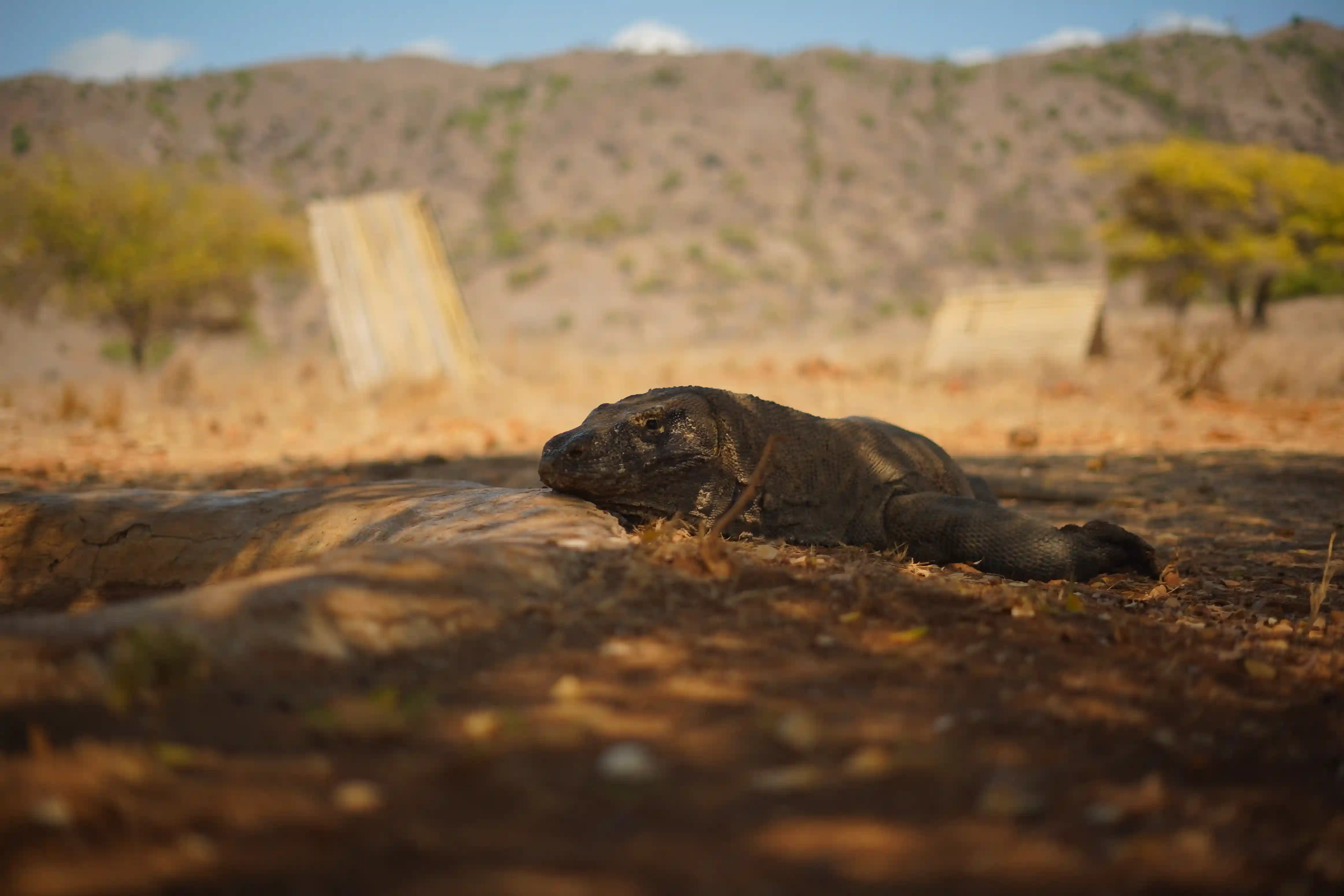
Komodo dragons are apex predators despite being ambush hunters rather than active stalkers. Their typical hunting strategy involves lying motionless in brush or rocky areas, waiting for prey to approach within striking distance.
Hunting Technique: When prey approaches, dragons employ explosive acceleration—their tail provides counterbalance while powerful hind legs generate forward momentum. Impact often bowls prey off-balance; jaws clamp down on neck or legs. Dragons possess venom glands in their lower jaw that, contrary to older theories, don’t produce lethal venom but do cause shock, drop in blood pressure, and anticoagulation in prey—effects that slow prey and facilitate feeding.
Feeding Efficiency: A single large meal (e.g., a 150-pound deer) can sustain a dragon for weeks or even months. Their metabolism is relatively slow, allowing them to remain inactive between kills. Dragons have been observed eating 80% of their body weight in a single feeding.
Your charter will likely include guided trekking on Komodo Island or Rinca Island—two primary locations where dragon encounters occur. Licensed rangers lead these excursions, armed with forked sticks (not weapons but defensive tools) and extensive knowledge of dragon behavior and island geography.
Despite their fearsome appearance, Komodo dragons are generally placid toward humans, having no evolved fear response to bipedal creatures. They see humans as irrelevant—neither prey nor threat. This indifference is why close observation is possible without constant aggression.
Territorial Behavior: Males are territorial, engaging in prolonged combat during breeding season (April-August). These fights involve wrestling, tail lashing, and biting; serious injuries occur but are rarely fatal. Dominance hierarchies develop within local populations.
Aggression Triggers: Dragons become defensive if cornered, separated from escape routes, or if food is presented when they’re feeding. Never attempt to hand-feed or provide food to dragons. Never position yourself between a dragon and potential escape routes.
Despite their apex predator status, Komodo dragons face multiple threats in the modern era.
Komodo National Park protection extends to marine environments surrounding islands, recognizing that comprehensive island ecosystem protection is necessary. Tourism revenue from charter operations and trekking fees directly funds ranger salaries, anti-poaching patrols, and habitat management.
Research Initiatives: Ongoing scientific research monitors population health, breeding success, and behavioral patterns. International universities and Indonesian institutions collaborate on long-term studies.
Your charter includes dragon trekking for good reason—these experiences create emotional connections to conservation. Witnessing dragons in their natural habitat fosters appreciation for their biological uniqueness and the critical importance of habitat preservation.
Responsible Tourism Principles: Maintain appropriate distance, follow ranger instructions precisely, avoid sudden movements or loud noises, and never attempt photography that compromises dragon welfare. Remember that you are a visitor to their world; they are not attractions for human entertainment.
Komodo dragon attacks on humans are extraordinarily rare. Only a handful of fatal incidents have occurred in the past 30+ years. Dragons don’t perceive humans as prey. Fatal attacks typically involved circumstances where victims were in extreme proximity or the dragon was defending a kill. Following ranger guidance eliminates virtually all risk.
Encounter frequency varies seasonally. During dry season, most treks encounter at least one dragon; many encounter multiple individuals. Wet season encounters are less predictable but still likely with experienced ranger guidance. Rinca Island typically offers better sighting probability than Komodo Island.
Stop walking and alert your ranger immediately. Do not run—dragons will chase running prey. Your ranger will position themselves between you and the dragon or move the group to safer positioning. Dragons investigating humans typically lose interest within seconds and move away. Stay calm and trust your guide’s expertise.
Photography is encouraged but should use natural light rather than flash to avoid stressing dragons. Avoid behaviors that put you in dangerous positioning for optimal photos. Rangers can suggest good photo locations and timing. Your charter guides often take professional photos they’ll share with you afterward.
Dragons rely on explosive acceleration in short bursts rather than sustained speed. They also employ patience—waiting motionless for extended periods until prey comes within striking distance. Their hunting style is ambush-based rather than pursuit-based, making them extraordinarily efficient at seizing vulnerable prey.
Populations are stable to increasing, thanks to protection efforts. Current projections indicate healthy populations for decades to come. Supporting sustainable tourism and conservation efforts (by booking responsible charter companies) directly contributes to species preservation. Your charter investment helps fund protection initiatives.
Low reproductive rates (females produce only 4-8 eggs annually) and high juvenile mortality limit population growth. Additionally, island habitats can only support limited numbers given prey availability. Dragons are slow-growing and don’t reach sexual maturity until 8-10 years old, further constraining population growth rates.
Despite similar apex predator roles, dragons and crocodiles are distantly related reptiles that evolved differently. Crocodiles are more aquatic; dragons are terrestrial. Crocodiles have evolved specialized adaptations for aquatic hunting; dragons for terrestrial stalking. Seeing both (if your charter includes Gili Motang where saltwater crocs exist) highlights evolutionary diversity.