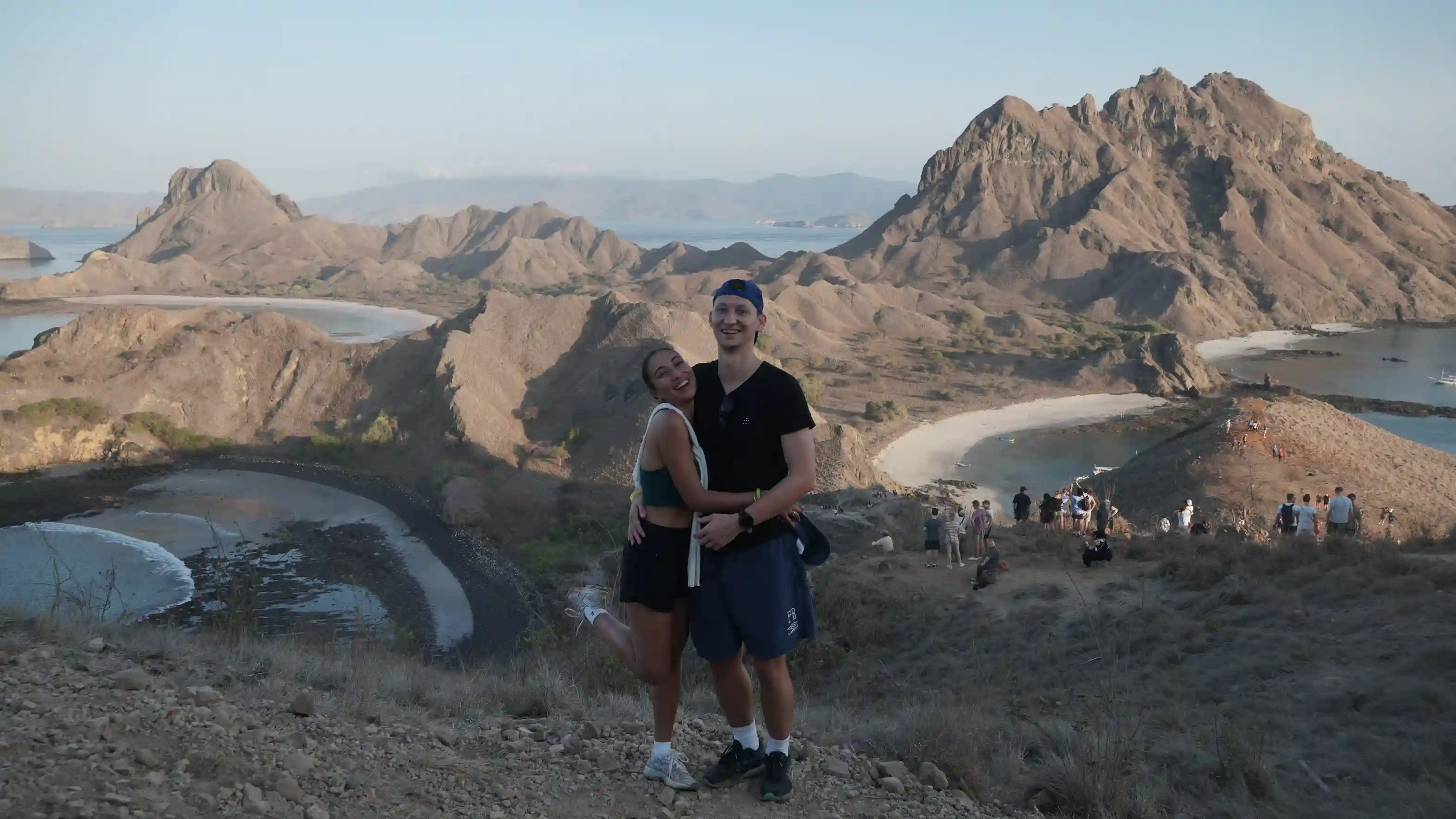
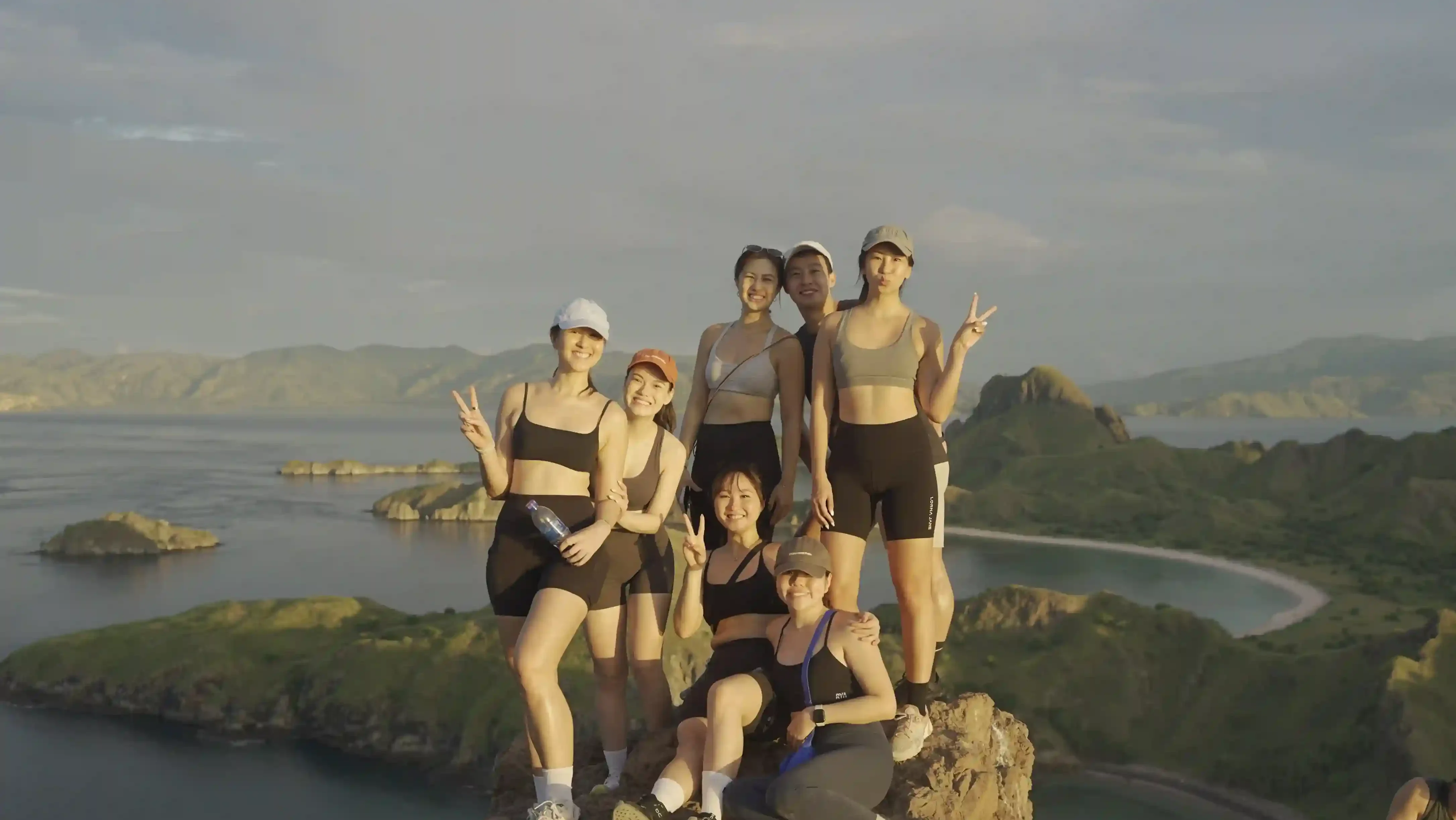
Perched on the northern edge of the Komodo National Park, Gili Lawa Darat represents one of the region’s most compelling experiences for those seeking to combine land-based exploration with exceptional marine encounters. Located approximately 2.5 to 3 hours by boat from Labuan Bajo, this twin-island destination has earned international recognition for its dramatic sunrise viewpoint and the surrounding waters that harbor some of the archipelago’s most diverse and active marine ecosystems.
The name itself—”Gili Lawa Darat” and its companion “Gili Lawa Laut”—translates to the dry and wet versions of Lawa Island, indicating their proximity and shared geological heritage. For travelers, Gili Lawa Darat means the terrestrial adventure combined with phenomenal snorkeling in waters that consistently produce encounters with large pelagic species, nuanced reef life, and seasonal appearances of whale sharks and manta rays.
Gili Lawa Darat sits at approximately 8°31’S, 119°31’E, positioned in the northern sector of the Komodo archipelago where the Flores Strait transitions into the wider Savu Sea. The island rises to approximately 280 meters elevation, creating a dramatic silhouette visible for considerable distances across the Flores Strait. The climb from sea level to the island’s highest point represents the most significant terrestrial effort required of visitors to the Komodo National Park.
The island’s composition reflects its volcanic origins—steep slopes covered in scrubland vegetation interspersed with exposed rock formations. The summit, while modest in absolute elevation, commands panoramic views across multiple islands and the channels between them. The elevation gain represents a consistent ascent without major switchbacks, creating a workout that ranges from moderate to moderately strenuous depending on individual fitness levels and pace.
The primary attraction at Gili Lawa Darat remains the sunrise trek to the summit. Charter boats typically arrive at the island’s anchorage in late evening, permitting dinner aboard and an early morning wake-up call for the trek. Guides lead groups from the beach upward along established trails, reaching the summit approximately 45 minutes to one hour after departure, depending on pace and group size.
Arriving at the summit just before sunrise provides an experience of remarkable beauty. The sky transitions through gradations of orange, pink, and purple as the sun’s upper limb appears above the horizon. At this moment, the surrounding islands—Komodo, Rinca, Flores, and the smaller satellites—emerge from darkness into increasingly vivid color and detail. The water below shifts from black to increasingly vibrant shades of blue as daylight advances.
The thermal experience of summit visibility differs markedly from lowland perspectives. Despite the modest elevation, temperature changes are noticeable, and the sensation of anticipating sunrise from an elevated vantage point carries a psychological weight that contributes to the experience’s profound appeal. Photography enthusiasts find this period intensely rewarding, with the graduated lighting conditions permitting compelling imagery from first light through full sunrise.
Beyond the sunrise experience, the summit provides educational value regarding the park’s geography. Guides typically point out prominent features: the distinctive shape of Komodo Island with its valleys and peaks, the narrow channel separating Komodo from Flores, and the distant island of Sangeang Api with its iconic conical volcanic form. This geographic education enhances understanding of the broader Komodo ecosystem and its placement within the Indonesian archipelago.
The ascent to Gili Lawa Darat’s summit passes through distinctive vegetation patterns reflective of the region’s semi-arid climate. The lower slopes support scrubland composed of low shrubs and scattered trees adapted to minimal rainfall. This vegetation type, known locally as savanna woodland, hosts various bird species including the endemic Flores crow and several small raptor species.
Small lizards and skinks bask on exposed rock formations during the walk, representing harmless wildlife that demonstrates the island’s faunal diversity. While Komodo dragons inhabit nearby Komodo Island, Gili Lawa Darat itself remains free of these megafauna, making the trek safe for visitors of reasonable mobility.
The botanical diversity, while modest compared to wetter regions, demonstrates remarkable adaptation to environmental constraints. Plants exhibit characteristics typical of arid environments—reduced leaf surface areas, deep root systems, and often aromatic compounds that conserve water. For those interested in botany, the trek provides tangible examples of vegetation ecology principles in action.
The waters immediately surrounding Gili Lawa Darat represent some of the Komodo National Park’s most biologically productive snorkeling destinations. The island’s position at the convergence of major current channels creates conditions that concentrate marine life and support exceptional biodiversity.
Snorkeling sessions typically occur on the afternoon of arrival and on departure mornings, providing multiple opportunities to experience the reef structures and open-water species that inhabit these waters. The reef architecture varies around the island—the sheltered bay on the eastern side hosts the typical shallow reef environment with seagrass beds similar to those at Siaba Besar, while the western and northern faces experience stronger current flows that support different coral and fish assemblages.
Current strength at Gili Lawa Darat demands respect and caution. Snorkelers must remain attentive to water movement and coordinate with guides to ensure safe entry and exit. However, these currents create biological benefits—they transport planktonic food sources that support massive populations of filter-feeding organisms and the fish species that consume them. Snorkeling during slack current periods provides the optimal combination of visibility and safety.
The fish diversity at Gili Lawa Darat exceeds that of most comparable locations. Schools of tuna, carangid species, and other pelagic fish move through the water column in formations that demonstrate hunting coordination and social structure. Reef-associated species occupy the coral structures, while specialized inhabitants like trumpetfish and ghost pipefish blend seamlessly with reef features. The sheer volume and diversity of observable fish life creates an impression of abundance that contrasts markedly with many other marine destinations.
Gili Lawa Darat performs optimally during the dry season (April through November) when sea conditions permit reliable access and visibility typically exceeds 15 meters. The water temperature remains consistently warm at 26-28°C, reducing thermal stress for extended snorkeling sessions.
Sunrise viewing quality peaks during the dry season when atmospheric conditions are clearest and the probability of cloud obstruction is lowest. September through October presents particularly favorable conditions with minimal atmospheric moisture and clear visibility extending in all directions from the summit.
The wet season (December through March) creates challenges for the sunrise trek due to increased cloud formation and reduced visibility from the summit. Boat access remains possible, but snorkeling conditions suffer from reduced visibility and more challenging current patterns. However, January through March brings the possibility of whale shark encounters as these massive filter feeders move into Indonesian waters during their seasonal migrations.
While Gili Lawa Darat offers consistent fish diversity year-round, certain species appear seasonally or periodically. Whale sharks, those gentle giants reaching lengths exceeding 12 meters, appear sporadically from January through March, typically in the deeper channels surrounding the island. Manta rays, while less predictable than at dedicated manta points, appear occasionally as they patrol the reef edges seeking plankton concentrations.
Nudibranchs and other bottom-dwelling species demonstrate year-round presence but vary in species composition with seasonal changes. Cuttlefish, those invertebrate geniuses capable of instantaneous color change and shape modification, appear more readily during cooler months when water temperatures decline slightly from their September-October peaks.
Dolphin pods occasionally pass through the channels separating Gili Lawa Darat from Komodo Island. While sightings cannot be guaranteed, the probability of observing these marine mammals remains higher here than at most alternative locations due to the deep channels and rich food sources concentrated in this region.
Most multi-day charters departing from Labuan Bajo include Gili Lawa Darat as a primary component of their itineraries, typically on day one or day two of three-day charters, or distributed across multiple days on extended five-day or seven-day itineraries. The trek itself adds value to the charter experience by providing a distinctive terrestrial component that combines with marine activities.
Physical preparation for the Gili Lawa Darat trek remains less demanding than many land-based activities, but participants should possess basic cardiovascular fitness. The 280-meter elevation gain accomplished over approximately 45 minutes requires sustained uphill effort. Those with significant mobility constraints may find the trek challenging, though individual guides can often adjust pace to accommodate varying fitness levels.
Footwear represents an important consideration—sturdy closed-toe hiking shoes or trail runners prove far superior to open-toed sandals or casual footwear. The terrain includes loose volcanic rock that can shift underfoot, creating twisted ankle risks. Lightweight trails shoes permit adequate foot protection while minimizing heat stress in the equatorial environment.
Sun protection—hat, sunscreen, and protective clothing—remains essential during the trek. The exposed summit offers no shade, and direct sun exposure during peak daylight hours creates significant heat stress. Starting before dawn for sunrise viewing negates most solar radiation concerns during the actual ascent, allowing protection efforts to focus on the descent when daylight becomes intense.
Hydration requires particular attention at Gili Lawa Darat. While the trek duration is brief, the equatorial heat and physical exertion combine to create meaningful fluid losses. Carrying one to two liters of water per participant ensures adequate hydration for the trek and the morning’s subsequent activities.
The trek represents a moderate challenge requiring approximately 45 minutes to one hour to reach the summit. The primary difficulty stems from consistent uphill elevation gain rather than technical scrambling or exposed sections. Those with basic cardiovascular fitness should manage the trek comfortably, though adjusting pace remains acceptable and encouraged.
Water temperature ranges from 26-28°C (79-82°F) year-round, with peak temperatures occurring during September and October. These warm temperatures permit extended snorkeling without thermal protection, though lightweight rash guards or wetsuits enhance comfort for some participants.
Children aged eight and above typically manage the trek successfully, provided they possess reasonable physical fitness and motivation. Younger children may struggle with the sustained uphill effort, though individual guides can accommodate slower paces. Parent discretion regarding individual child capabilities remains essential.
Currents at Gili Lawa Darat vary considerably around the island, with stronger flows on the western and northern faces and calmer conditions in the sheltered eastern bay. Snorkeling sessions are scheduled to coincide with slack current periods when possible. All snorkelers should remain attentive to water movement and follow guide instructions regarding safe snorkeling practices.
Whale shark encounters are not guaranteed but remain possible, particularly during the January through March period when seasonal migrations bring these gentle giants into Indonesian waters. Most visits do not result in whale shark sightings, though when they occur, they represent transformative experiences.
No shade structures exist at the summit. The exposed rock and sparse vegetation provide minimal shelter from direct sunlight. Sun protection including hats and sunscreen remains essential during non-dawn hours.
Sunrise viewing offers superior visual conditions due to clearer atmospheric conditions and more gradual light transitions. Sunset viewing remains visually compelling but occurs with less predictable atmospheric clarity. Sunrise timing also aligns with the charter schedule, making the dawn trek a practical component of the itinerary.
Photography opportunities span terrestrial landscape imagery during the trek and summit views during sunrise, plus substantial underwater photography potential during snorkeling sessions. The interplay of dawn light on water and distant islands creates particularly compelling photographic conditions. Bring extra camera batteries as the dawn photography sessions drain power rapidly in the cold pre-dawn hours.
Ready to witness Gili Lawa Darat’s sunrise and exceptional snorkeling? Our premium Komodo yacht charters feature the Gili Lawa Darat experience as a signature component. Explore our complete tour itineraries or contact us via WhatsApp +6281138108110 to customize your Gili Lawa Darat adventure. Learn more about our available vessels or reach out directly to plan your Komodo expedition.