Castle Rock commands respect from divers worldwide, earning legendary status through its combination of challenging conditions and extraordinary marine encounters. This iconic pinnacle, named for its castle-like rock formations rising dramatically from the seafloor, represents diving at its most thrilling and unpredictable. Strong currents funnel nutrient-rich water across the site, creating conditions that attract massive fish populations and apex predators, delivering experiences that define why divers travel thousands of kilometers to Komodo’s waters.
Castle Rock rises from approximately 40 meters depth with multiple pinnacles and ridges creating a complex three-dimensional maze. The formation’s name derives from actual castle-like towers and ramparts formed by volcanic basalt. These architectural features create ecological zones at different depths, generating diversity in coral communities and fish species distribution. The rock’s exposed faces provide substrate for prolific coral colonization while creating shelter in crevices and caves.
The site’s geography means multiple diving strategies. Some divers ride currents along the rock’s face, encountering pelagic fish and large predators. Others work the shallower areas, exploring coral formations and smaller fish communities. Technical divers may explore deeper crevices and caves. This flexibility allows customization based on conditions, diver skill, and specific interests.
Castle Rock’s defining characteristic is robust current flow, particularly during tidal peaks. These powerful currents deliver nutrient-rich water that fuels the entire food chain. The abundance of small fish—the foundation of larger predator diets—creates conditions supporting populations of large pelagic species rarely seen at other locations.
Giant trevally (GT) patrol the pinnacle with aggressive hunting behaviors. These powerful fish, reaching over 100 kilograms, demonstrate raw predatory power. School trevally move in coordinated formations, their speeds and coordinated feeding behaviors displaying intelligence and social sophistication. Watching trevally attack prey schools creates adrenaline rushes that define memorable diving moments.
Reef sharks—blacktip, whitetip, and occasionally gray reef sharks—are frequent Castle Rock residents. These sleek predators inspire both respect and fascination. Their streamlined bodies, sensitive electroreceptive systems, and powerful swimming represent millions of years of evolutionary refinement. Watching sharks hunt and interact with other species reveals their essential role in ecosystem health.
Shark encounters often shift diver psychology. Initial fear typically transforms into awe and appreciation. These creatures ignore humans, focused entirely on fish hunting. Observing sharks in their environment—powerful, purposeful, and beautiful—creates profound perspective shifts. Many divers report shark encounters as peak moments of their diving careers.
Castle Rock frequently hosts trevally schools numbering in dozens or hundreds. Watching coordinated hunting is extraordinary—the precision, speed, and aggression of these predators demonstrates sophisticated intelligence. Prey schools scatter and regroup, attempting evasion tactics while trevally slice through their formations. This primal dance—predator and prey engaged in ancient survival competition—captivates divers and creates visceral connections to natural processes.
Photography of trevally requires quick reactions and anticipation. These fish move explosively, appearing and disappearing within seconds. Videography captures the action sequences that still photography might miss. The combination of technical difficulty and dramatic subject matter makes trevally encounters highly valued.
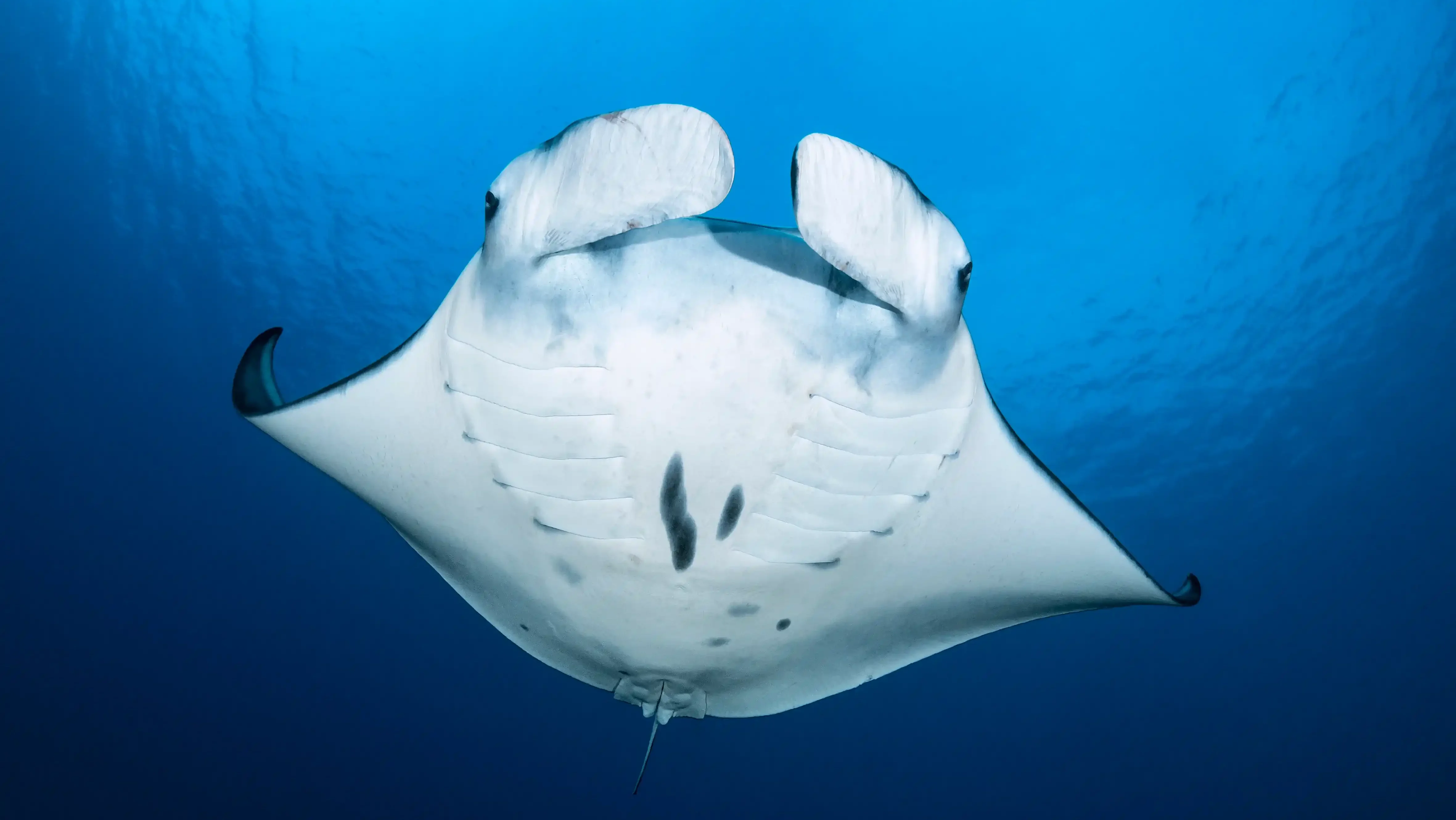
Manta rays visit Castle Rock, particularly during peak season months. These enormous creatures—wingspans reaching 7 meters—glide through water with balletic grace. Despite their imposing size, mantas are gentle filter feeders, consuming plankton and small fish larvae. Observing mantas’ movements—undulating wing-like pectoral fins propelling them through water—reveals the elegance beneath their size.
Manta encounters carry profound emotional impact. The combination of size, grace, and gentleness creates awe. Many divers report tears of joy during manta encounters, so powerful the emotional response. If you experience a manta at Castle Rock, you’ll understand why these encounters define diving experiences.
Beyond large pelagic action, Castle Rock hosts excellent coral gardens and fascinating small creatures. The reef supports prolific invertebrate populations—nudibranchs, shrimp, octopi, and numerous other species. Macro photographers discover endless subjects within a meter radius. The transition from pelagic megafauna to micro-creatures illustrates ecosystem complexity and interconnectedness.
Coral health varies by section. Some areas host robust branching corals. Others feature delicate soft corals and gorgonians. Hard coral encrustation provides substrate for countless small fish and invertebrate species. The biodiversity surprises photographers expecting only large fish drama.
Castle Rock demands Advanced Open Water certification minimum. Honestly, intermediate divers should approach this site cautiously. Strong currents, significant depths to 40+ meters, and aggressive fish behavior all demand maturity and discipline. Nitrox certification enables longer bottom times at deeper depths. Technical diving background or previous current diving experience strengthens candidacy significantly.
Pre-dive briefings emphasize specific hazards. Strong currents can exhaust inexperienced current divers. Aggressive fish behavior rarely extends to humans, but understanding predator psychology reduces anxiety. Depth management and air consumption require attention—nitrogen narcosis becomes factor at 35+ meter depths. Conservative dive planning keeps everyone safe.
Most Castle Rock diving occurs between 5 and 40 meters depth. The upper sections, 5-15 meters, host coral gardens and are accessible to less experienced divers (assuming current tolerance). Mid-levels, 15-30 meters, provide excellent fish viewing and remain within recreational diving limits. Deeper exploration, 30-40+ meters, requires Advanced certification and conservative air management.
Current strength determines dive strategy. Light current days allow thorough exploration and photography. Strong current days demand drift diving techniques, riding currents along the pinnacle face while observing passing pelagic life. Both approaches provide different but equally rewarding experiences.
Peak diving season (May-September) offers most consistent conditions and highest probability of large fish encounters. December through February brings occasional strong weather but often features equally impressive diving. Year-round diving is possible with proper planning and weather assessment.
Tidal cycles significantly influence Castle Rock conditions. New and full moon periods generate strongest currents and most dramatic pelagic action. Quarter moon periods provide gentler conditions, ideal for less experienced divers or those preferring macro photography without current intensity.
Our dive masters possess extensive Castle Rock experience. They read current patterns, assess diver capability, and make conservative decisions regarding dive execution. If conditions exceed safe parameters for your group—too strong currents, unpredictable weather, or diver readiness concerns—dives are modified or rescheduled. Safety always supersedes agenda.
We emphasize buddy diving, constant communication, and group awareness. Divers must remain within visual contact of buddies and dive masters. Air consumption monitoring prevents emergency scenarios. Ascent protocols include mandatory safety stops. These practices have maintained impeccable safety records across thousands of Castle Rock dives.
Castle Rock challenges underwater photographers. Fast-moving pelagics demand quick reactions. Strong currents make camera handling difficult. Yet the rewards justify the technical challenges. Wide-angle shots capture the pinnacle’s scale and dramatic fish action. Macro photography reveals intricate coral detail and fascinating small creatures.
Videography captures action sequences that still photography misses. Trevally schools moving in coordinated patterns, manta rays gliding through water, sharks patrolling the reef—these dynamic sequences create compelling footage rivaling any nature documentary.
With honest self-assessment and recent current diving experience, yes. However, strong current days demand advanced skills. Discuss your experience during booking; we’re transparent about whether Castle Rock matches your capability.
Reef sharks and trevally show no aggression toward divers. They’re indifferent to humans, focused entirely on hunting fish. Attacks on divers are virtually non-existent. Respecting their space (3+ meters) ensures safe, rewarding encounters.
Typically 26-29°C (79-84°F) year-round. A 3-5mm wetsuit provides adequate thermal protection and minor abrasion resistance from coral contact.
Mantas are frequent but not guaranteed. Encounters depend on season, time of day, and sea conditions. Peak season (July-September) offers highest probability. Even without mantas, shark and trevally encounters provide remarkable experiences.
Our dive masters teach current management techniques. Positioning yourself behind rock formations reduces current force. Descending into sheltered areas provides relief. Most importantly, surrender to current when beneficial—riding current along the reef while observing passing pelagic life often provides best experiences.
Underwater cameras rated to 40+ meters depth work well. Wide-angle lenses (14-24mm) capture pinnacle scale and fish schools. Fast shutter speeds (1/500 or faster) freeze fast-moving fish action. GoPro Hero series offers durability and simplicity.