Komodo National Park represents one of Earth’s most visually compelling destinations, offering photography subjects spanning dramatic landscapes, rare wildlife, vibrant marine ecosystems, and cultural encounters. Whether traveling with smartphone cameras or professional DSLR systems, the islands provide endless composition opportunities rewarding both casual enthusiasts and serious photographers. This comprehensive guide explores techniques, equipment considerations, ethical practices, and location-specific strategies maximizing photographic returns from Komodo expeditions.
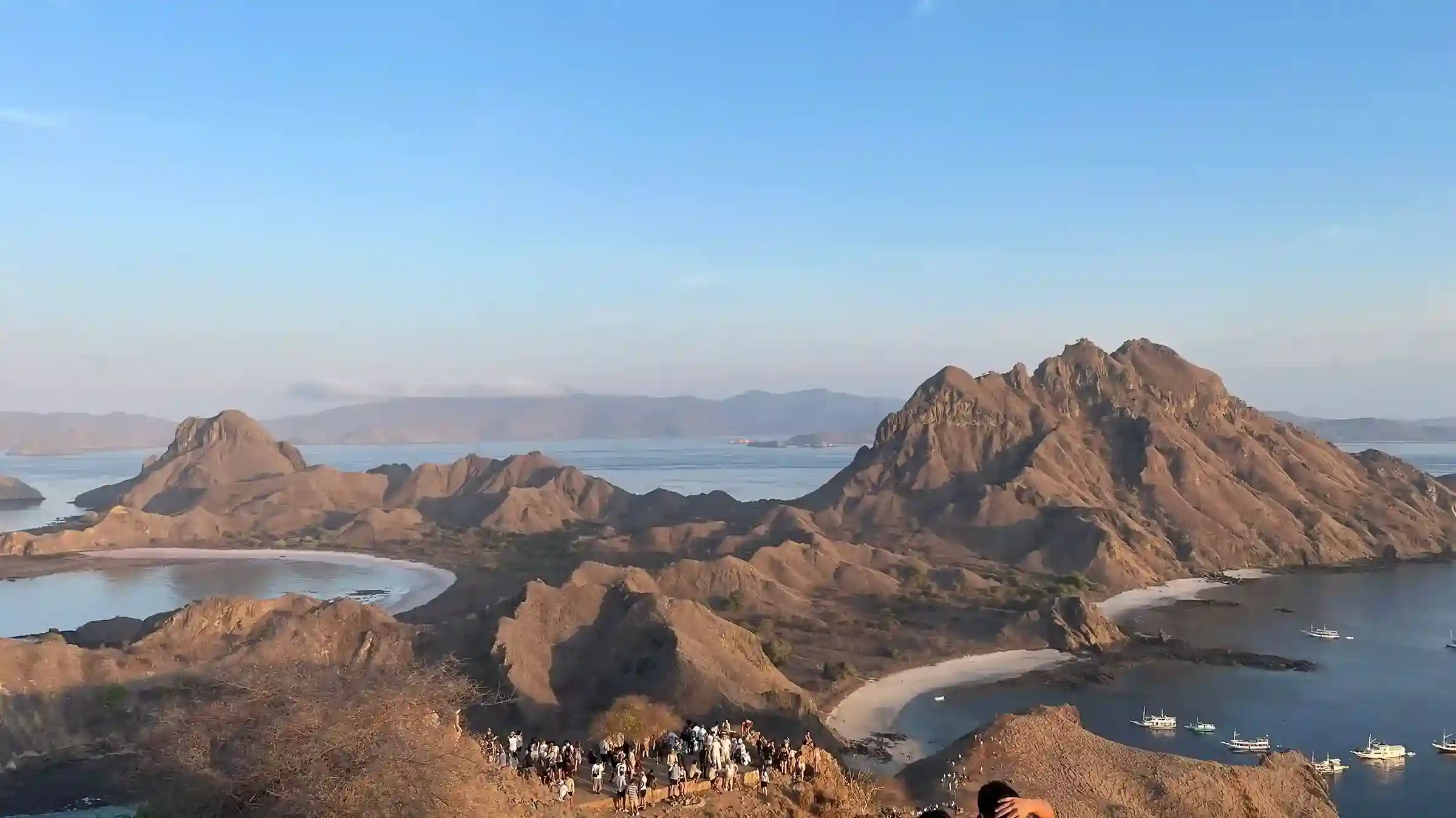
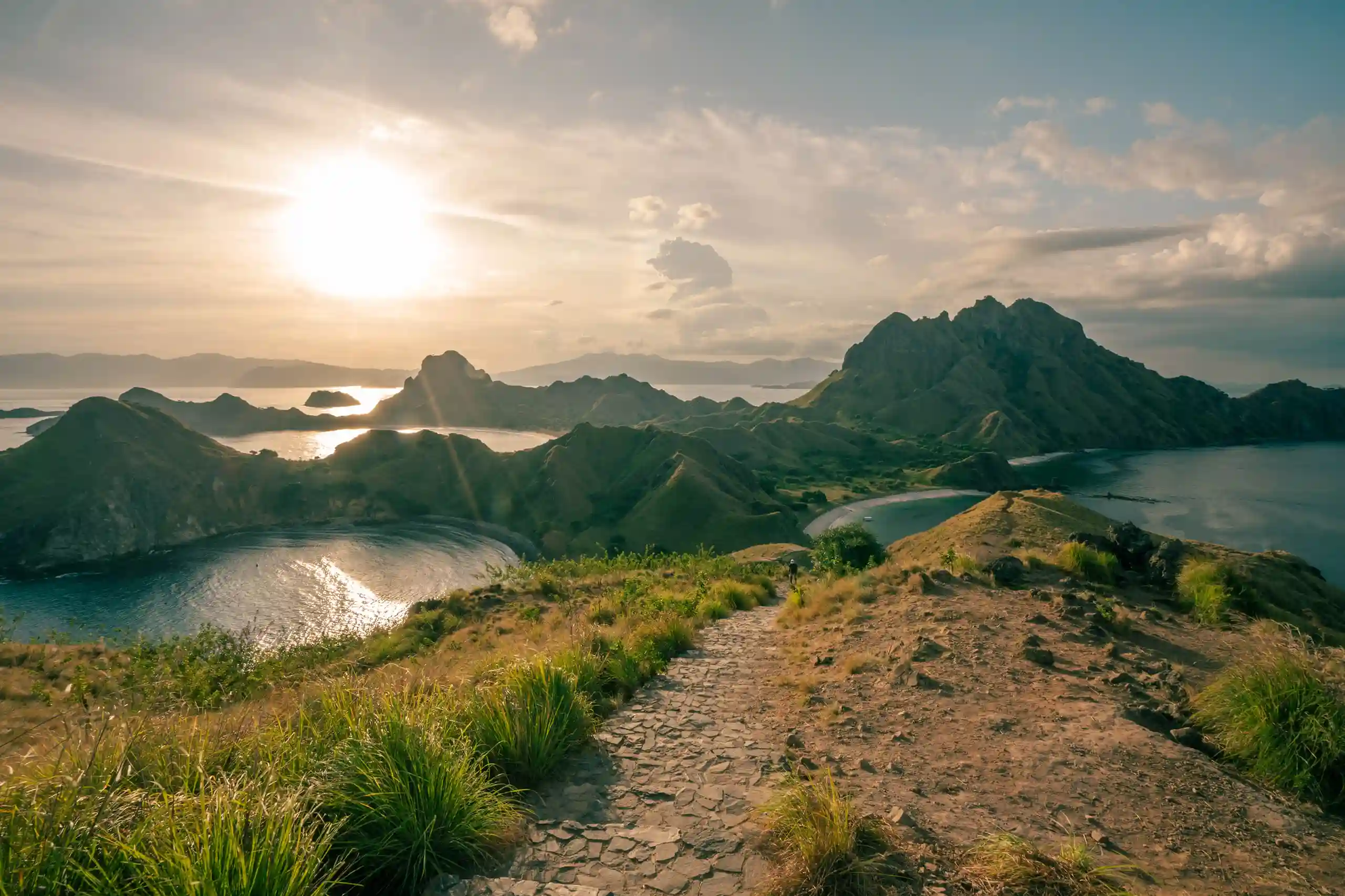
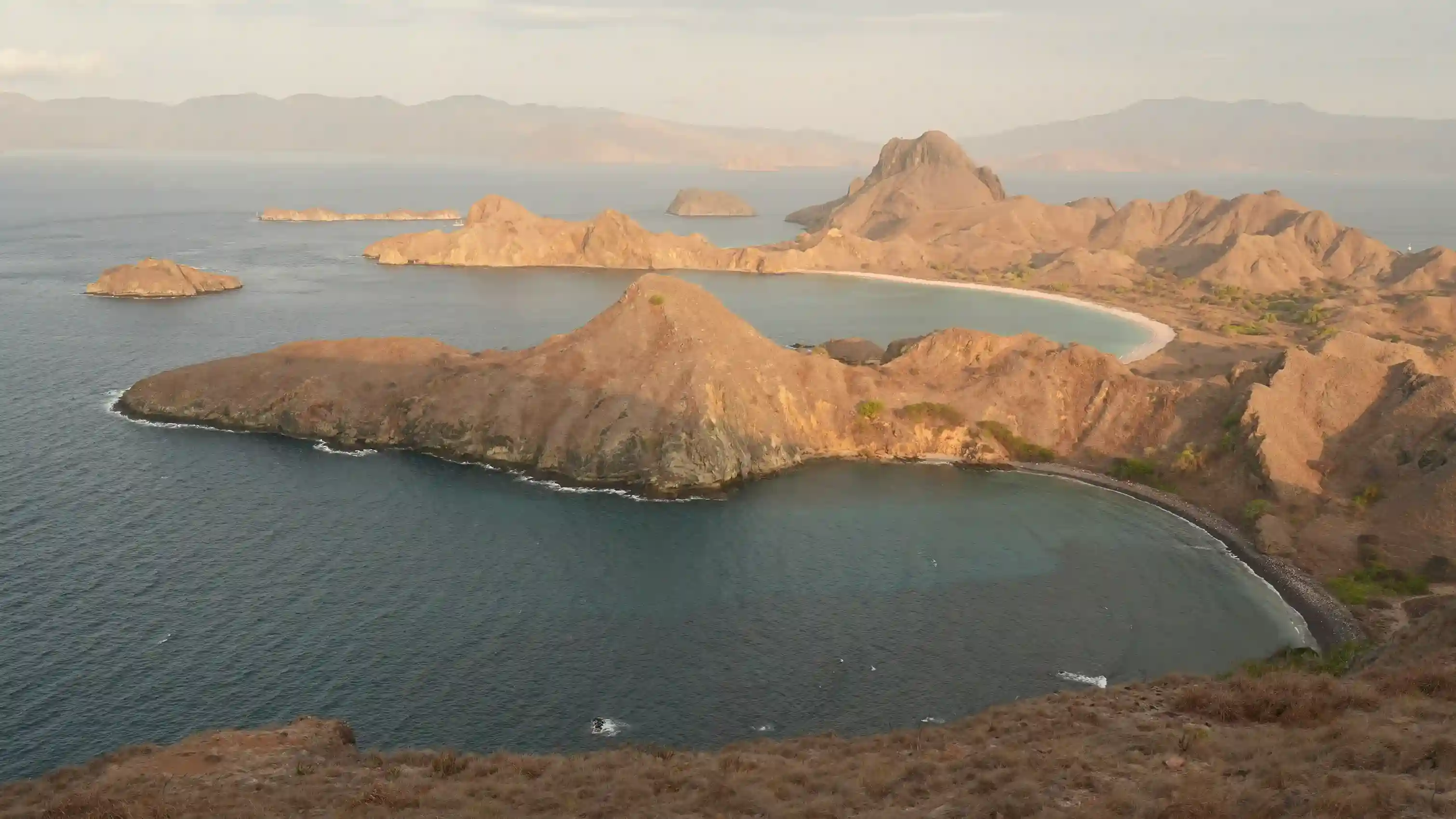
Komodo’s dramatic volcanic terrain creates compelling landscape photography spanning multiple scales and perspectives. Sweeping vistas from elevated ridgelines capture entire archipelago compositions showcasing the islands’ geological grandeur. Golden-hour lighting during dawn and dusk transforms landscape colors, creating warm tones emphasizing texture and three-dimensional terrain form.
The Island Summit Trek provides premier landscape photography locations—Gunung Ara’s peak enables 360-degree panoramic compositions. Wide-angle lenses (16-35mm equivalent) capture expansive vistas encompassing multiple islands within single frames. Graduated neutral density filters balance exposure between bright skies and darker terrain, preventing sky blowout while maintaining shadow detail.
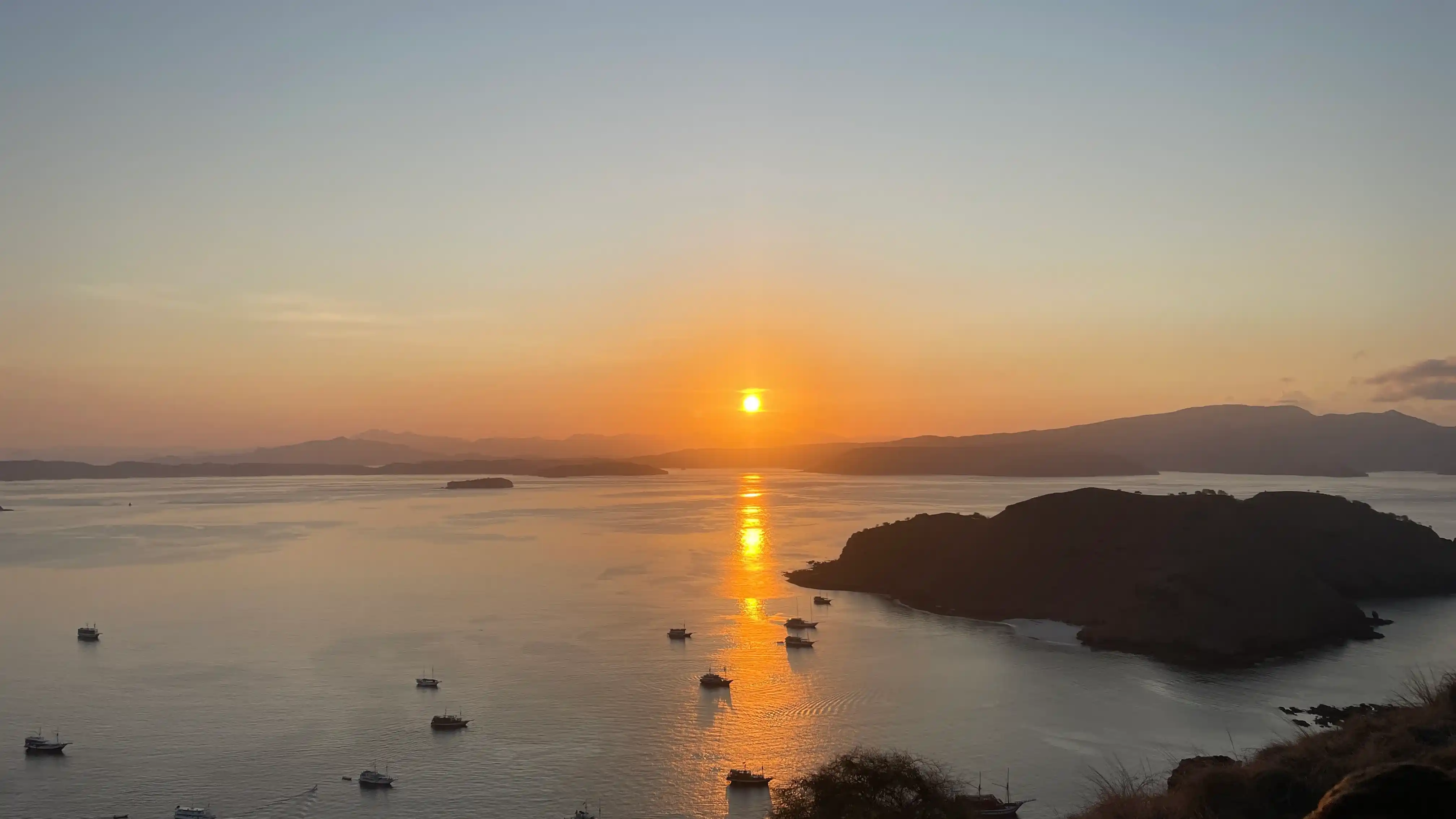
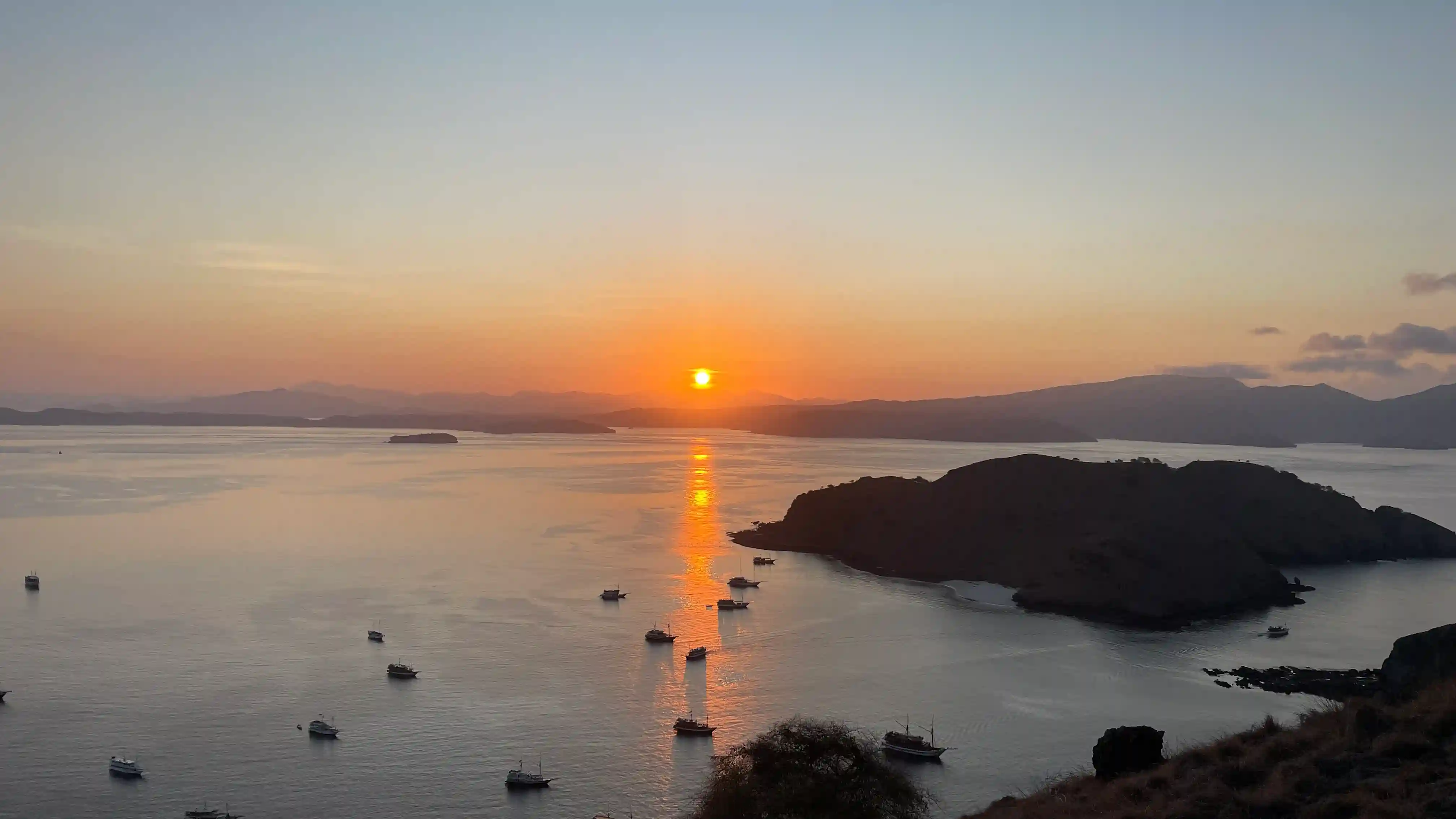
Coastal landscapes present distinct photographic character—dramatic sea cliffs, hidden coves, and colored sand beaches provide compositional variety. Pink Beach’s distinctive salmon coloration, created by crushed coral and volcanic minerals, appears nearly unreal without color correction. Sunset compositions incorporating silhouetted shorelines and golden-hour water reflections create romantically appealing images.
Rock formations including Cauldron’s dramatic sea stacks, Komodo’s weathered volcanic outcrops, and Tatawa Islands’ distinctive double-peak shapes provide striking foreground elements. Foreground inclusion creates compositional depth, positioning viewers within landscape scenes rather than observing from external positions.
Komodo dragons represent the archipelago’s most iconic photographic subjects. Successful dragon photography requires patience, appropriate positioning, and understanding reptilian behavior. Early morning trekking captures dragons in optimal lighting before midday heat causes activity reduction. Position yourself downwind of dragons—these predators rely on olfactory sensory input, and upwind positioning alerts them to human presence.
Telephoto lenses (70-200mm equivalent minimum) enable safe subject distances while maintaining frame-filling composition. Longer focal lengths compress background elements creating environmental context without excessive terrain inclusion. Fast shutter speeds (1/500 second or faster) freeze sudden movement as dragons occasionally accelerate from apparent dormancy.
Dragon close-ups reveal remarkable detail: textured scales, muscular jaw structures, and penetrating eye expressions. Macro focus enables facial detail capture, transforming simple documentary shots into compelling portraits. However, respect safety distances—guide instructions regarding appropriate positioning supersede photographic ambition.
Timor deer photography benefits from similar telephoto approaches, though these animals display less tolerance for close approach. Capture behavioral sequences: head-turning alert positions, grazing posture, and running sequences revealing defensive behaviors. Silhouette compositions during dawn/dusk create dramatically appealing images emphasizing antler forms.
Bird photography demands patience, speed, and equipment flexibility. Early morning bird activity peaks—arrive at promising locations before sunrise. Quiet positioning prevents alarmed departure. Fast auto-focus systems track erratically moving subjects more effectively than manual focus. Action photography demands professional-grade autofocus and high continuous shooting rates.
Underwater photography encompasses distinct technical requirements and artistic approaches compared to terrestrial work. Diving cameras or underwater housings protect expensive electronic equipment while enabling marine subject capture. Compact underwater cameras provide exceptional portability while delivering respectable image quality sufficient for social media sharing and casual printing.
Snorkeling photography proves more accessible than diving for casual travelers. Floating cameras, waterproof smartphone cases, or dedicated snorkel camera housings enable shallow-water composition capture. Colorful reef fish, sea turtles, and coral formations provide abundant composition subjects.
Underwater composition differs fundamentally from terrestrial principles—backscatter (particulate reflection) interferes with clarity, necessitating close subject positioning and wide-angle perspectives emphasizing environmental context over distant subjects. Macro underwater photography revealing nudibranchs, crustaceans, and small fish species creates unusual, visually compelling images from subjects overlooked during casual observation.
Lighting dramatically impacts underwater image quality. Daylight penetration decreases with depth—deeper dives require artificial illumination. Camera strobes or continuous lighting reveal natural colors lost to depth-dependent wavelength absorption. Professional underwater photographers employ dual strobe systems creating dimensional lighting from multiple angles.
Surface water photography captures marine megafauna: manta rays, sea turtles, and dolphins. Pre-focus positioning and rapid response enable exceptional action photography. Floating underwater housings remain accessible for snorkelers while enabling compelling large-animal captures.
Local communities provide compelling photographic subjects revealing daily life, cultural practices, and human-environment relationships. Approach photography ethically—request permission before photographing individuals, explain photographic purpose, and offer photo sharing. Many locals appreciate photographic recognition of their existence and environment.
Fishing boat photography, market scenes, and family activities reveal Komodo’s human dimension. Early morning light illuminates fishing preparations and departure scenes. Market photography captures vibrant color, cultural diversity, and commercial activity. Children often welcome photographic attention, creating spontaneous, joyful images.
Guide portraits document relationships with expedition facilitators whose knowledge enables entire experiences. Gratitude photography honoring these professionals creates meaningful remembrances of human connections forming during expeditions.
Smartphone photography proves sufficient for memorable documentation despite professional cameras’ technical advantages. Modern smartphone sensors capture exceptional detail; built-in computational photography processes automatically enhance images. These devices’ portability enables constant readiness—significant photography occurs during unexpected moments rather than pre-planned sessions.
Dedicated cameras provide manual control enabling artistic expression beyond automated processing. DSLR and mirrorless systems accommodate diverse lenses optimizing specific photography types: wide-angle landscape lenses, telephoto wildlife lenses, and macro optics. Weather sealing protects electronics from tropical humidity, saltwater spray, and accidental water contact.
Lens selection dramatically influences photographic results. Wide-angle lenses (16-35mm) capture expansive landscapes and establish environmental context. Standard lenses (35-85mm) suit general photography and portraits. Telephoto lenses (70-200mm) isolate distant wildlife subjects. Specialty lenses including macro and ultra-wide variants expand creative possibilities.
Tripods improve image sharpness by eliminating hand-holding vibration, essential for landscape photography and low-light conditions. Portable travel tripods compromise between stability and portability—carbon fiber construction minimizes weight while maintaining rigidity. Many trekking environments preclude tripod use; bean bags and improvised support alternatives enable stable camera positioning.
Golden hour—the period immediately following sunrise or preceding sunset—transforms mundane scenes into visually compelling compositions through warm color casts and low-angle raking light. Komodo’s clear skies enable predictable golden-hour timing based on daily sunrise/sunset times. Structure activities enabling golden-hour photography at compelling locations.
Harsh midday sun creates high-contrast conditions challenging exposure metering. Polarizing filters reduce glare and enhance color saturation, particularly beneficial for water and sky photography. Graduated neutral density filters balance exposure between bright skies and darker terrain, preventing sky overexposure while maintaining foreground detail.
Exposure compensation manages camera metering biases in challenging conditions. Bright sand and water reflect excessive light, triggering underexposure in automatic modes. Increase exposure compensation (+1 to +2 stops) preventing underexposure in bright environments. Conversely, dark jungle environments sometimes require exposure reduction preventing overexposure.
Manual exposure mode provides maximum control when conditions defeat automatic metering. Use manual mode during extreme lighting transitions, mixed illumination conditions, or when specific artistic exposure intent supersedes automatic decisions. Histogram evaluation confirms exposure accuracy, preventing highlight clipping and shadow loss.
Rule of thirds—positioning primary subjects along imaginary grid lines dividing frames into equal thirds—creates visually balanced compositions more engaging than centered subject placement. Enable grid overlays in camera settings, enabling composition refinement through viewfinders.
Leading lines guide viewer attention through images: horizonlines, pathways, shorelines, and visual elements creating directional flow. Compose leading lines directing attention toward primary subjects, creating intuitive visual progression.
Depth creation through foreground, middle ground, and background element layering transforms two-dimensional image planes into perceived three-dimensional spaces. Include compelling foreground elements, position primary subjects in middle ground, and include environmental context in background layers.
Color psychology influences viewer emotional response—warm tones (reds, oranges, yellows) evoke energy and positivity, while cool tones (blues, purples) convey calm and melancholy. Komodo’s natural color palette provides exceptional saturation variations rewarding thoughtful color-conscious composition.
Minimal post-processing maintains photograph authenticity while correcting technical shortcomings. Exposure adjustment, white balance correction, contrast enhancement, and saturation adjustment improve images without crossing into heavy manipulation. Avoid excessive artificial enhancement creating unrealistic results.
Raw format capture provides maximum post-processing flexibility compared to compressed JPEG formats. Raw files retain unprocessed sensor data enabling extensive adjustment latitude without quality degradation. Processing workflow emphasizes preservation of natural appearance while correcting technical limitations.
Color grading—deliberate color shift emphasizing specific tones—creates artistic styles distinguishing personal photographic voice. Subtle color grading (warm orange casts, teal shadows) remains popular, while excessive color casting creates artificial, unappealing results.
Cropping and straightening refine compositions, eliminating distracting elements and correcting horizon tilting. Thoughtful cropping often improves weaker compositions through tighter subject framing and elimination of unnecessary background inclusion.
Wildlife welfare supersedes photographic ambition—never disturb animals in pursuit of images. Maintain professional guide-recommended distances, respecting their expertise regarding animal behavior and safe interaction protocols. Patience yields better images than aggressive pursuit causing animal stress or dangerous situations.
Don’t feed wildlife or alter natural behavior attempting to create photogenic poses. Natural behavior documentation proves more compelling than contrived situations. Respect breeding seasons, nesting areas, and sensitive habitats—some locations remain off-limits to protect vulnerable species.
Avoid sharing specific rare animal locations on social media—this encourages visitation causing cumulative stress on sensitive populations. Contribute to conservation by limiting location specificity in captions, protecting species through discretion rather than publicity.
Dry season (April-December) photography emphasizes clear skies, dramatic shadows, and excellent visibility. Golden-hour colors intensify through clean atmosphere. Strong dry season winds occasionally create challenging conditions but enable dramatic cloud compositions.
Wet season (January-March) introduces atmospheric drama—dark storm clouds create dramatic compositions and moody atmospheres. Higher humidity occasionally creates haze reducing visibility but adding romantic, misty characteristics. Wet season vegetation appears lush and vibrant.
Shoulder season (March-April, November-December) transitions between extremes, offering variable conditions requiring flexibility. Unpredictable weather creates compositional opportunities while demanding rapid photographic response to changing light and atmospheric conditions.
Bring lens protection filters preventing dust and saltwater contact from damaging optical coatings. Circular polarizing filters enhance image quality while requiring no post-processing compensation. Neutral density filters enable long-exposure landscape photography in daylight—compelling compositional technique for water and cloud movement capture.
Clean lenses regularly—tropical environments introduce saltwater spray and dust rapidly accumulating on optics. Soft brush tools, lens cleaning cloths, and proper technique prevent optical coating damage. Store equipment in waterproof bags with silica gel desiccants preventing moisture damage in humid conditions.
Back up images immediately—carry redundant storage devices and consider cloud backup services preventing catastrophic data loss. Memory card failure represents the greatest risk to photograph preservation in remote locations. Transfer images daily to independent backup storage.
Embrace mobile photography—smartphone cameras capture candid moments and spontaneous compositions. The best camera remains the one you have with you; stunning images emerge from constant camera accessibility rather than professional equipment quality alone.
Smartphone cameras prove sufficient for excellent results—modern devices include exceptional optics and computational photography. Dedicated cameras offer manual control and specialized lenses optimizing specific photography types. Choose gear matching your skill level and intended photography focus. Don’t let equipment limitations prevent photography—excellent images emerge from mastering available tools.
Store equipment in waterproof cases with silica gel desiccants absorbing moisture. Lens protection filters prevent optical damage from spray and dust. Rinse equipment with fresh water after saltwater exposure. Clean lenses and sensors regularly using appropriate tools. Consider weather-sealed equipment designed for challenging environmental conditions.
Adobe Lightroom provides comprehensive tools for photography management and processing—preferred by professionals and enthusiasts. Free alternatives including Darktable and RawTherapee offer excellent functionality. Smartphone apps enable mobile processing when computer access is unavailable. Experiment with various software identifying tools matching your workflow preferences.
Park regulations typically permit personal-use wildlife photography. Commercial use or publication may require specific permits—consult park headquarters regarding intended use. Local guide cooperation remains essential—their expertise enables optimal photography while respecting animal welfare. Obtain permissions from individuals before photographing people, offering to share images.
Dawn/dusk golden hour suits landscape and wildlife photography. Early morning captures peak wildlife activity. Midday light creates high contrast challenging for optimal exposures. Overcast days provide even lighting suitable for detailed wildlife and cultural photography. Flexible scheduling enabling photography during optimal conditions produces superior results.
Wildlife photography benefits from telephoto lenses (200mm+) enabling distant subject capture. Landscape photography emphasizes wide-angles (16-35mm) capturing expansive terrain. Underwater photography typically employs wide-angle lenses (14-28mm equivalent) or macro options (100mm+). Travel photography benefits from versatile standard focal lengths (35-85mm).
Personal photography intended for personal use requires no special permissions. Commercial licensing or publication may require formal permission from park authorities. Specific locations, indigenous peoples, or guides appearing in photographs may require model releases for commercial use. Clarify copyright ownership and usage rights before publishing commercial imagery.
Maintain multiple memory card copies during expeditions—minimize data on single cards. Transfer images daily to independent backup devices. Consider cloud backup services for critical images. Store backup devices separately from primary equipment preventing simultaneous loss. Redundancy prevents catastrophic data loss from equipment failure or damage.